
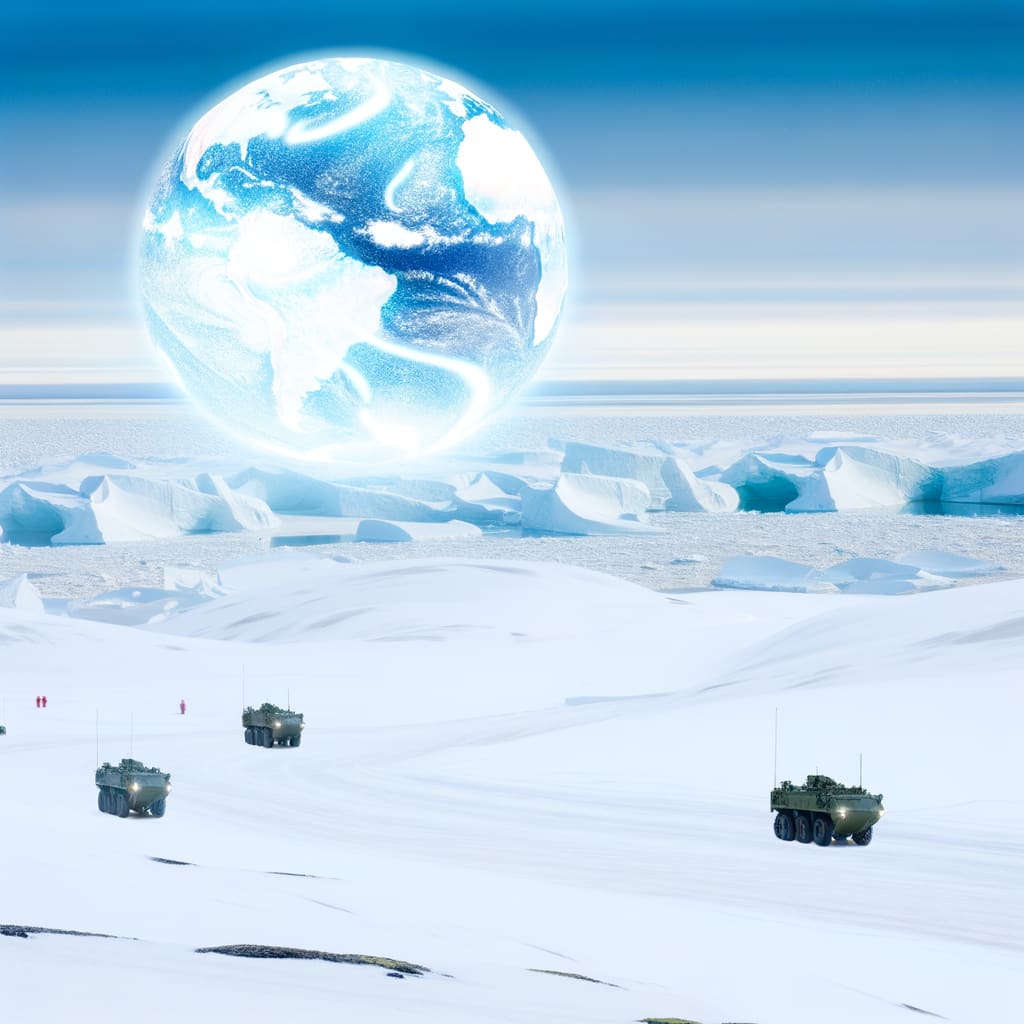
NATO Launches Arctic Sentry Mission Amid Tensions Over Greenland
In an effort to bolster its military presence and surveillance capabilities in the Arctic region, the North Atlantic Treaty Organization (NATO) is set to launch the Arctic Sentry mission within days. The move comes amid growing tensions between U.S. President Donald Trump and European allies over Greenland and the perceived threats from Russia and China.
The Arctic: A Geopolitical Hotspot
The Arctic has become a major strategic space for states, driven by both climate and geopolitical concerns. As these regions become more accessible due to climate change, Russia and China have shown increased interest, leading to a contest of power and influence. NATO's new mission comes in response to this, aiming to strengthen the Western alliance's role in the region.
Rising Tensions and Military Presence
The announcement of the Arctic Sentry mission follows weeks of turbulence within the transatlantic partnership, stemming from President Trump's claims over Greenland, a territory of NATO ally Denmark. The new mission is expected to coordinate an increasing military presence of NATO allies in the region, which includes the U.K.'s decision to double its troops in Norway to counter the 'rising' Russian threat.
NATO is bolstering its military presence in the Arctic in an effort to de-escalate the conflict over Greenland,
Deutsche Welle reported. However, specifics regarding the extent of military capabilities being sent to the region remain unclear.
U.S. Interest and Reactions
The Greenland issue has led to some assertive statements from U.S. officials. Vice President JD Vance suggested that the United States should gain some benefit
from Greenland if it’s going to be on the hook for protecting this massive landmass.
Meanwhile, analysts have suggested that Europe, heavily dependent on the U.S., would likely do little if Trump decided to annex Greenland, a move that has stirred tension within the NATO alliance.
Conclusion: Looking Ahead
As the Arctic region becomes a focal point for geopolitical interests and climate concerns, NATO's new mission aims to increase its presence and influence in the region. This move, sparked by increasing tensions over Greenland and the perceived threats from Russia and China, underscores the growing importance of the Arctic on the global stage.
The outcome of this mission and its impact on the alliance's internal dynamics, as well as its relations with external powers, will undoubtedly be closely watched in the coming days and weeks.