
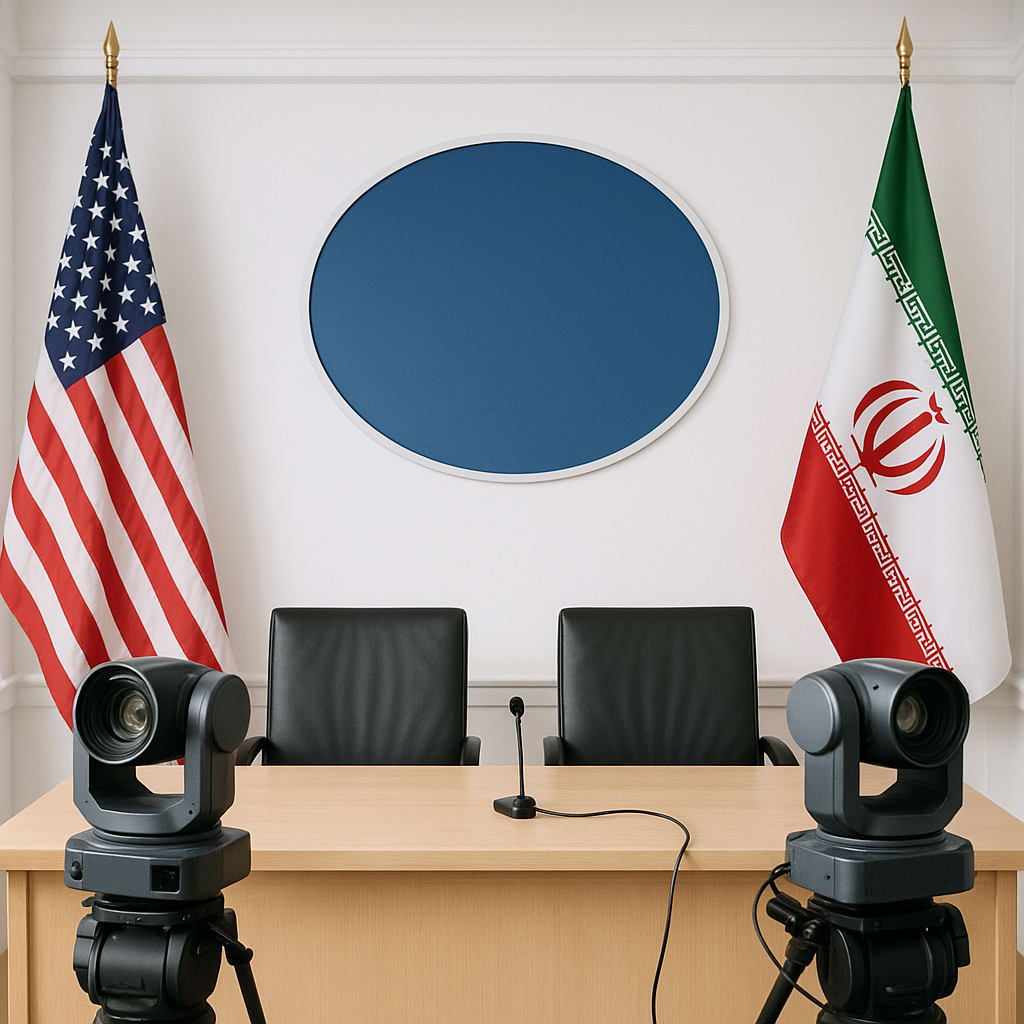
Trump ends NBC ‘Meet the Press’ interview after clash with Kristen Welker
Narrative Snapshot
- Broad agreement: outlets report that the interview ended after sustained pushback on Trump’s assertions that the 2020 U.S. election was “rigged,” with some also noting Welker’s questions about other topics, including Iran and a large fund referenced in foreign coverage (BBC; The Guardian; La Repubblica; Clarín; Le Monde; Folha de S.Paulo; The Hindu).
- Emphasis diverges: Anglophone outlets foreground the election-claims clash (BBC, The Guardian, The Hindu). European and Asian coverage adds policy substance and production friction—questions on Iran strategy and references to weather disruptions (Le Monde; South China Morning Post).
- Framing splits: Fox News centers Trump’s media-bias charge and, separately, his critique of Obama’s Iran deal; RT amplifies his “crooked or stupid” jab at the host; Middle East Eye spotlights his assertion that an Iran deal is “very close” (Fox News; RT; Middle East Eye).
- What’s at stake: credibility of executive communications; durability of contested-election narratives; and policy signaling on Iran in parallel with an escalating confrontation with major U.S. broadcasters (SCMP; Fox News; BBC).
What Happened
During a pre-taped appearance on NBC’s Meet the Press aired June 7, 2026, President Donald Trump clashed with host Kristen Welker after she repeatedly pressed him for evidence supporting his claims that the 2020 presidential election—and, separately, a California governor race—were “rigged” (BBC; The Guardian; La Repubblica; Clarín). Trump criticized NBC and labeled ABC, CBS, and CNN “crooked,” at one point telling Welker she was “either crooked or stupid,” before removing his microphone and ending the interview (Fox News; RT; Corriere della Sera). Several outlets note the exchange also covered Iran policy and a “billion‑dollar”/“anti‑instrumentalisation” fund, with sporadic weather disruptions affecting the taping (Le Monde; Folha de S.Paulo; SCMP). In parallel coverage the same day, Trump attacked the Obama-era Iran nuclear deal and suggested a new deal with Tehran was “very close” (Fox News; Middle East Eye).
Why It Matters
- Executive–media relations: The confrontation underscores an entrenched dynamic in which the U.S. president publicly delegitimizes major broadcasters, complicating standard accountability mechanisms that rely on adversarial interviews and shared factual baselines (Fox News; BBC; Corriere della Sera).
- Democratic confidence: Renewed, unsubstantiated claims about a “rigged” 2020 process keep election-administration legitimacy in political contention, a persistent governance challenge with downstream effects on compliance, participation, and institutional trust (BBC; The Guardian; La Repubblica; Clarín; The Hindu).
- Iran signaling: Substantively, remarks about Iran—simultaneously denigrating the Obama-era nuclear agreement and hinting a “very close” new deal—send mixed but consequential signals to regional actors and negotiating counterparts about U.S. posture and potential diplomatic timelines (Fox News; Middle East Eye; SCMP; Le Monde).
- Policy opacity: References to a large “fund” raised in foreign coverage highlight information gaps that invite scrutiny of financial instruments or initiatives associated with the administration, without clarifying mandate or oversight (Le Monde; Folha de S.Paulo).
Diverging Narratives
- Trigger and frame: BBC, The Guardian, The Hindu, La Repubblica, and Clarín frame the walkout primarily as the result of sustained challenges to Trump’s election‑fraud assertions, emphasizing Welker’s insistence on evidence. Fox News centers Trump’s charge that major networks are “crooked,” echoing his broader critique of media bias (BBC; The Guardian; The Hindu; La Repubblica; Clarín; Fox News).
- Tone and rhetoric: RT highlights the confrontational soundbite—“either crooked or stupid”—focusing attention on the president’s direct insult to the host (RT). Corriere della Sera and Fox News document his labeling of ABC, CBS, CNN as “crooked” (Corriere della Sera; Fox News).
- Substantive policy content: Le Monde and the South China Morning Post note the interview extended into Iran strategy and was affected by weather disruptions—elements largely absent from U.S./U.K. summaries (Le Monde; SCMP). Middle East Eye isolates the claim that an Iran deal is “very close,” while Fox News publishes a separate piece attacking the Obama‑era deal (MEE; Fox News).
- Open questions: Foreign outlets reference a “billion‑dollar”/“anti‑instrumentalisation” fund without detailing purpose or governance; no source provides corroboration or specifics on the asserted “very close” Iran deal beyond Trump’s remark (Le Monde; Folha de S.Paulo; MEE).
What Happens Next
- Iran track: Trump’s statements set an observable marker. Analysts should watch for corroborating signals—a formal U.S. announcement, parallel statements from Tehran, or concrete negotiating steps—consistent with “very close,” versus continued critique of the Obama‑era deal without new detail (Middle East Eye; Fox News).
- Media strategy: Having labeled NBC, ABC, CBS, and CNN “crooked,” monitor future booking decisions and access patterns with these networks as indicators of whether the White House sustains an exclusionary posture or re-engages after the clash (Fox News; Corriere della Sera).
- Financial instrument clarity: Given mentions of a large fund in foreign coverage, look for administration or congressional disclosures that define its scope, oversight, and objectives; absence of detail will sustain scrutiny (Le Monde; Folha de S.Paulo).
- Election-claims trajectory: Welker’s repeated requests for evidence establish a threshold for future interviews; observe whether the president provides substantiating material or continues to restate claims when challenged (BBC; The Guardian; La Repubblica; Clarín; The Hindu).