
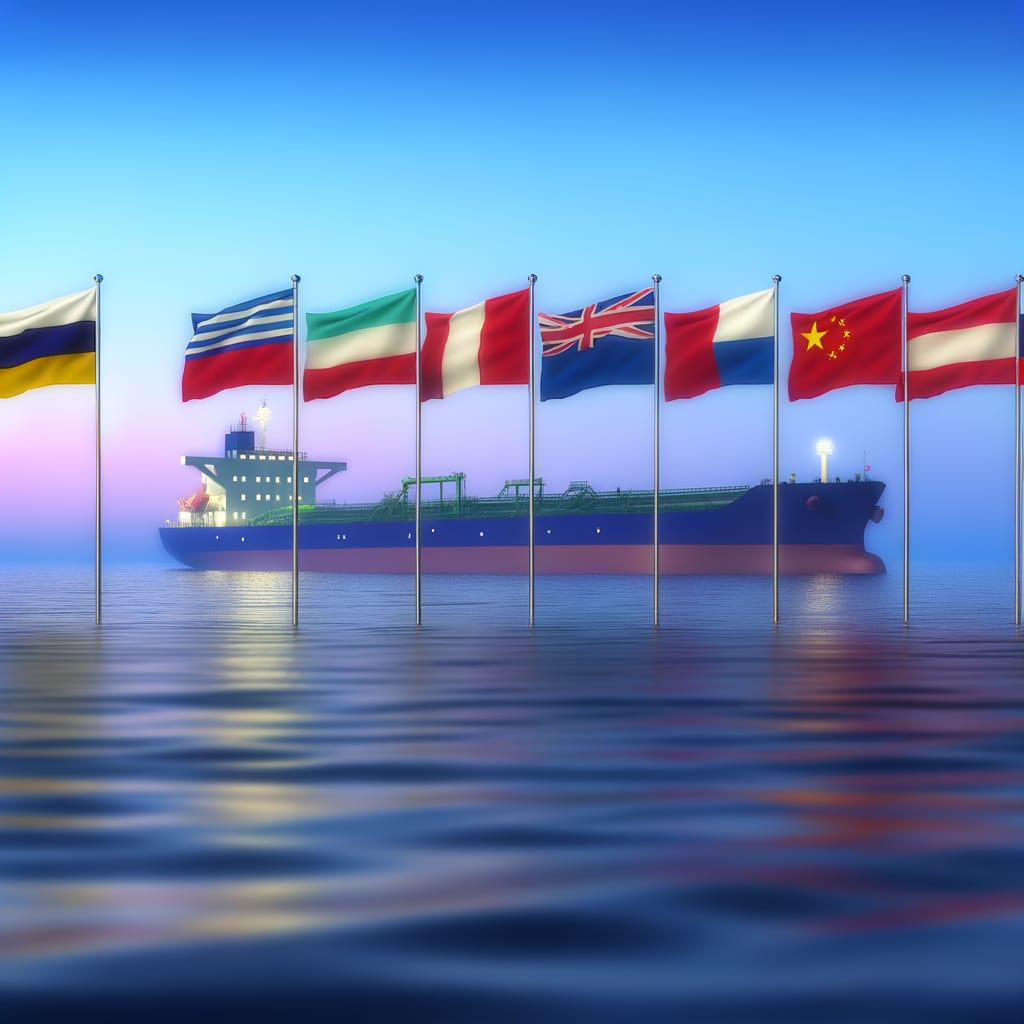
US Proposes International Control over Strait of Hormuz amid Tensions
In a significant turn of geopolitics, the United States has proposed placing the strategically crucial Strait of Hormuz under international control, according to reports by TASS. US Secretary of State Marco Rubio reportedly presented the initiative at a meeting of G7 foreign ministers. The development comes as President Donald Trump urged countries that did not assist the US-Israeli strikes on Iran to independently secure their oil supplies from the Strait of Hormuz.
Background and Context
The Strait of Hormuz is a vital passageway for global oil trade. The recent US-Israeli military actions against Iran have resulted in Iran effectively closing oil tanker traffic through the Strait, causing a surge in global oil prices and roiling international markets.
With the US seemingly stepping back from the conflict, President Trump singled out non-supportive nations, particularly Britain and France, suggesting they should either buy American oil or procure it themselves from the Strait of Hormuz. This move has been perceived as an attempt to pressure these nations to step up their involvement in the Middle East conflict.
Key Developments
US defence secretary has echoed President Trump's sentiments, calling on allies to 'step up' over the Strait of Hormuz. Marco Rubio, on the other hand, has been rallying for G7 participation in an international mission in the Strait, while asserting that the US does not require G7 assistance to open the strait.
Simultaneously, the United Arab Emirates (UAE) is reportedly preparing to assist the US in this endeavor. As per the Wall Street Journal, Abu Dhabi has been exploring its potential role in the conflict.
Implications and Reactions
The US's stance has drawn sharp criticism, especially from European countries. The New York Times reports that European countries have responded by imposing more restrictions on American aircraft in their airspace. Rubio, expressing his frustration over the lack of support from allies, suggested the US may need to reassess its relationship with NATO after the war with Iran.
Meanwhile, the continuing conflict has led to speculation about the possibility of a military draft in the US, as well as concerns about the potential impact on the global economy and trade. Analysts from Deutsche Welle question how quickly global trade could recover after the conflict.
Current Status
Despite the ongoing tensions, President Trump appears optimistic about the conflict's resolution. He recently claimed that Iran agreed to allow 20 more ships of oil through the Strait of Hormuz. The US president also anticipates that the conflict in the Middle East will conclude within the next two to three weeks. However, the future of the Strait of Hormuz remains uncertain as Secretary of State Rubio insists it will reopen 'one way or another'.