
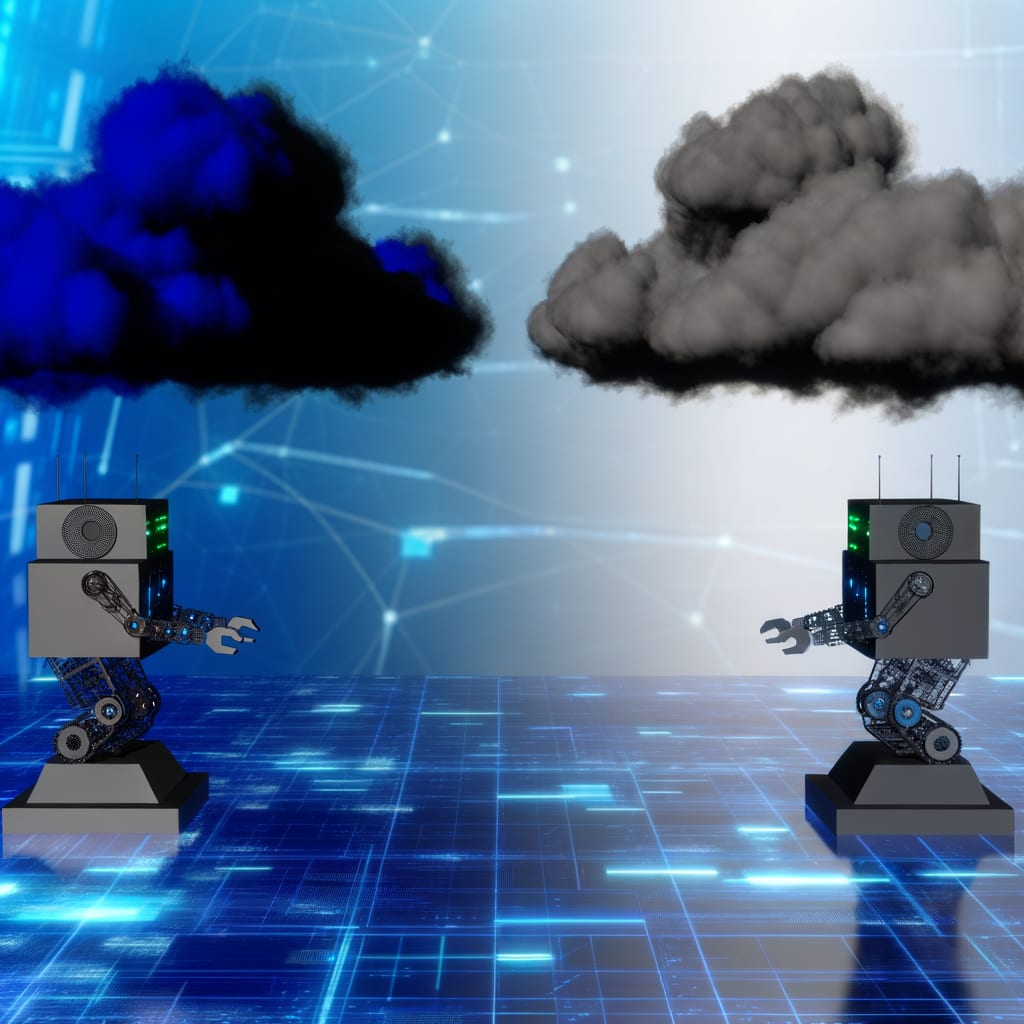
Artificial Intelligence Revolution: China and US in Tech Race Amid Cybersecurity Concerns
The global Artificial Intelligence (AI) market is experiencing a boom, with China and the US taking divergent paths in development. Amid the surge, concerns about AI-driven cybersecurity threats and increasing regulations are shaping the future of AI.
The AI Boom
China's AI sector is seeing significant growth, with companies like DeepSeek raising their valuation to US$50 billion1 and ByteDance increasing its AI capital expenditure by at least 25%2. The country is also pushing its AI data centres to adopt green energy3 and unveiled the world’s first dual core quantum computer, Hanyuan-24.
In parallel, US chipmaker Nvidia is enhancing its partnership with Corning to expand its AI infrastructure5, and SoftBank is planning large-scale batteries for AI data centers6. US tech giant Cisco purchased Israeli AI cyber startup Astrix to boost its digital workforce’s security7.
However, this rapid growth has a downside. Data centers are becoming energy-intensive engines of growth, with thousands being built worldwide8.
Mounting Security Concerns
Amidst the AI revolution, cybersecurity threats are evolving. US Treasury Secretary Scott Bessent warned about AI-driven bank account hacks9. Anthropic's AI model, Mythos, found over 2,000 unknown software vulnerabilities in just seven weeks of testing9.
China is also scrambling to close the AI security gap as Anthropic and OpenAI pull ahead with new models10. Chinese developers are using API relay platforms to bypass restrictions and access top-tier overseas AI models11.
The Regulatory Landscape
Regulatory actions are shaping the AI ecosystem. China blocked Meta Platforms' acquisition of the AI startup Manus over security concerns12. In a potential shift from its hands-off approach, the White House is reportedly considering a review of new AI models before their official release13.
The EU has also taken a stand against the misuse of AI, banning sexualized AI deepfakes14.
The AI Divide
While the AI revolution promises economic growth, it could also widen the wealth gap. Big cities with deep pools of talent and capital are best placed to adopt the technology, while smaller cities and rural areas may struggle to keep up[13].
Staff at Google’s UK artificial intelligence division have voted to unionize over concerns that its technology is being used by the US to wage war on Iran and by Israel against Palestinians in Gaza15.
Current Status
As the AI revolution continues, companies are adapting their strategies. Alibaba is overhauling its online shopping experience, betting on AI chatbots16, while WiseTech staff are left in limbo as AI is touted as better than humans17.