
Lead
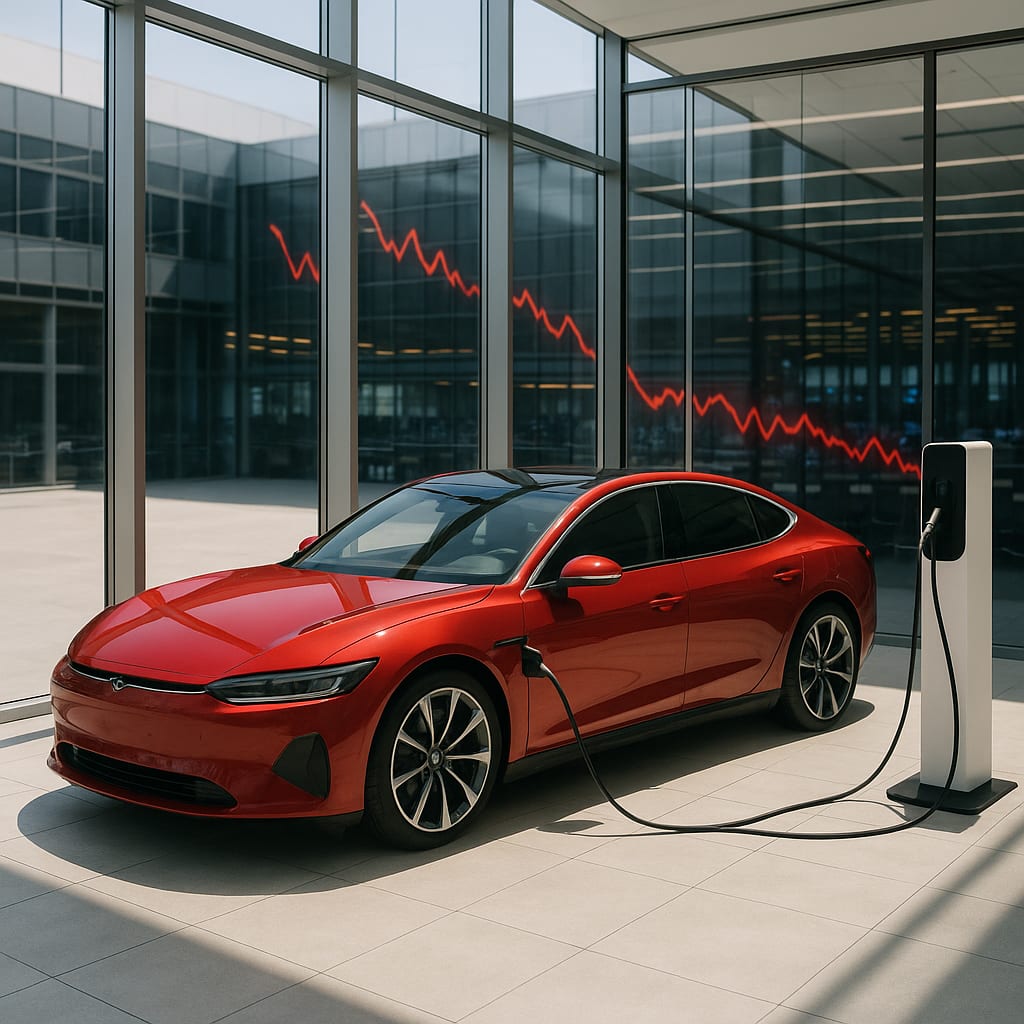
Ferrari’s first fully electric model, the Luce, has landed with the kind of instant global visibility most carmakers would envy—and the kind of identity crisis Ferrari has long tried to avoid. Within days of the unveiling, the car became a lightning rod: memes and derision spread online, owners’ clubs and brand traditionalists questioned whether an electric Ferrari could still be a Ferrari, analysts publicly tested the commercial logic of the design and positioning, and investors sent the company’s shares lower. At the same time, the launch underscored a larger industry reality: legacy luxury manufacturers are moving toward electrification unevenly and cautiously, attempting to protect high margins and brand mythology while adapting to regulatory pressure, changing consumer expectations, and a new competitive set.
What Happened
Ferrari revealed the Luce on Monday, 25 May, presenting it as its first all-electric vehicle and, notably, a more practical format than the brand’s traditional two-seat or 2+2 sports cars. Multiple outlets described it as a four-door model with seating capacity larger than typical Ferraris—often framed as a five-seater—signaling a bid to broaden the addressable market without abandoning the upper end of the price spectrum.
The unveiling was followed almost immediately by a backlash that played out on two tracks: cultural and financial.
On the cultural side, the criticism was visceral and symbolic. Longtime enthusiasts and organized owner communities focused less on engineering claims than on what electrification does to Ferrari’s signature sensory identity—especially the sound and perceived mechanical drama. Some commentary went further, arguing that the model should not carry the prancing horse at all, a striking marker of how brand authenticity is policed by core fans. Online mockery, including memes targeting the styling and the premise of an electric Ferrari, amplified the reaction well beyond the usual car-review ecosystem.
On the financial side, the reaction was immediate enough to become part of the story. Ferrari’s shares fell after the debut, with coverage linking the move to investor unease over how the market will receive a battery-electric Ferrari at a time when the luxury EV segment is widely described as cooling from earlier hype. Analysts were quoted questioning whether the vehicle’s look and concept align with Ferrari’s heritage and whether the product will entice buyers at the top end of the market.
Ferrari then moved into damage-control and image management. Coverage described the company attempting to persuade skeptics in the days after launch, including a highly symbolic public presentation of the car to Pope Francis. The gesture read as a deliberate attempt to shift the conversation from mockery to legitimacy—an appeal to Italian institutional and cultural authority that also guaranteed a fresh news cycle.
Why It Matters
Ferrari is not just launching a new model; it is stress-testing the logic that has allowed luxury and ultra-luxury brands to navigate disruption on their own terms. For decades, Ferrari’s core product has been as much narrative as machine: racing heritage, scarcity, and a visceral driving experience. A fully electric Ferrari forces the company to translate those intangibles into a product category associated—fairly or not—with silence, software, and sameness.
That translation has economic stakes. Ferrari’s business model rests on high margins, limited volumes, and extraordinary pricing power. The Luce’s debut price point was reported at the very top of the market, and the company’s ability to maintain premium positioning in a more crowded EV world is central to the investment case. The immediate share-price drop captured how sensitive the market is to any hint that Ferrari could lose its aura or misread demand at a moment when some luxury buyers are hesitating on EVs.
The launch also matters because it shows how luxury electrification is diverging by segment and geography. Traditional European luxury brands are seen “testing” electrification rather than sprinting into it—balancing emissions targets, city restrictions, and political pressure against customer expectations and supply-chain realities. Meanwhile, separate business coverage highlighted that Chinese EV makers are pushing aggressively upmarket to protect margins, meaning Ferrari and its European peers face not only legacy competitors but also a new generation of well-capitalized challengers seeking credibility through premium models.
Finally, the episode illustrates how brand transitions now unfold in public, at internet speed. A generation ago, a controversial Ferrari might have been debated in enthusiast magazines and dealerships. The Luce was adjudicated within hours on social platforms, by owners’ clubs, financial analysts, and meme accounts—different audiences applying different criteria to the same object.
Diverging Narratives
The broad facts—an all-electric Ferrari debuted, provoked backlash, and was followed by a share-price dip—are widely shared. The differences lie in what each media ecosystem treats as the real story.
1) Identity crisis vs. calculated evolution
Anglophone coverage, particularly in business and general-interest outlets, foregrounded the backlash itself: the memes, the owners’ outrage, and the sense that Ferrari may be tampering with a sacred formula. The emotional vocabulary—shock, anger, even calls to remove the logo—was treated as news, implying that brand legitimacy is a fragile asset that can be damaged quickly.
Italian coverage tended to contextualize the controversy within a longer tradition of big brands surviving product shocks. One prominent framing compared Ferrari’s moment to “New Coke”—a reminder that consumer outrage can be intense, but not necessarily fatal, and that a company can emerge stronger if it reads the reaction correctly. This approach downplayed the idea of an existential rupture and instead treated the uproar as a predictable phase of adaptation.
2) Market skepticism vs. strategic repositioning
Some reporting placed the emphasis on investor and analyst skepticism: whether the Luce’s design and concept deliver what buyers pay Ferrari for, and whether the luxury EV market is softening. This framing sees the launch through the lens of demand risk and valuation.
Other coverage stressed strategic repositioning: a four-door, more spacious Ferrari aimed at attracting a younger clientele and expanding use-cases beyond the weekend sports car. In that narrative, the Luce is less a betrayal of heritage than an attempt to future-proof the customer base.
3) Italy’s cultural theatre vs. global competitive logic
The Pope presentation became a focal point in parts of the international press because it dramatized the company’s response to criticism—an unmistakably Italian tableau mixing industry, symbolism, and soft power. In more market-oriented coverage, the same moment functioned as brand management: a bid to steer attention and confer prestige amid a volatile news cycle.
Meanwhile, business coverage from Asia that focused on premiumization among Chinese EV makers treated Ferrari less as a culture-war story and more as a data point in a competitive landscape: luxury is where margins are, and incumbents no longer have the premium segment to themselves.
4) Disputed details: seating and classification
Even on concrete specs, there were small variations. Several outlets described the Luce as a four-door car with room for five, while others emphasized the four-door format without dwelling on capacity. The disagreement does not appear to be about whether the car is a departure—everyone agrees it is—but about how to categorize it: a practical Ferrari, a luxury grand tourer, or something closer to a high-end family-capable vehicle. That classification matters because it shapes expectations about what a Ferrari “should” be.
Current Situation
As of the end of May, the Luce remains in its immediate post-unveiling phase: intense public scrutiny, polarized fan reaction, and a market still evaluating whether Ferrari can extend its brand into full electrification without diluting exclusivity.
Ferrari’s near-term posture, as reflected in coverage of its public appearances, is to project confidence and legitimacy while engaging critics indirectly through symbolism and controlled messaging. The financial markets’ initial negative reaction has become part of the ongoing narrative, suggesting that future disclosures—orders, production plans, and early buyer sentiment—will be watched closely.
The immediate outlook is therefore less about the engineering, which few outlets could independently verify at launch, and more about perception: whether Ferrari can convert controversy into curiosity, reassure core loyalists that the brand’s essence survives electrification, and persuade new buyers that an electric Ferrari is not a compromise but a new kind of status object.