
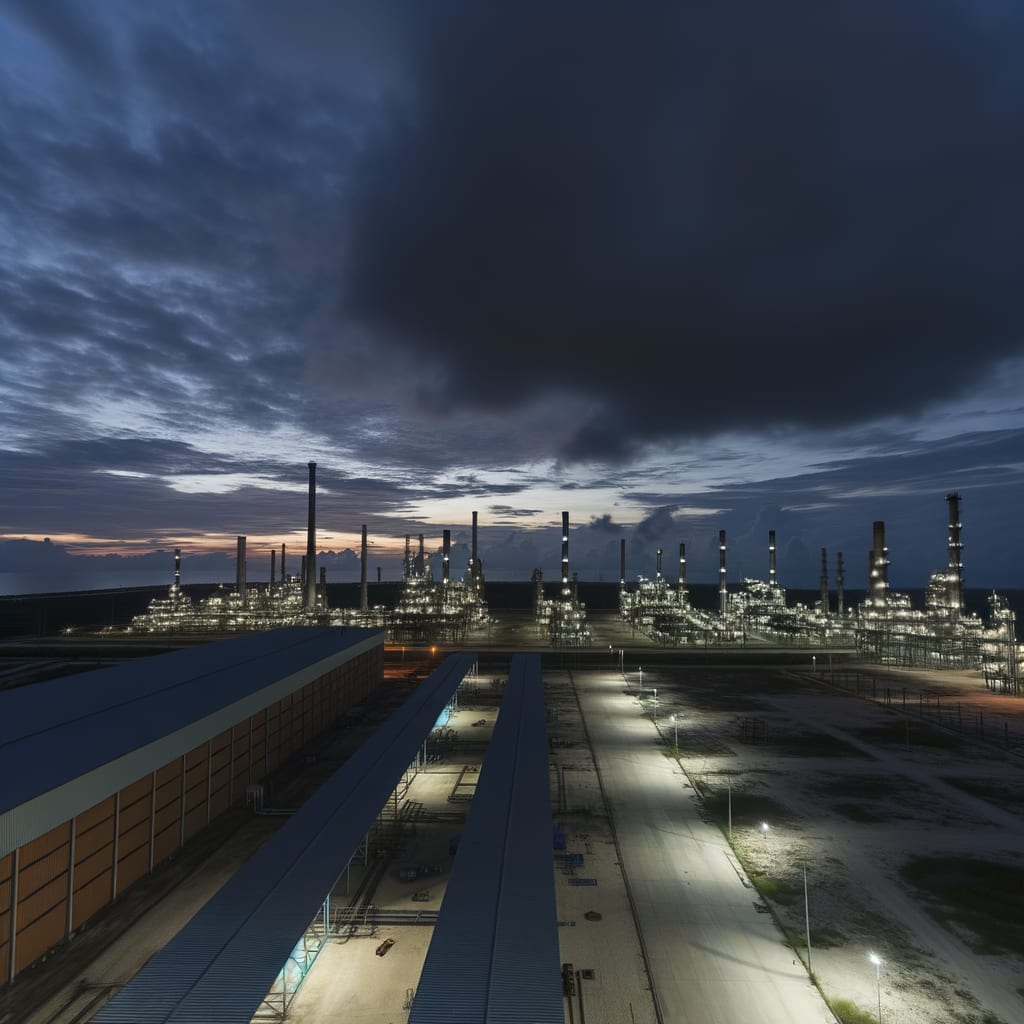
Crisis in the Gulf: Rising Tensions Amidst Attacks on Energy Infrastructure
Tensions rise in the Middle East as Gulf states grapple with a surge in attacks on their energy infrastructure. The escalating conflict, which involves Iran, Saudi Arabia, Kuwait, Qatar, and the United Arab Emirates (UAE), is a retaliation for the American-Israeli strikes. Amidst the debris and drone interceptions, the region's policy of restraint is increasingly untenable, with potential implications for global energy supplies.
Background
The recent wave of attacks targets not only U.S. assets but also civilian landmarks, oil and gas facilities, airports, and residential areas. In particular, the Habshan gas facilities in Abu Dhabi were forced to shut down due to falling debris. Similarly, Saudi Arabia intercepted and destroyed multiple drones across the country, including nine over the Eastern Province and another over the northern al-Jawf region. Kuwait is also facing a renewed wave of 'hostile missile and drone attacks.'
Key Developments
In the face of these attacks, Saudi Arabia reserves the right to act militarily against Iran, a position echoed by other Gulf states. Saudi Foreign Minister Prince Faisal bin Farhan accused Iran of premeditated hostile actions against its neighbors, both directly and via an array of regional proxies which he urged Tehran to rein in.
Meanwhile, Iran has dismissed this as a 'joke' and warned of a potential 'false flag' operation by Israel aiming to target Saudi Aramco facilities and place the blame on Tehran.
The UAE has taken a proactive stance, announcing the neutralization of a group linked to Hezbollah and Iran. The members of the group are accused of money laundering, undermining the economy, and posing a threat to national security.
Similar measures have been taken across the Gulf, with over 100 arrests in Abu Dhabi for filming and posting 'misleading' information during the conflict.
Implications and Reactions
The conflict's repercussions are felt beyond the region, affecting global energy supplies and international relations. Foreign ministers from the Arab and Muslim world met in Riyadh to formulate a unified response to the Iranian strikes, asserting their right to self-defense.
The escalating tensions have led to a shift in investment strategies for Gulf states like Saudi Arabia, Qatar, and the UAE, who may redirect their trillions of dollars of worldwide investments closer to home. Furthermore, countries like Canada are advising their citizens in the Middle East to avoid documenting military activity due to potential legal repercussions.
Conclusion
The situation in the Gulf remains volatile, with the duration of the US-Israeli war on Iran dependent not only on stockpiles but also on the effectiveness of new US deployments and political calculations. As Gulf states activate their air defense systems in response to the ongoing threats, the UAE is considering joining US efforts to protect the Strait of Hormuz once the current conflict concludes.
With the region on high alert, authorities urge residents to follow official channels for updates and safety instructions. The international community watches closely as the crisis unfolds, underscoring the urgent need for a negotiated solution.