
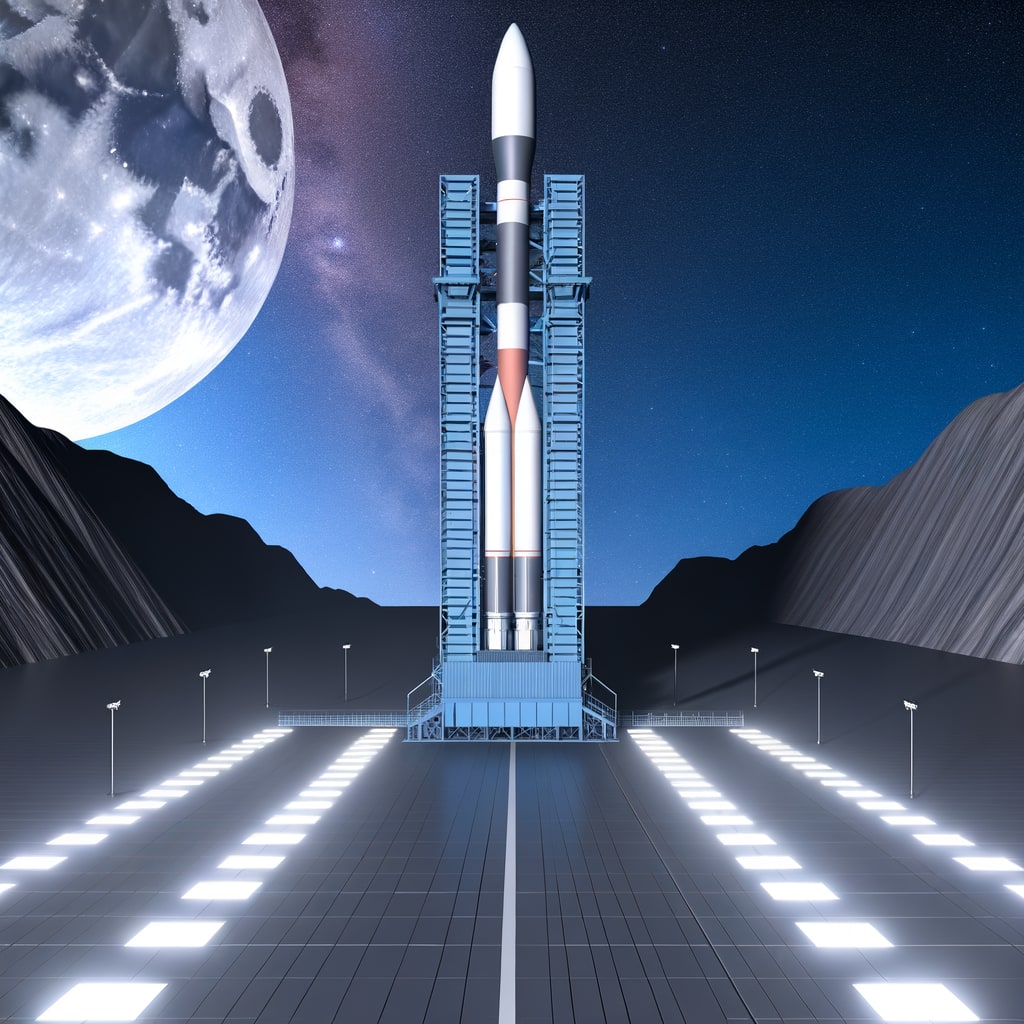
Artemis II: NASA's Historic Return to the Moon
NASA's Artemis II mission, the first crewed lunar mission in more than 50 years, successfully launched on Wednesday from Kennedy Space Center in Florida. The mission, which has been celebrated by President Donald Trump as a testament to American dominance in space, aims to send four astronauts on a 10-day journey around the Moon.
Background and Context
The Artemis program was established during President Donald Trump’s first term in 2017, with the objective to return American astronauts to the moon and eventually pave the way for missions to Mars. The Artemis II mission, which includes astronauts Reid Wiseman, Victor Glover, and Christina Koch from the U.S., and Jeremy Hansen from the Canadian Space Agency, marks the first crewed journey beyond low-Earth orbit since the final Apollo mission in 1972.
The Launch and Mission Details
The astronauts launched aboard NASA’s Orion spacecraft, the most powerful launch system rocket ever built by the space agency. The Artemis II crew will circle the moon and return to Earth in the Orion capsule, in a mission designed to test critical systems aboard the spacecraft, from navigation to life support. While the mission will not land on the lunar surface, it is expected to carry the four-person crew farther from Earth than any crewed mission since the Apollo era.
Implications and Reactions
This mission is seen as a crucial test for NASA's ambitious plans to establish a permanent human presence on the moon, and it also signifies a reassertion of American leadership in space. As NASA Administrator Jared Isaacman stated, This time, the goal is to stay.
The mission comes amid growing international competition in space, particularly with China. The U.S. is racing to establish a lunar base as a long-term foothold for deep space exploration.
The Artemis II mission has also received international recognition. French President Emmanuel Macron praised the mission, saying the Moon is once again a meeting point for humanity. On the other hand, the mission has drawn some contrast to the ongoing political tensions on Earth, with one U.S. senator noting it as a stark contrast to the U.S. war on Iran.
Conclusion
Despite the pressure from past failures and the significant challenges posed by the rapidly shifting space industry, NASA's Artemis II mission marks a historic step in humanity's return to the Moon. As the astronauts embarked on their journey, the world watched with anticipation and hope for a successful mission that could pave the way for future lunar landings and even potential missions to Mars.