
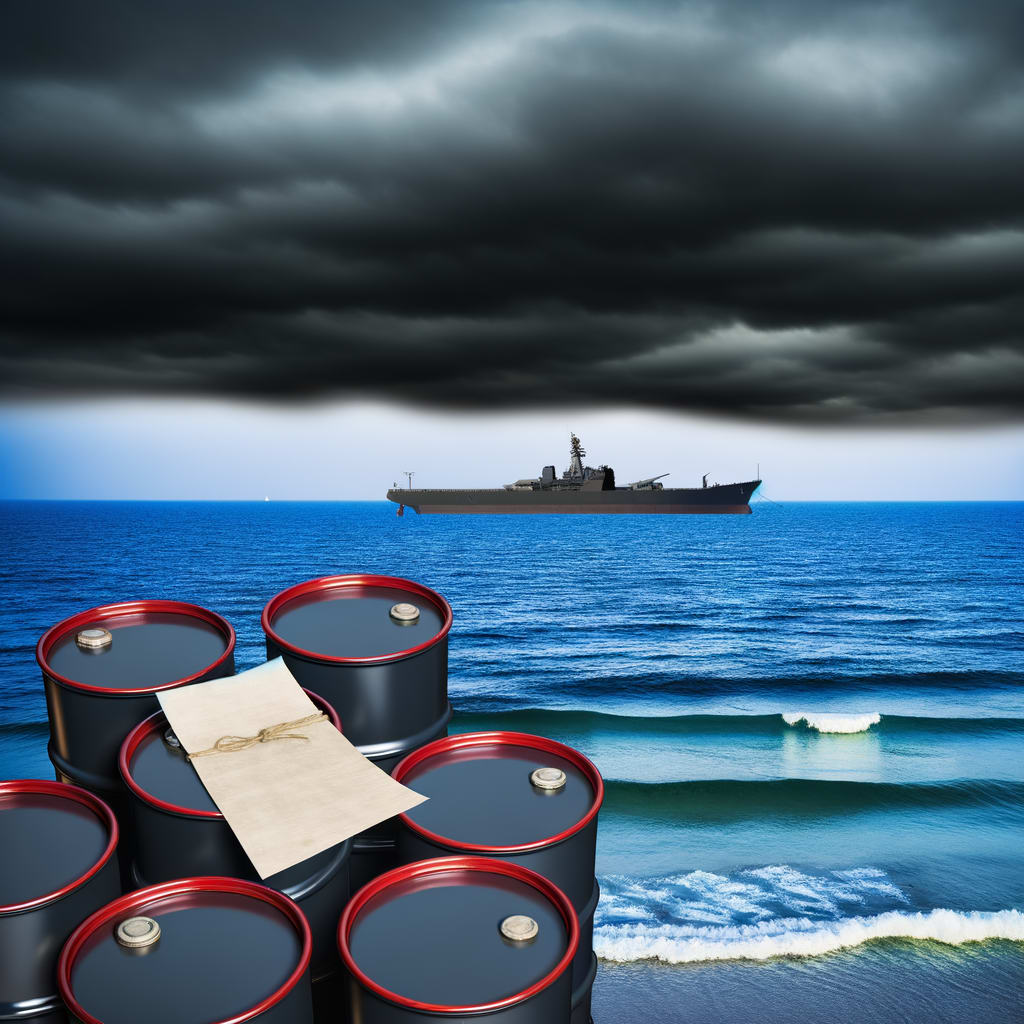
Escalating Tensions: U.S. Pressures Venezuela with Oil Sanctions and Military Presence
The U.S. has intensified its pressure campaign against Venezuelan leader Nicolás Maduro, with President Donald Trump ordering a naval blockade of sanctioned oil tankers and escalating military presence in the region. The measures have sparked international debates and fears of a potential war.
U.S. Actions and Accusations
President Trump announced a ban on the exportation of sanctioned oil from Venezuela, leading to the seizure of multiple tankers. Venezuela denounced these actions, calling them extortion
and piracy,
while the U.S. administration accused the Latin American country of stealing
U.S. energy assets. The U.S. has reportedly deployed additional forces to the Caribbean, a move believed to be aimed at increasing pressure on Venezuela.
The White House has ordered the U.S. military to focus on enforcing a quarantine
of Venezuelan oil for the next two months. This action, along with the continued seizure of oil tankers, has drawn criticism and accusations of violating maritime rules and customs.
This is the greatest extortion known in our history,Caracas' envoy to the UN, Samuel Moncada, said during a UN Security Council session.
International Reactions
The international community's response to the escalating situation has been divided. UN experts have criticized the U.S. blockade for endangering human rights and have called for an investigation into alleged violations. They urged the U.S. Congress to intervene to stop aggression against Venezuela, stating that the blockade of oil tankers violates fundamental rules of international law.
At the UN Security Council, Venezuela claimed overwhelming support, with the country's leader asserting that no one can defeat
the country. Amid these tensions, Russia and China expressed support for Venezuela, while critics compared the U.S. offensive to the Iraq war, highlighting a mix of regime-change rhetoric, security pretexts, and oil interests.
The military action of the United States near Venezuela and the recent announced naval blockade are a violation of the United Nations Charter,stated Sérgio Danese, Brazil's ambassador to the UN.
U.S. Domestic Responses and Predictions
Within the U.S., responses have also been mixed. Some Republican lawmakers expressed fears that a regime change in Venezuela, through escalating military pressure, could backfire, given the history of such actions in other countries.
However, national security expert Rebeccah Heinrichs predicted that the intensified pressure campaign would lead to Maduro's downfall, positing that the combination of the U.S. enforcement at sea and growing internal unrest in Venezuela are accelerating this outcome.
I don’t see at all how Maduro survives this. I think he’s going to be gone,Heinrichs said onFox & Friends.
Current Status and Future Implications
The current situation remains tense, with the U.S. maintaining its naval blockade and intensifying pressure on Maduro's regime. The implications of these actions on the global stage, and their potential effects on the stability of the region, continue to be subjects of international concern.