
US Supreme Court Strikes Down Trump's Global Tariffs, Trump Announces New 10% Tariff
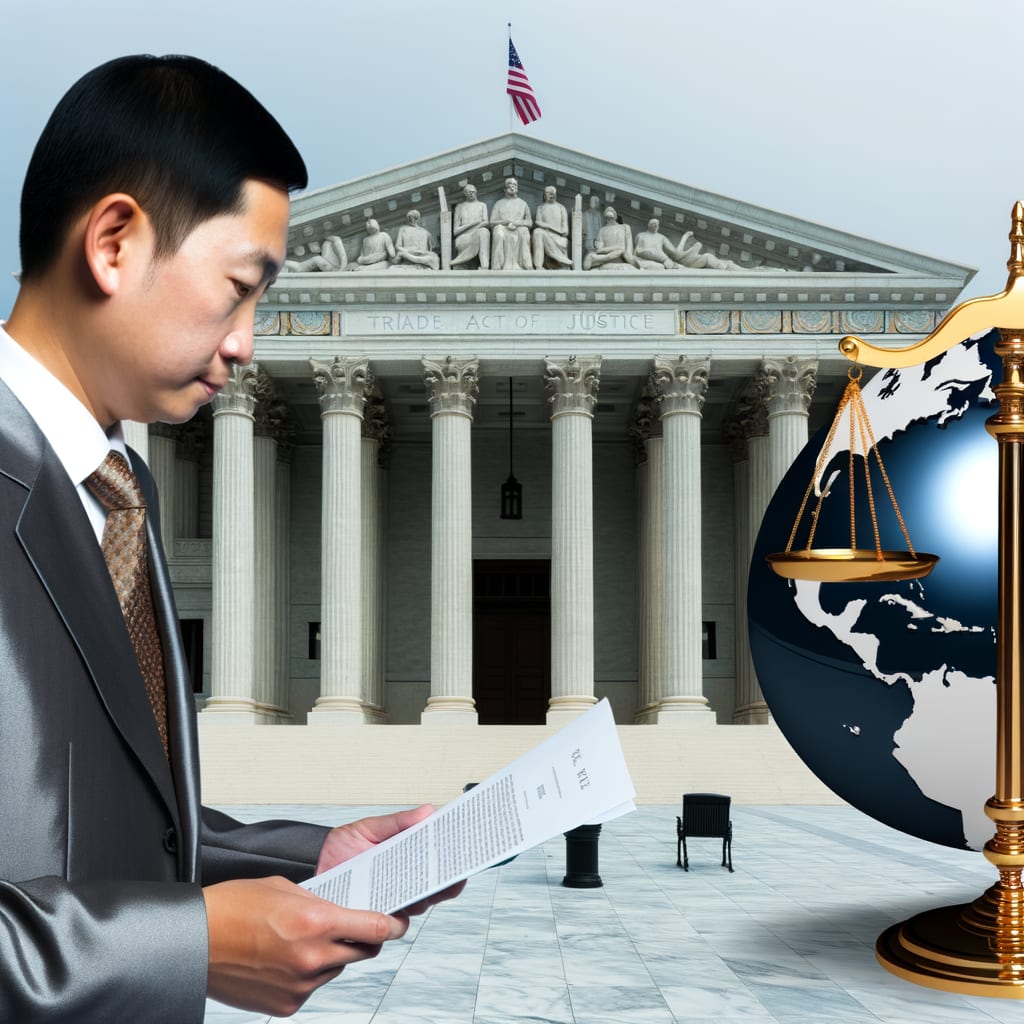
In a landmark decision that has sparked worldwide reactions, the US Supreme Court has ruled that President Donald Trump's global tariffs, enacted under the International Emergency Economic Powers Act (IEEPA), were unconstitutional. However, in response to the court's decision, Trump has announced a new 10% global tariff under the Trade Act of 1974.
Background and Context
The Supreme Court's 6-3 decision came as a surprise to many, given that the bench is dominated by conservative judges aligned to Trump's Republican Party. The ruling stated that the president exceeded his authority when imposing import taxes on almost every country in the world, and that the power to impose tariffs and taxes lies with Congress, not the president.
Citing the Constitution, Chief Justice John Roberts wrote, framers gave [tariff] power to Congress alone, notwithstanding the obvious foreign affairs implications of tariffs.
Key Developments
Following the court's decision, President Trump announced a new 10% global tariff using the Trade Act of 1974. The Supreme Court did not overrule tariffs, they merely overruled a particular use of IEEPA tariffs,
Trump told reporters. Now I'm going to go in a different direction, probably the direction that I should have gone the first time.
In response to the initial ruling and subsequent tariff announcement, international reactions have varied. The UK government, for instance, is working closely with the US to understand the implications, while expecting its privileged trading position with the US to continue. The EU is actively seeking clarity on the Trump administration's next steps.
Implications and Reactions
The court's decision has stirred significant reactions across business groups and foreign governments. Some analysts predict another bout of activity-crimping confusion, coupled with the near-certainty that Trump will seek other means to replace the global tariffs now struck down.
On the other hand, many small businesses celebrated the ruling as it brought relief to those who were heavily taxed. However, it's uncertain whether consumers will see immediate effects as companies may decide to temper price increases, but the effect would take time to materialize.
Conclusion
The Supreme Court's decision and President Trump's subsequent announcement of a new global tariff have injected new uncertainty into global trade. Despite the initial relief from the court's decision, the global economy awaits the implications of the new tariff regime. The situation remains fluid, with countries and businesses worldwide assessing the potential impacts on their trade relationships with the US.