
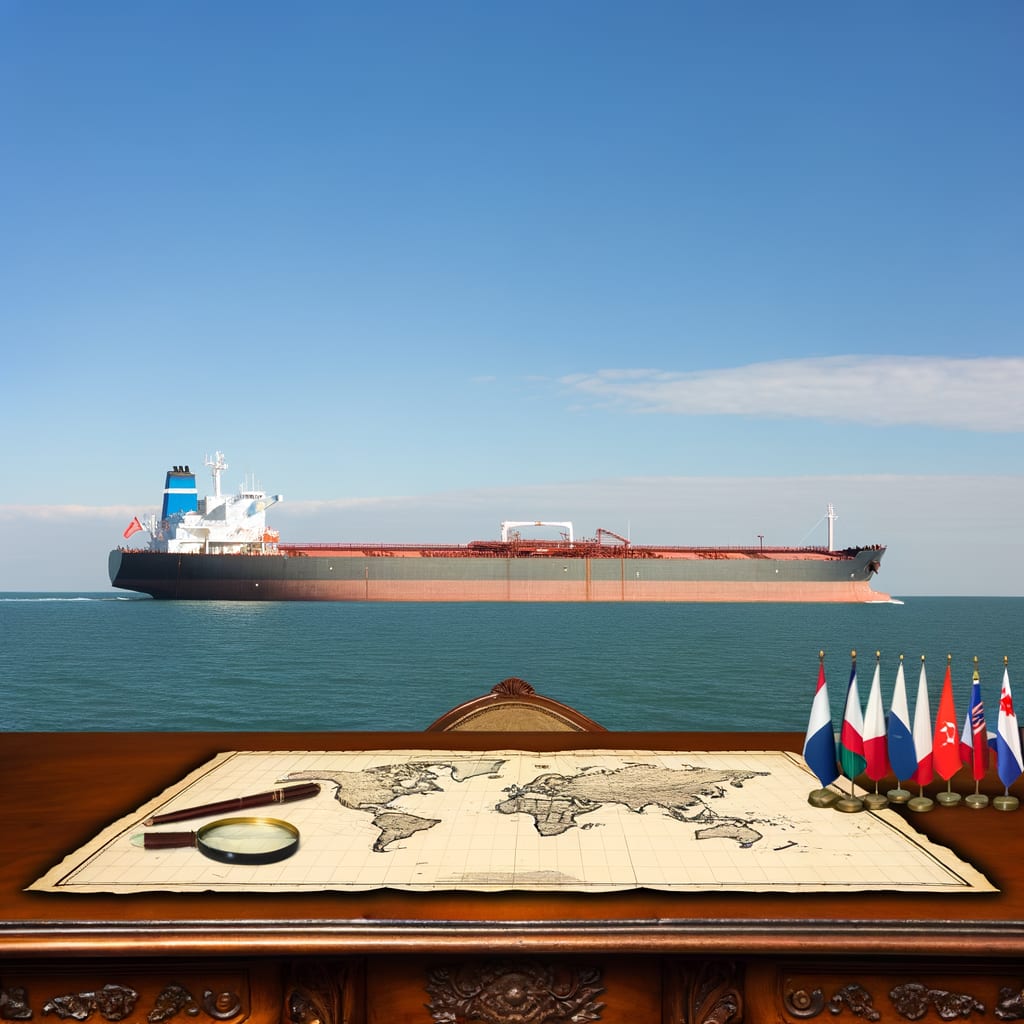
Tensions Rise Over Strait of Hormuz Amid Oil Transit Disputes
Amid rising tensions, Saudi Arabia is operating its East-West pipeline to bypass the contentious Strait of Hormuz at full capacity, while the United States stands poised to counter any attempts by Iran to charge toll fees for ships traversing the strategic waterway. The escalating situation is drawing international attention, with the potential to significantly impact global energy supply and security.
Background and Context
The Strait of Hormuz is a key global chokepoint for oil transit, with a significant portion of the world's oil supply passing through it. Tensions have been rising in this strategic waterway, due to Iran's plan to impose tolls on ships passing through. This move, approved by the Iranian parliament committee, targets ships associated with the U.S., Israel, and countries that have imposed unilateral sanctions on Iran.
Meanwhile, Saudi Arabia's East-West pipeline, which bypasses the Strait of Hormuz, is operating at full capacity, exporting about 5 million barrels per day from Yanbu on the Red Sea, with an additional 700,000 to 900,000 barrels of refined products shipped daily.
Key Developments
President Donald Trump has stated that the U.S. could quickly shut down any Iranian attempt to charge toll fees for ships passing through the Strait of Hormuz. Trump's assertion came amid reports of Iran's plan to let 20 oil tankers through the Strait of Hormuz. He warned that the U.S. would act decisively if Iran pursued such a move.
Secretary of State Marco Rubio also clearly stated that the U.S. will not accept Iran’s claim over the Strait of Hormuz and that the strait will reopen 'one way or another'. Iranian Foreign Minister, Araghchi, countered these statements, saying that preventing the passage of vessels belonging to or associated with “the enemy and its allies” is a legal right of Iran as a coastal state.
Reactions and Implications
The escalating situation has drawn international attention and concern. Ursula von der Leyen, the European Commission president, called for the U.S. and Iran to negotiate and immediately end the de facto closure of the strait of Hormuz, warning that the situation was critical for the global energy supply. She further condemned Iran’s efforts to block the strategic waterway via attacks on unarmed commercial vessels and critical infrastructure.
The situation in the Gulf has left regional allies apprehensive, with Riyadh and Abu Dhabi wary of a truce that might strengthen Tehran, while Oman, Qatar, and Kuwait are advocating for peace.
Conclusion
The situation remains tense as the conflicting interests of the U.S., Iran, and other regional players continue to clash in the Strait of Hormuz. The global community watches closely as the situation unfolds, underscoring the strategic importance of this waterway in global energy supply and security.