
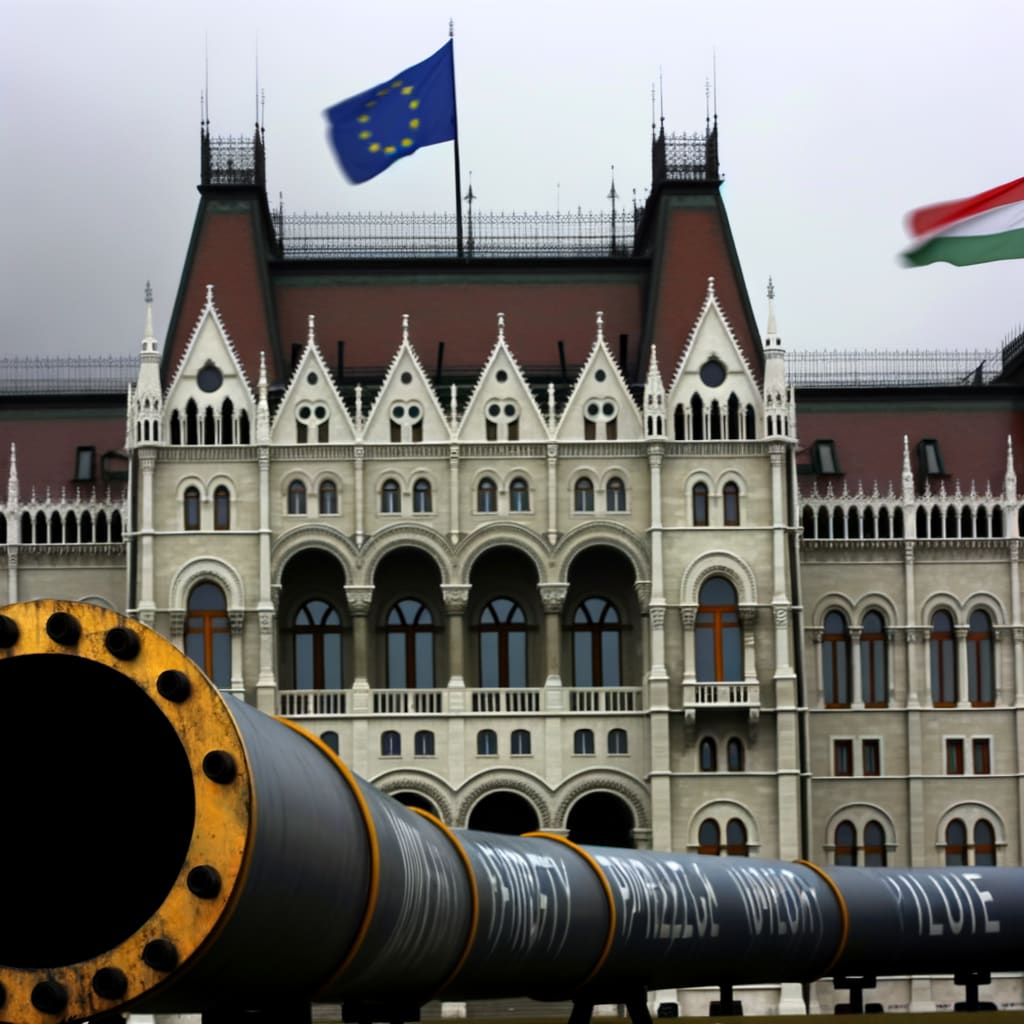
Hungary Blocks Additional EU Sanctions on Russia and Aid to Ukraine over Oil Dispute
Hungary has obstructed the European Union's (EU) efforts to pass a 20th package of sanctions against Russia and a €90 billion ($106 billion) loan to Ukraine. The veto comes amid a dispute over halted oil supplies through the Druzhba pipeline from Russia to Hungary and Slovakia, which has been out of operation since late January.
The Background and Context
The Druzhba pipeline is a key route for Russian oil deliveries to parts of Central Europe, including Hungary and Slovakia. Ukraine claims that the pipeline's operation was disrupted due to a Russian attack on the infrastructure in January, while Russia has denied these allegations. Hungary has sided with Russia, accusing Ukraine of deliberately withholding oil supplies for political reasons.
Hungarian Foreign Minister Peter Szijjarto stated, We are blocking the €90 billion EU loan for Ukraine until oil transit to Hungary via the Druzhba pipeline resumes
. He further claimed that Ukraine, in coordination with Brussels and the Hungarian opposition,
is blackmailing Hungary by halting oil transit to create supply disruptions in Hungary and push fuel prices higher before the elections.
Key Developments
EU foreign policy chief, Kaja Kallas, confirmed that the sanctions package is being blocked by Hungary and Slovakia. Kallas expressed disappointment at the situation, stating, This is a setback and a message we didn't want to send today
. EU foreign ministers failed to reach an agreement on the new sanctions package against Russia during a recent meeting of the Council of the European Union.
Hungarian Prime Minister Viktor Orban accused Ukraine of blatant political blackmail
by blocking the delivery of Russian oil. Orban suggested that Ukraine could resume supplies but is choosing not to to pressure us to support their EU membership and hand over funds belonging to Hungarian families
.
Implications and Reactions
The French President, Emmanuel Macron, called on the European Union to adopt the 20th package of sanctions, which is being blocked by Hungary. We will continue to increase the pressure on Russia,
he said alongside his Finnish counterpart, Alexander Stubb.
Germany's foreign minister, Johann Wadephul, said he was astonished
by the Hungarian position on sanctions and hoped to discuss this during the meeting of EU foreign ministers. Estonia's Foreign Minister, Margus Tsahkna, was more blunt, stating that the failure to adopt the new sanctions would only benefit Russia.
Current Status
As the EU's efforts to implement new sanctions against Russia and provide financial aid to Ukraine remain in limbo, tensions continue to rise among the member states. The dispute over the Druzhba pipeline and its implications for EU's foreign policy decisions will be a pivotal issue to watch in the days to come.