
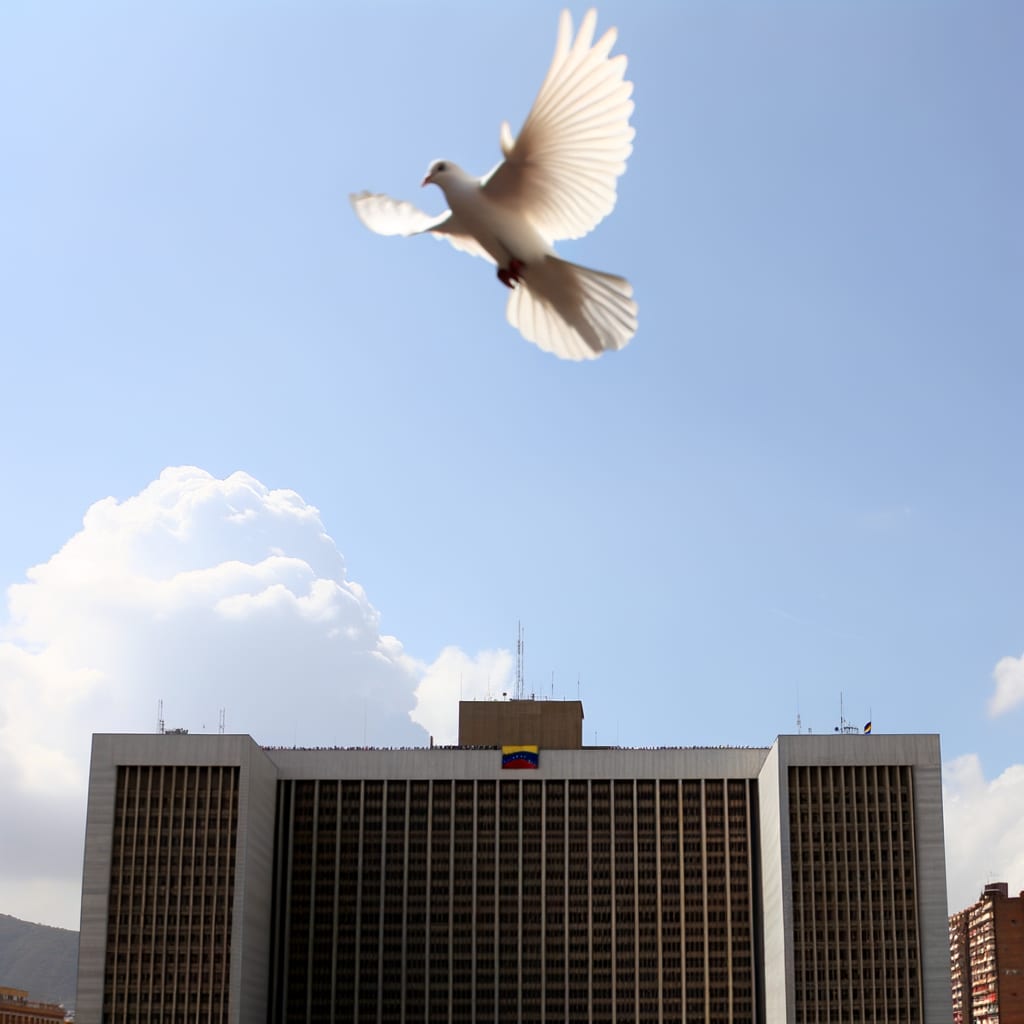
Venezuela Commences Political Prisoner Release amid Tensions
In a significant development, the interim government of Venezuela, led by acting President Delcy Rodríguez, has started the process of releasing political prisoners. This move marks the first known release of detainees since the capture of former President Nicolás Maduro by the U.S. forces. The released include several journalists and at least four U.S. citizens. However, the exact number of released prisoners remains uncertain, with independent sources offering varying figures.
Background and Context
The release of political prisoners comes in the wake of tumultuous events in Venezuela. Former President Nicolás Maduro was captured by the U.S. in early January and is currently facing federal drug trafficking charges in New York. His former vice, Delcy Rodríguez, has since assumed the role of interim president and has committed to continue the release process of detainees.
According to María Claudia López, spokesperson for Machado in Italy, Venezuela is in dire need of a transition, citing the eight million exiles waiting to return to their homeland.
Key Developments
Reports suggest the number of released prisoners varies. Clarin asserts that the Chavista regime claims over 400 releases, while Foro Penal estimates the number to be 66 out of a total of 800 detainees. ANSA reports the release of 11 journalists, with 24 others still incarcerated.
Among the released is American James Luckey-Lange, 28, who had been missing since December. The U.S. State Department refrained from confirming the identities or the number of the released U.S. citizens but acknowledged the move as an important step in the right direction
.
Rodríguez, in her first press briefing as acting leader, emphasized that the process of releasing detainees has not yet concluded
. She further conveyed her vision of a Venezuela that opens itself to a new political moment, that allows for political and ideological diversity
.
Reactions and Implications
The release of prisoners has received mixed reactions. Monsignor Polito Rodríguez, Archbishop of Barquisimeto, has lauded the releases but asserts that there are still many others
.
The move is seen as an attempt to seek peace
as per Jorge Rodríguez, head of the National Assembly and brother of the acting president. This gesture is also viewed as a crucial step in Venezuela's political transition.
Meanwhile, the U.S. has shown interest in Venezuela's oil resources. Acting President Rodríguez has defended plans to open up Venezuela's oil market to Washington, even as critics label it as modern-day colonialism.
Current Status
As Venezuela grapples with its political transition, the future of the detainees still in prison hangs in balance. While the release of prisoners is seen as a positive development, the task of rebuilding Venezuela's fractured socio-political landscape remains daunting.
The country's future also hinges on its military's allegiance, which has shown incentives to strike a deal. As the political saga unfolds, the world watches with bated breath.