
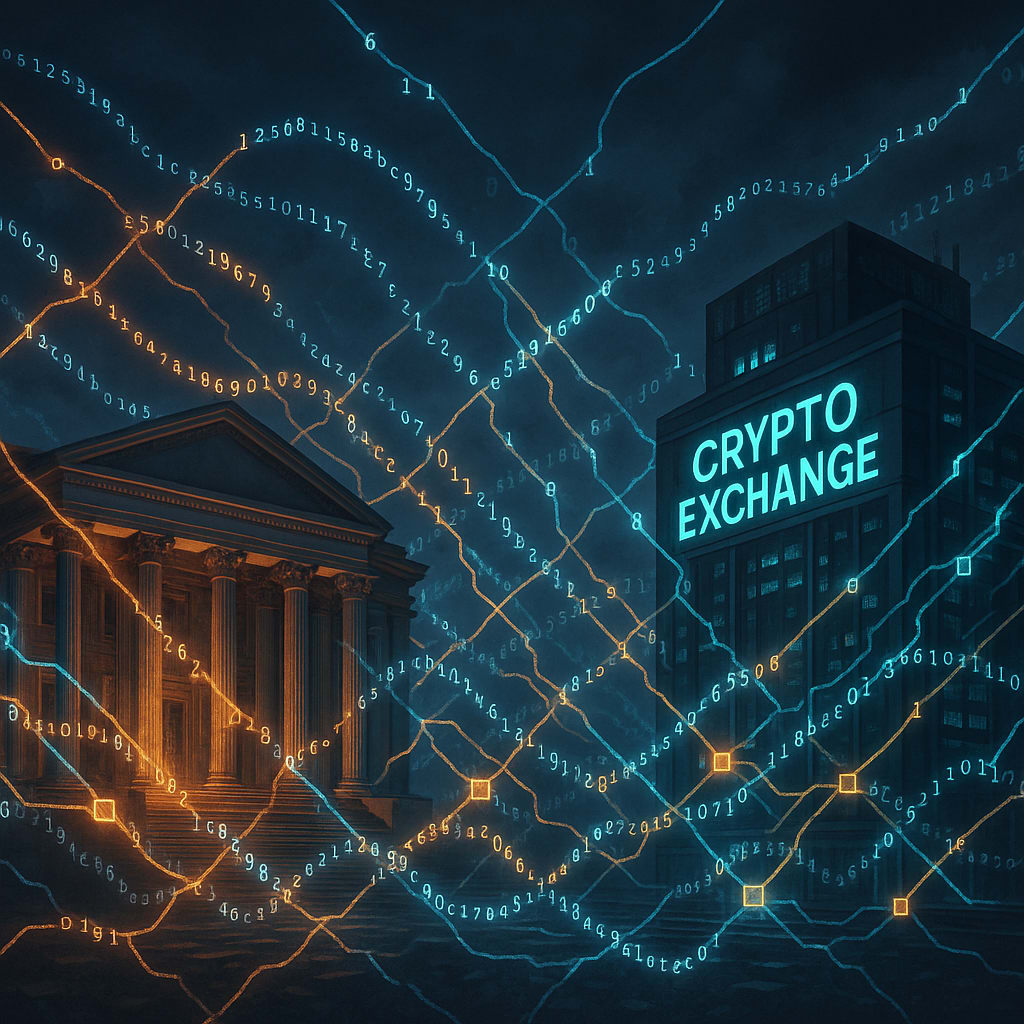
Trump's Crypto Ventures and Political Tensions: A Complicated Web
The international political and financial landscape continues to be shaped by a complex mix of emerging technologies, shifting alliances, and economic strategies. A recent example is the interconnected web of the Trump family's cryptocurrency ventures, Iran's crypto exchange, and the brewing political tensions between the US and Iran.
Background and Context
Details have emerged about Iran's crypto exchange processing at least $2.3 billion on the same two blockchains utilized by the Trump family for their World Liberty Financial. According to The Times of Israel, both entities are using the same industry networks for their growing crypto empires. The Trump family's involvement in cryptocurrency is further evidenced by the U.S. president's purchase of at least $1 million each in companies including Nvidia, Oracle, Microsoft, Boeing, and Costco Wholesale, as reported by Japan Times.
Key Developments
However, the overlapping financial networks between the Trumps and Iran's crypto exchange are not the only point of convergence. Fox News reports that the Trump administration has partnered with major private-sector companies, including Mark Cuban Cost Plus Drugs, for a new initiative aimed at lowering the cost of 600 generic prescription drugs. This partnership with Trump and Cuban marks a shift in their relationship, given their history of political attacks.
Simultaneously, tensions between the U.S. and Iran continue to escalate, centering around a 14-point proposal for peace put forth by Iran. The Hindu reported that Iran's chief negotiator has stated that the U.S. must accept this proposal or face 'failure'. Trump, on the other hand, has delivered an ultimatum to Iran, insisting that they must accept the accord or 'disappear', as reported by TASS and ANSA.
Implications and Reactions
The interplay between these financial and political interests highlights the potentially conflicting positions that the Trumps' sprawling business interests could place the U.S. presidency in. The overlap of networks between the Trumps' crypto ventures and Iran's top exchange, which is performing sanctioned transactions, further complicates the situation.
Moreover, the US President's stance on Iran has drawn mixed reactions. While some see his approach as a necessary show of strength, others question whether this strategy is rational or reckless. The Times of Israel points out that this is a volatile and uncertain moment in U.S.–Iran–Israel relations.
Current Status and Conclusion
The situation remains fluid, with the U.S. and Iran testing fragile diplomatic channels. However, the ceasefire between the two countries is precarious, with both sides expressing skepticism and readiness for potential combat operations. As RT (Russia Today) reports, the White House continues to push the narrative about an active negotiation process with Iran, which is supposedly yielding results.
In conclusion, the interplay of political tensions, financial interests, and emerging technologies, as demonstrated by the Trump family's crypto ventures and the political situation with Iran, underscores the complexity of the current international landscape.