
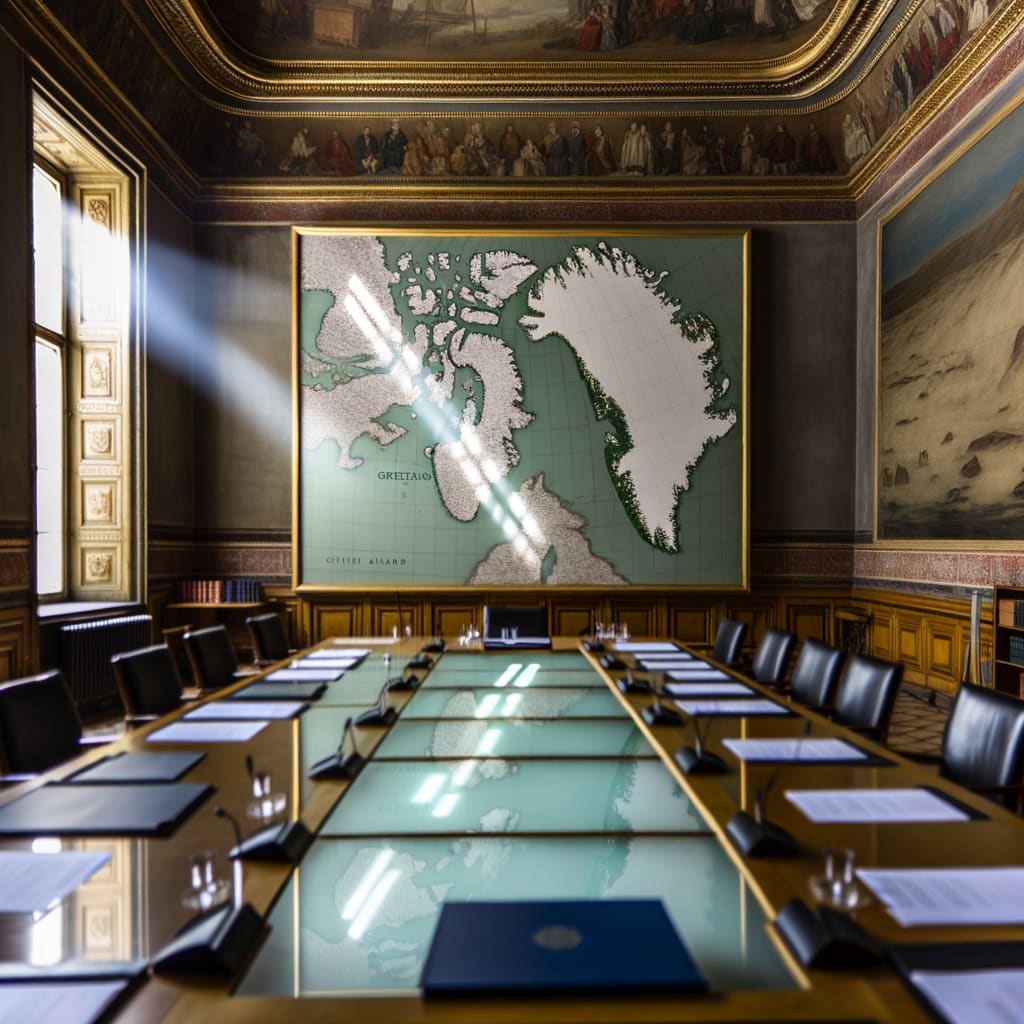
EU-US Relations Strained Over Greenland, Trade War Looms
In a dramatic development, US President Donald Trump's push to acquire Greenland has strained the transatlantic relationship, leading to an emergency summit by European Union (EU) leaders and a potential trade war.
A Shift in the Transatlantic Relationship
Tensions have escalated following Trump's demand for Greenland, an autonomous territory of EU member Denmark, to come under US control, citing its mineral wealth and strategic Arctic position. This move has led some European leaders to question whether the US, a long-standing ally, has turned into an adversary.
Christine Lagarde, President of the European Central Bank, set the tone for a recent EU summit, calling for a deep analysis of the transatlantic relationship between Brussels and Washington.
Trade War Threats
President Trump threatened to impose tariffs on European countries just six months after signing a trade deal. These threats came in retaliation against European countries that sent troops to Greenland in support of its sovereignty.
The EU is contemplating retaliatory measures, potentially up to $108 billion worth of tariffs or restrictions on American companies from the bloc's market. European leaders are seeking leverage in the ongoing talks with Trump.
Blowback and Reactions
European industry leaders have criticized Trump's ludicrous demands,
calling for a smart
response coordinated by Brussels. The French President Emmanuel Macron warned Europe to respond to US threats or passively accept … vassalisation and bloc politics.
Iran's foreign minister commented on the situation, saying that Europe is experiencing blowback
similar to Iran's nuclear deal.
On the other hand, some European leaders have expressed support for Denmark and Greenland, denouncing Trump's tariffs and threats, with the Belgian Prime Minister stating that the continent needs to say no to Trump's offensive or face a future of servitude.
Legal Challenges and Future Implications
Trump's use of an emergency wartime law to impose sweeping tariffs is being challenged in the Supreme Court, with plaintiffs arguing that it violates the major questions doctrine,
which limits the power of executive agencies on actions of vast economic and political significance.
As transatlantic ties continue to fray, some analysts suggest that by rejecting closer ties with Russia and China, EU nations risk limiting their strategic options and leaving themselves vulnerable in the global arena.
Conclusion
The situation remains tense, with EU leaders meeting in Brussels to discuss their response to Trump's threats. The outcome of this dispute could redefine the relationship between the US and its European allies, potentially leading to a significant shift in global alliances and trade relations.