
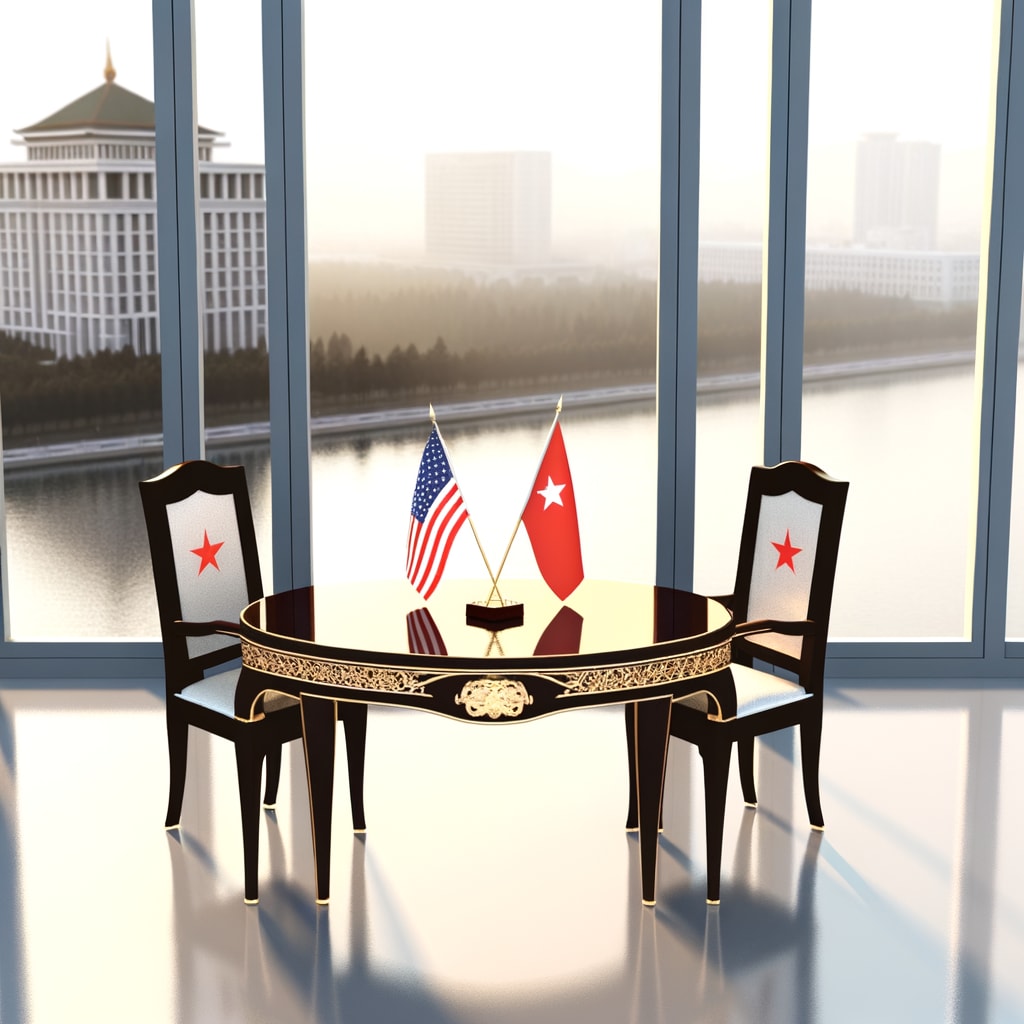
Trump Delays Beijing Summit Amid Iran Conflict, Stirring International Uncertainty
U.S. President Donald Trump has postponed his planned summit with Chinese President Xi Jinping, originally scheduled for March 31 to April 2, due to the ongoing U.S.-Israel war against Iran. The delay, expected to last five or six weeks,
has disrupted Trump's foreign policy agenda and introduced further tension to the already strained U.S.-China relationship.
The Backdrop to the Delay
The postponement comes amid an escalating conflict with Iran, which has seen Iran block the strategically important Strait of Hormuz in retaliation for U.S. and Israeli attacks. This move has prompted Trump to petition nations heavily reliant on Gulf oil to assist in reopening the waterway. The war has also led to a shift in the U.S. foreign policy agenda, with Trump indicating the need to remain in Washington D.C. to coordinate the conflict.
Reactions to the Postponement
While the Chinese embassy in Washington has not confirmed Trump's timeline, it has stated that China and the U.S. remain in communication
regarding Trump's trip. However, the delay has raised questions in Beijing about whether Trump will ever sit at the negotiating table, while simultaneously generating concerns over potential impacts on U.S. arms sales to Taiwan.
The delay has also stirred uncertainty among investors who had been looking towards the Xi-Trump summit for reassurance on growth and stability in the face of Middle East conflict. As stated in the South China Morning Post, the possibility of a meeting between the two leaders has become a key focus for investors seeking some clarity amid diminished appetite for risk.
Implications of the Delay
The postponement could potentially amplify tensions between Washington and Beijing, particularly if it becomes linked with the Hormuz issue. However, some believe that the delay may ultimately prove more beneficial for Beijing than for Washington.
The delay could also affect a reported record U.S. arms sales package to Taiwan, with a $14 billion arms package – possibly the largest ever for Taiwan – ready for the American president’s approval.
Current Status
As the conflict with Iran continues, the question of whether and when Trump will reschedule his visit to Beijing remains open. The U.S. intelligence community has asserted that China does not currently plan to attack Taiwan in 2027 and seeks to control the island without the use of force.
While the international community watches the unfolding situation in the Middle East, it also keeps a close eye on the U.S. political landscape. The Iran war, along with the postponed summit, could potentially impact the U.S. midterms and Beijing's strategy when Trump eventually meets with Xi.