
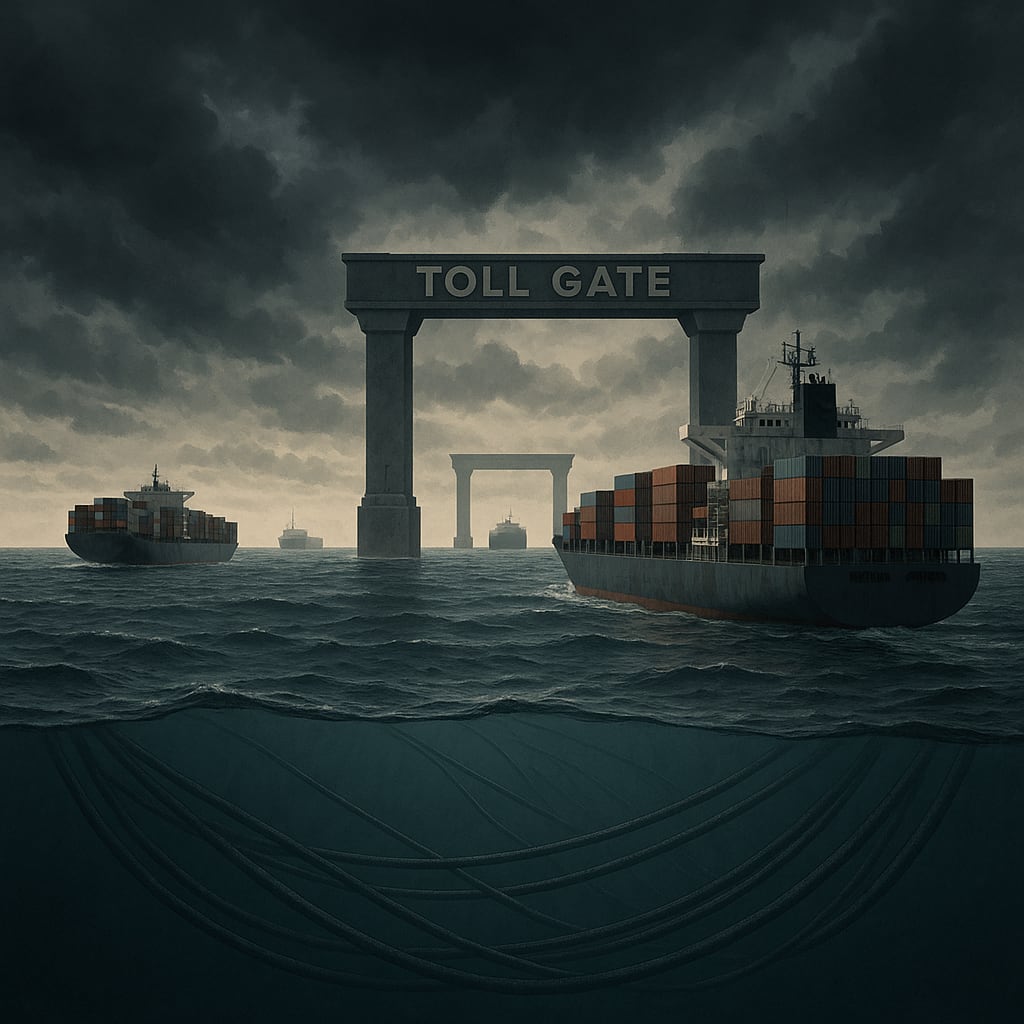
Iran Tightens Control Over Strait of Hormuz Amid Rising Tensions
In a move that has heightened regional tensions, Iran has announced plans to introduce tolls for shipping through the strategically significant Strait of Hormuz. The decision comes amidst rising military activity across the Gulf region and a warning from U.S. President Donald Trump that Tehran faces a “very bad time” if a peace deal is not reached soon. Iran's actions have sparked widespread international concern and have led to calls for a diplomatic resolution to the ongoing crisis.
Background and Context
The Strait of Hormuz, a narrow waterway between Iran and Oman, is one of the world's most vital shipping routes. It is crucial for the global transport of oil and gas, and its closure or restriction can significantly impact global energy supplies. Iran has largely blocked shipping through the strait since the outbreak of conflict with the United States and Israel on February 28.
In response to the escalating crisis, Iran has formed a new body, the Persian Gulf Strait Authority (PGSA), to manage the Strait of Hormuz. Iran's Supreme National Security Council has stated that the new authority will provide real-time updates on operations and developments in the Strait. However, Iran has warned that any vessels passing through the Strait without approval will face consequences, escalating its control over the waterway.
Key Developments
The introduction of tolls in the Strait of Hormuz is just one aspect of Iran's efforts to assert control over the region. CNN reports that Iran is also seeking to expand its regional influence by focusing on submarine internet cables that carry communications and financial data between Europe, Asia, and Gulf countries. Iranian authorities have stated that major technology companies, including Google, Microsoft, Meta, and Amazon, would be required to pay for submarine cables passing through the region and comply with Iranian laws.
Meanwhile, the United Arab Emirates (UAE) is fast-tracking a major west-east oil pipeline expansion aimed at bypassing the Strait of Hormuz. The pipeline project, expected to become operational in 2027, is seen as a strategic move by the UAE to ensure the continuity of its oil exports amid the escalating regional tensions.
International Reactions and Implications
The international community has reacted strongly to Iran's escalating control over the Strait of Hormuz. A draft resolution focused on protecting navigation through the Strait has gained the support of 112 member states at the United Nations. The resolution calls for freedom of navigation through the strategic waterway and seeks to safeguard international shipping, commercial trade, and global energy supplies.
The United States and the United Kingdom have also discussed reopening the Strait of Hormuz. Talks between US Secretary of State Marco Rubio and British Foreign Secretary Yvette Cooper focused on safeguarding commercial shipping through the strait after the end of the conflict.
However, the ongoing tensions have also led to rising oil prices and the potential for further disruption to global energy supplies. The US Energy Information Administration has warned of a significant price increase if the Strait remains shut through late June.
Current Status
As the situation continues to evolve, the international community is closely watching Iran's actions in the Strait of Hormuz and the wider Gulf region. Despite the rising tensions, there remains a strong emphasis on finding a diplomatic resolution to the crisis. The ultimate outcome, however, hinges on the ability of all parties involved to reach a mutually acceptable agreement in the face of escalating regional tensions.