
Rome’s rival marches put ‘remigration’ citizens’ bill on Italy’s parliamentary agenda
Narrative Snapshot
- Across outlets there is convergence that Rome saw two large, tightly policed mobilizations and that a “remigration” citizens’ bill has cleared the signature threshold to reach parliament (DW; RT; Al Jazeera; ANSA; La Repubblica).
- Coverage splits on emphasis: Italian and Israeli outlets foreground fascist symbols at the pro-“remigration” march and the antifascist framing of the counter-protest (La Repubblica; Times of Israel), while DW and RT stress the procedural and policy dimensions of the citizens’ initiative and its timing (DW; RT).
- Counter-protest identity is framed differently: Italian and Al Jazeera reports stress antifascist/antiracist organizing (ANSA; La Repubblica; Al Jazeera), whereas Times of Israel highlights Palestinian flags and migrant-rights messaging (Times of Israel).
- What is most at stake in the reporting is not crowd size but whether a fringe policy agenda moves into formal deliberation, and how far-right actors position themselves around it, including visible intra-right distinctions (ANSA).
What Happened
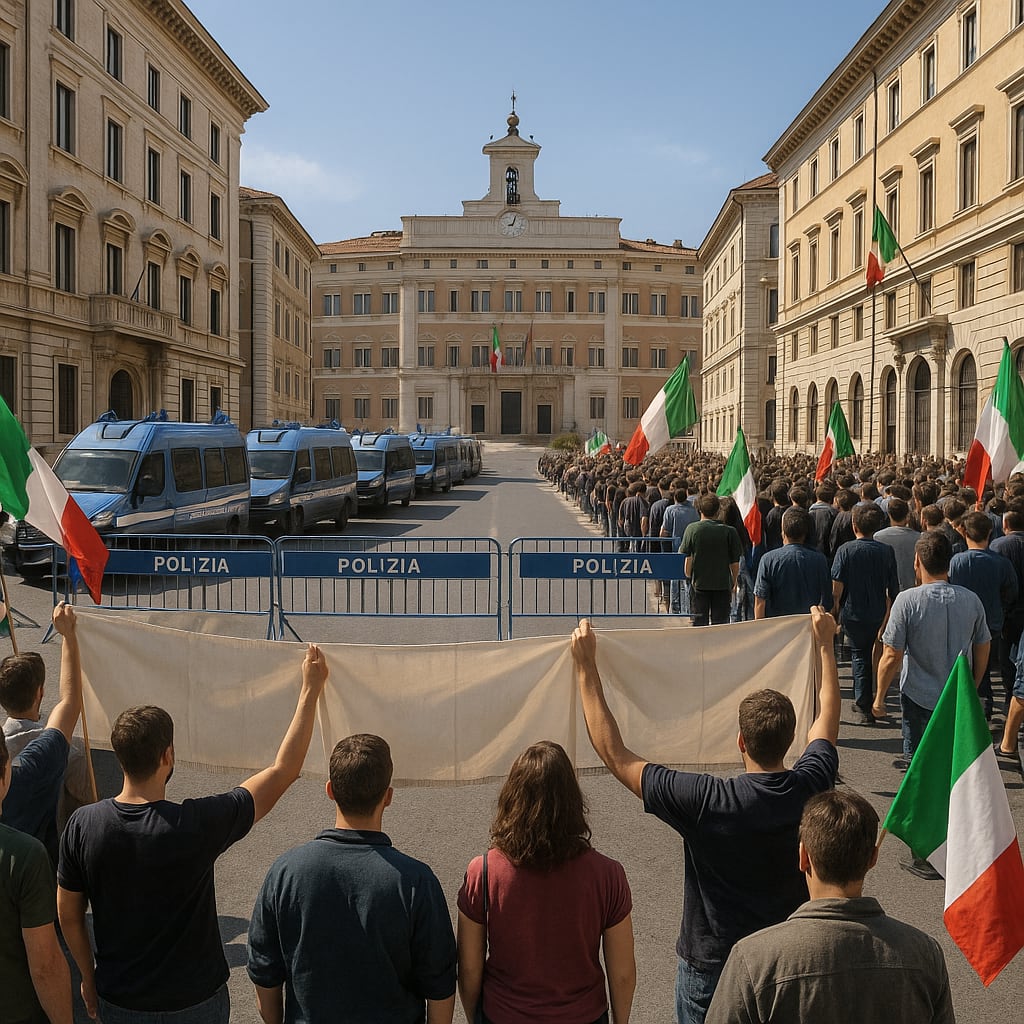
On June 13, Rome hosted rival demonstrations: a march by the Remigration and Reconquest Committee advocating an anti‑migration “remigration” agenda, and a larger anti‑racist/antifascist counter‑protest kept apart by a heavy police deployment (ANSA; La Repubblica; Al Jazeera). Italian and Israeli outlets reported fascist salutes and chants praising Mussolini within the pro‑“remigration” crowd (La Repubblica; Times of Israel). Times of Israel also noted Palestinian flags among counter‑protesters (Times of Israel). La Repubblica reported a separate CasaPound‑promoted event nearby the main mobilizations (La Repubblica), while ANSA quoted far‑right figure Luca Marsella at a Prati gathering distancing his camp from retired General Roberto Vannacci (“We do not identify with Vannacci”) (ANSA). Deutsche Welle reported that a proposed bill seeking measures against migrants has secured sufficient signatures to be brought before parliament; RT put the petition total above 130,000, surpassing Italy’s 50,000‑signature threshold for citizens’ initiatives (DW; RT).
Why It Matters
The marches coincide with a procedural inflection point: a citizens’ bill linked to the “remigration” platform now qualifies for parliamentary introduction, potentially compelling committees and parties to take positions on proposals to incentivize foreign residents’ departure and prioritize return migration of Italian descendants (DW; RT). That places Italy’s domestic debate alongside evolving European migration governance; RT explicitly ties the mobilization to the EU Migration Pact’s entry into force (RT). The contest also reflects a normative struggle over acceptable rhetoric and policy framing in a post‑fascist context, highlighted by Italian commentary that characterizes “remigration” as seeking to render “the unsayable sayable” and likens it to “theorists of deportation” (La Repubblica, 12 Jun). Internationally, a Brazilian editorial situates such currents within a broader drift toward authoritarian, exclusionary politics amid socioeconomic insecurity, underscoring the transnational resonance policymakers must account for (Folha de S.Paulo).
Diverging Narratives
- Characterization of the pro‑“remigration” march: La Repubblica and Times of Israel emphasize fascist salutes and chants for Mussolini (La Repubblica; Times of Israel). RT presents the event as backing a citizens’ initiative for stricter controls, detailing incentives for foreigners to leave and return migration for Italian descendants, without reference to extremist symbols (RT).
- Scale and security: DW reports “tens of thousands” across rival protests, while others refer to “thousands,” with Al Jazeera and La Repubblica stressing the deployment of a large police force to keep groups apart (DW; Al Jazeera; La Repubblica).
- Triggers and context: DW and RT link the rallies to the citizens’ bill clearing the signature bar (DW; RT). RT additionally connects timing to the EU Migration Pact taking effect (RT), a linkage not foregrounded elsewhere.
- Political alignments: ANSA highlights intra‑right positioning, quoting Luca Marsella’s rejection of identification with Roberto Vannacci at a Prati gathering (ANSA). Separately, La Repubblica notes a CasaPound‑promoted event near the main mobilizations, indicating multiple far‑right nodes active the same day (La Repubblica).
- Counter‑protest framing: Italian outlets and Al Jazeera frame it as antifascist/antiracist (ANSA; La Repubblica; Al Jazeera), while Times of Israel underscores migrant‑rights themes and the presence of Palestinian flags (Times of Israel).
What Happens Next
- Parliamentary handling of the citizens’ bill: With sufficient signatures, the initiative can be introduced. Watch for docketing, committee referral, and whether any parliamentary groups sponsor or seek to amend or shelve it (DW; RT). Signals: formal submission date, committee assignments, and floor scheduling.
- Party positioning and intra‑right dynamics: Public statements from governing and opposition parties will indicate whether “remigration” remains a fringe agenda or enters mainstream debate. ANSA’s reporting of Marsella distancing from Vannacci suggests factional calibration to monitor (ANSA). Signals: leadership statements, legislative questions, and coalition discipline.
- Policing and protest management: Al Jazeera and La Repubblica note a substantial security operation to separate rallies (Al Jazeera; La Repubblica). Signals: future protest permits, restrictions, and incident reports tied to parliamentary milestones.
- EU‑Italy interface: RT links the mobilization to the EU Migration Pact’s effect (RT). Analysts should track how Italy’s implementation choices interact with proposals in the citizens’ bill. Signals: government decrees on pact implementation and legal assessments of compatibility with EU obligations.