
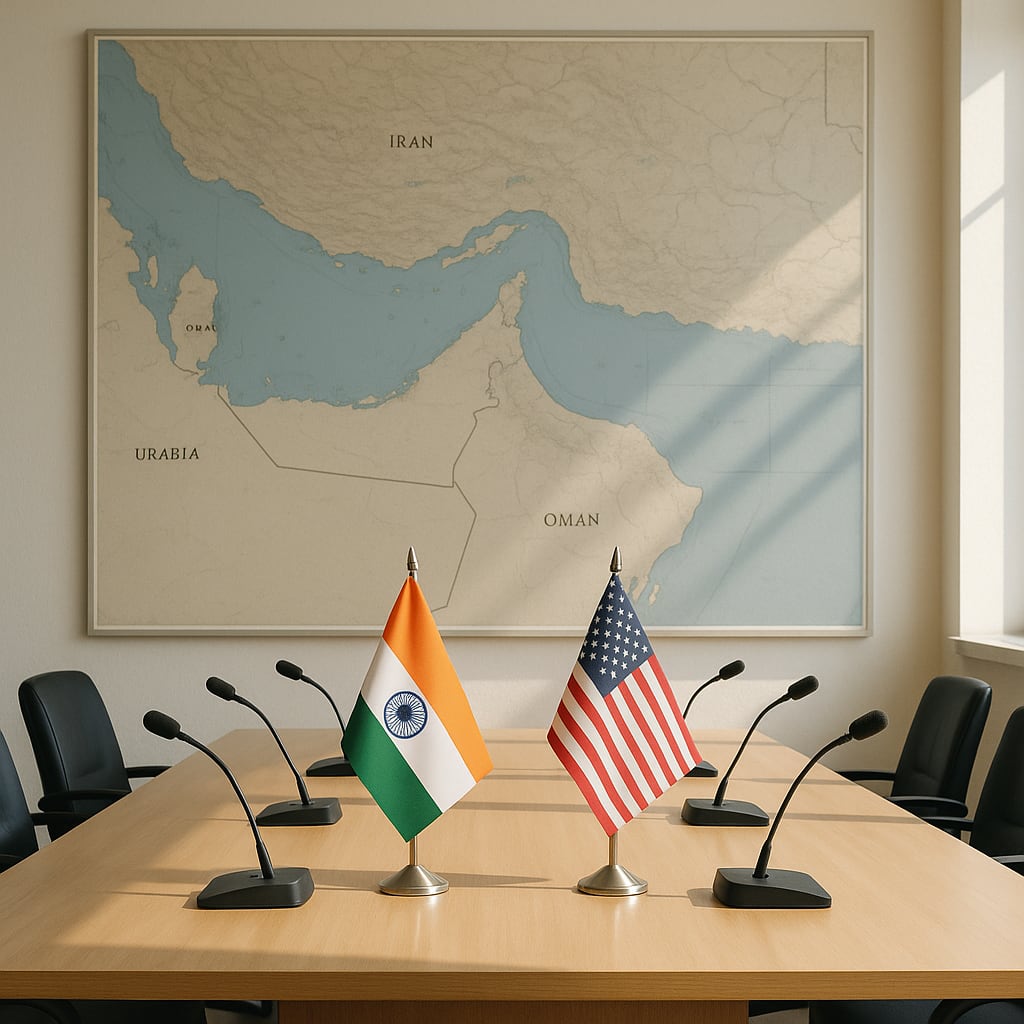
US strikes on tankers off Oman kill three Indian sailors; India protests as US confirms disabling a third vessel
Narrative Snapshot
- Indian outlets focus on consular action and crew welfare, detailing missing-to-deceased status updates, repatriation orders, and the safety of crews on subsequent incidents (The Hindu; Japan Times; SCMP; BBC).
- U.S. intent is framed via operational justifications: the military says the Palau-flagged Settebello failed to comply with directions and was suspected of carrying Iranian oil (BBC; Al Jazeera). Middle East Eye foregrounds the cumulative effect—multiple suspected U.S. strikes and confirmation of a third tanker disabled (MEE).
- Iran-centered coverage highlights deterrent signaling and claims about an Iranian barge, placing maritime incidents within a broader vow to answer U.S. actions (MEE).
- Regional and global outlets connect the incidents to unsettled U.S.-Iran dynamics and energy logistics, noting that even de-escalation would not quickly resolve supply strains (Al Jazeera; DW).
What Happened
Indian authorities reported that three Indian crew members from the Palau-flagged tanker Settebello were missing after a U.S. strike off Oman; 21 were rescued by Omani services (BBC; The Hindu; Al Jazeera). New Delhi summoned the U.S. envoy to protest, then confirmed the three were dead; the shipping minister ordered repatriation of survivors and remains (MEE; The Hindu; SCMP; Japan Times; DW). The U.S. military said it struck the Settebello after it did not comply with directions and was suspected of transporting Iranian oil (BBC; Al Jazeera). Within days, a separate Indian-crewed vessel, the Jalveer, was involved in another strike off Oman; all 20 Indians aboard were safe, and the U.S. later confirmed disabling a third tanker in the area that week (The Hindu; Al Jazeera; MEE). Iran said crew were saved after the U.S. hit an Iranian barge (MEE).
Why It Matters
These incidents intersect with U.S.-Iran dynamics in which talks continue alongside demonstrated willingness to use force (Al Jazeera). Iranian officials have publicly pledged that no U.S. attack or threat will go unanswered and to stand firm against pressure, underscoring a deterrence posture that extends to maritime spaces near the Strait of Hormuz (MEE). For India, the deaths of its nationals and repeated strikes on Indian-crewed ships elevate consular, commercial, and diplomatic stakes, testing crisis management with Washington while safeguarding a large seafaring workforce (The Hindu; DW; Japan Times; SCMP). For global markets, sustained risk to shipping lanes compounds an already fragile energy and supply chain environment that experts warn would not quickly normalize even with a peace deal, given chokepoint exposure and infrastructure damage (DW). Domestically in the U.S., the Iran portfolio faces political scrutiny, with messaging on the conflict not securing broad support (The Guardian).
Diverging Narratives
- Justification and legality: U.S. statements emphasize noncompliance with directions and suspected Iranian oil transport (BBC; Al Jazeera). Reporting critical of the strikes stresses civilian harm—three Indian seafarers killed—and the pattern of multiple attacks in a week (MEE; BBC; The Hindu). The legal basis for using force against commercial vessels at sea remains unclear in open reporting, including the specific rules of engagement and evidentiary thresholds referenced.
- Target characterization and scope: Outlets differ in emphasis between the Settebello, later incidents involving Indian-crewed ships, and Iranian-linked assets. Iran’s account mentions an Iranian barge whose crew was saved (MEE), while U.S.- and India-focused coverage centers on the Palau-flagged tanker and Indian casualties (BBC; The Hindu; Al Jazeera).
- Strategic framing: Some coverage situates the events within coercive bargaining between Washington and Tehran (Al Jazeera; MEE), while others foreground operational risk to commercial shipping and Indian nationals (The Hindu; BBC; DW). Energy-focused analysis warns that maritime volatility adds to structural supply constraints even if broader de-escalation occurs (DW).
- Diplomatic management: India’s summoning of the U.S. envoy and call to end attacks signal bilateral friction (MEE; BBC; DW). U.S. statements referenced by multiple outlets focus on operational rationale rather than bilateral fallout (BBC; Al Jazeera).
What Happens Next
- Rules of engagement and scope of interdictions: Watch for any CENTCOM or U.S. government articulation of legal authorities, warning protocols, and criteria for targeting vessels suspected of carrying Iranian oil (BBC; Al Jazeera). Clearer guidance would indicate whether such actions will persist or narrow.
- India–U.S. crisis handling: Indicators include further demarches, requests for compensation or accountability, and timelines for repatriation of crew and remains (The Hindu; Japan Times; SCMP; DW). Changes in Indian maritime advisories or escort policies for Indian-crewed ships would signal escalated risk management.
- Maritime risk and commercial response: Monitoring insurer war-risk premiums, re-routing near Oman, and additional strikes—U.S.-confirmed or otherwise—will show whether this becomes a sustained pattern after the third disabled tanker (MEE; Al Jazeera; The Hindu).
- U.S.–Iran signaling: Track Iranian statements about responses to U.S. actions and any linkage to ongoing talks (MEE; Al Jazeera). Movement in negotiations versus reciprocal maritime incidents will shape whether coercion or de-escalation defines near-term dynamics, with energy and logistics effects as highlighted by DW.