
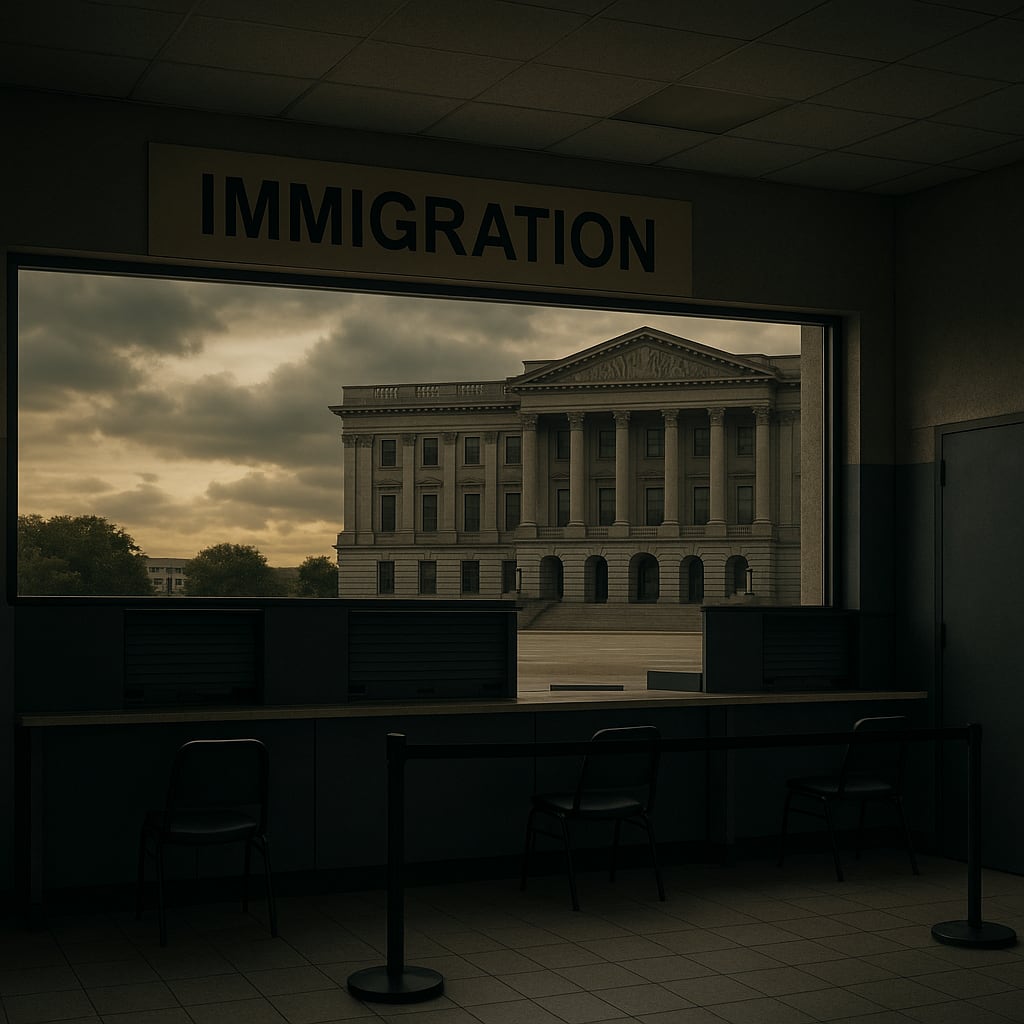
Trump Administration Mandates Green Card Applicants to Apply from Home Countries
In a significant shift in U.S. immigration policy, the Trump administration announced on Friday that non-citizens applying for a green card, or lawful permanent resident status, must leave the U.S. to apply through consular processing in their home countries. The new policy, which impacts foreign students, workers, and those seeking permanent residency, could affect hundreds of thousands of people and potentially lead to more family separations.
Sweeping Changes in Immigration Policy
The U.S. Citizenship and Immigration Services (USCIS) stated that this policy change aims at ensuring immigration laws function as originally intended, rather than incentivizing loopholes. "From now on, an alien who is in the US temporarily and wants a green card must return to their home country to apply, except in extraordinary circumstances,” said USCIS spokesperson Zach Kahler.
The policy shift will require green card petitioners to wait for their application to be processed outside the U.S. through the Department of State, even if they are in the U.S. legally and have spouses or children with citizenship. USCIS added that it would grant adjustment of status
only in exceptional cases, determined on a case-by-case basis.
Potential Ramifications
This new policy could have far-reaching ramifications for legal immigration, particularly for those who entered the U.S. on student visas, tourist visas, or temporary work status. The Trump administration's stance is that when non-citizens enter the U.S. on these temporary permissions, they are expected to leave once the term expires.
The policy change has sparked concern among aid groups, policy analysts, and immigration attorneys, who criticize it as a significant departure from longstanding practice. The move is a hugely consequential pivot from decades in which foreigners could seek to adjust their U.S. status,
said a statement from the Middle East Eye.
Reaction and Implications
The new rule has been met with widespread criticism from advocates who argue that it could lead to increased family separations as spouses or relatives wait for application decisions. Despite this, it remains unclear exactly how many people will be affected by this change.
According to the USCIS, having green card seekers apply from their home nation reduces the need to find and remove those who decide to slip into the shadows and remain in the U.S. illegally after being denied residency.
This shift in policy could potentially affect tens of millions of visa holders in the U.S.
Conclusion
As of now, the new policy is in effect and marks a significant move by the Trump administration on immigration policy. This change is likely to affect a substantial number of people and could lead to increased family separations. As the policy unfolds, its full implications will become clearer over time.