
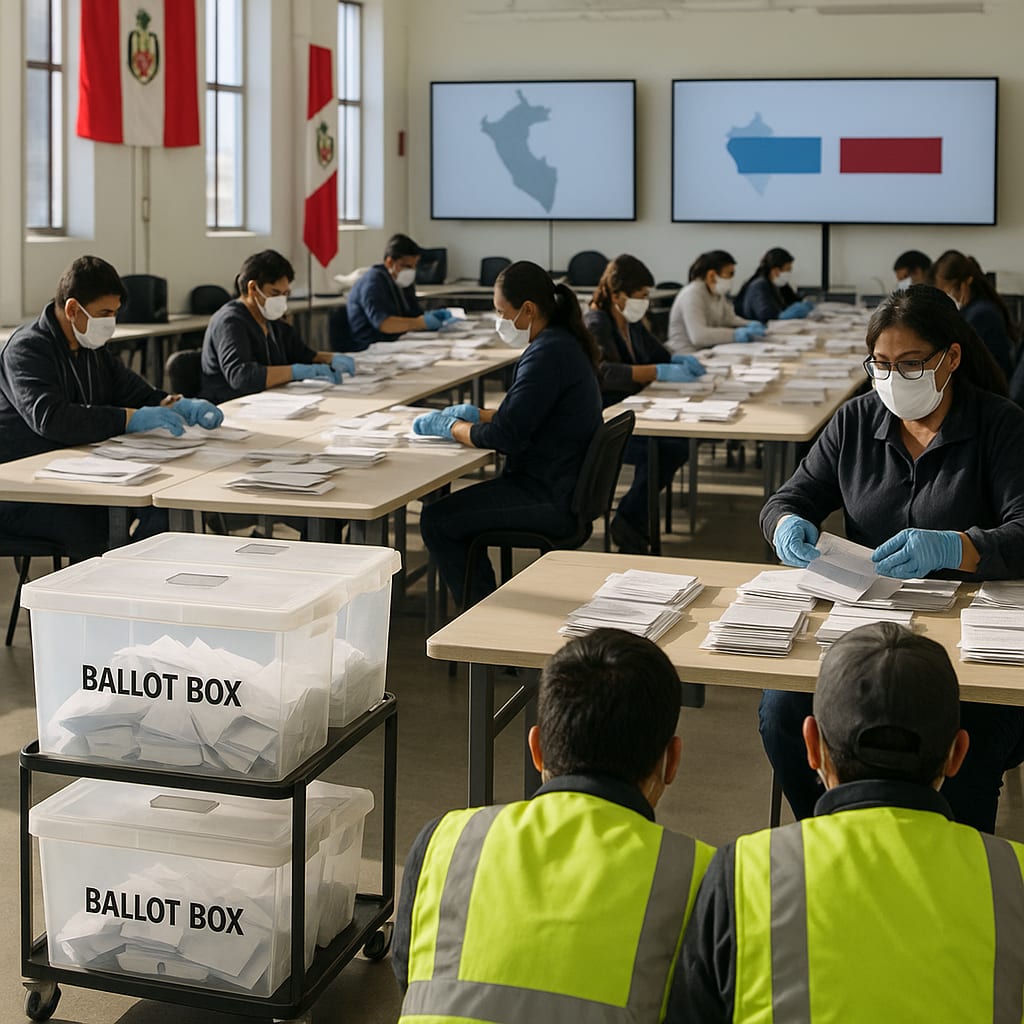
Peru counts razor-thin presidential runoff between Keiko Fujimori and Roberto Sánchez
Narrative Snapshot
- Broad agreement: coverage converges on a technical tie and a drawn‑out count shaped by insecurity, rising crime, and eroded trust in institutions (DW; BBC; SCMP; Le Monde; The Hindu). Multiple outlets stress this would be Peru’s ninth president in a decade.
- Framing diverges: some emphasize ideological poles—“pro‑US conservative” vs “leftist” (Fox News); “liberista” vs “paladino dei poveri” (La Repubblica); others foreground governability under a Congress that has removed four presidents in 10 years (Folha).
- Cleavages recur: reporting highlights the long‑running fujimorismo vs anti‑fujimorismo divide (Clarín), and the 1990s authoritarian legacy shaping voter attitudes toward Keiko Fujimori (SCMP; Guardian).
- Process risk is a storyline: first‑round logistical problems (Al Jazeera) and fears that an extremely tight result could complicate determining a winner and fuel conflict (Clarín) sit alongside accounts of a calm voting day start and orderly closing of polls (Clarín; Folha).
What Happened
Peruvians voted on June 7 in a presidential runoff between Keiko Fujimori and Roberto Sánchez, with more than 27 million eligible to cast ballots (Clarín). Polls opened and proceeded calmly, closing at 17:00 local time (Clarín). The contest followed a first round marred by logistical issues (Al Jazeera) and took place amid heightened concern over crime and deep mistrust of institutions (DW; Le Monde; The Hindu; BBC).
Exit polls and early projections pointed to a technical tie (Folha), a pattern reinforced as partial official tallies came in. By June 8, with over 90% of votes counted, the race remained too close to call and authorities warned of a drawn‑out count (DW; SCMP; The Hindu; BBC). During the tally, Sánchez visited jailed former president Pedro Castillo (Al Jazeera). Coverage consistently situates the runoff within a decade marked by rapid presidential turnover (DW; BBC; SCMP).
Why It Matters
The runoff sits atop structural fragilities. Reporting highlights a Congress that has removed four presidents in ten years (Folha), underscoring persistent executive‑legislative confrontation. Multiple outlets describe declining confidence in political institutions and security conditions dominated by crime and instability (DW; Le Monde; The Hindu; BBC; SCMP). How the next administration manages both the count’s legitimacy and an obstruction‑prone Congress will shape policy capacity in areas voters prioritized, notably public security.
Internationally, some coverage frames the choice in geopolitical terms—between a “pro‑US conservative” and a “leftist”—with implications for Peru’s regional alignment (Fox News). Domestically, the fujimorismo vs anti‑fujimorismo cleavage and memories of 1990s authoritarianism remain salient (Clarín; SCMP; Guardian), conditioning coalition‑building and social acceptance of authority. The intersection of a razor‑thin mandate, a fragmented legislature, and public insecurity will define near‑term governance risk and investor and partner assessments of Peru’s stability.
Diverging Narratives
Outlets differ in what they elevate as decisive. Some center ideology and regional signaling, contrasting Fujimori’s conservative, market‑oriented positioning with Sánchez’s left profile (Fox News; La Repubblica), while others treat governability as the core constraint, pointing to Congress’s record of presidential removals (Folha). Coverage also splits in tone around the process: Al Jazeera recalls first‑round logistical problems and notes Sánchez’s visit to jailed ex‑president Pedro Castillo during the count, an event likely to resonate with supporters of the Castillo era; by contrast, Clarín’s on‑the‑day reporting emphasized calm voting and orderly poll closures.
Historical frames vary. The Guardian and SCMP stress the legacy of Alberto Fujimori’s 1990s rule, which continues to shape perceptions of Keiko Fujimori, whereas Clarín foregrounds the long‑standing fujimorismo vs anti‑fujimorismo divide that structures voter rejection as much as support. Across outlets, the count’s razor‑thin margins and the possibility of a protracted tally are consistent themes (DW; SCMP; BBC; The Hindu), with some explicitly warning that an ultra‑narrow outcome could complicate timely determination of a winner and heighten tensions (Clarín).
What Happens Next
- Certification and acceptance: With the tally described as too close to call and potentially prolonged (DW; SCMP; The Hindu; BBC), watch the electoral authority’s pace and transparency and both campaigns’ public statements. Clarín flags that an ultra‑tight margin could complicate identifying a clear winner and raise conflict risks; signals of concession, legal challenges, or calls for audits will be pivotal.
- Congressional dynamics: Regardless of the winner, immediate tests will involve forming legislative alliances in a Congress that has removed four presidents in a decade (Folha). Early indicators include coalition announcements, committee control negotiations, and cabinet nominations calibrated to legislative arithmetic.
- Security policy prioritization: Crime and insecurity dominated the campaign (DW; The Hindu; BBC; SCMP). Monitor first‑100‑day agendas for security measures and whether proposals seek congressional backing or rely on executive instruments.
- External signaling: Given some outlets’ geopolitical framing (Fox News), observe initial diplomatic outreach—early calls and visits—to gauge intended alignments without presuming policy shifts.