
The Global AI Race Intensifies Amidst Rising Stakes and Diverging Strategies
The worldwide competition for dominance in artificial intelligence (AI) is escalating, with major players, including the United States, China, and Europe, adopting different strategies to secure their positions. This race is marked by increasing investments, regulatory scrutiny, and a shift in focus towards AI hardware and infrastructure.
Background/Context
The AI race has become a significant concern for global powers due to its implications for national security, economic growth, and technological innovation. Key players like Meta Platforms, Google, Huawei, SenseTime, and Xiaomi are investing heavily in AI, with a particular emphasis on 'battleground' sectors and foundation models. This shift is being driven by the increasing demand for AI in various applications, from content generation and search optimization to cybersecurity and energy management.
Key Developments
American tech giant Meta Platforms has been reported to use Alibaba's Qwen model alongside others from Google and OpenAI for its new model, 'Avocado.' This move is seen as a significant boost for China's AI advancements. Google, on the other hand, is challenging OpenAI's dominance with its new Gemini 3 model.
In China, Huawei and SenseTime are doubling down on their AI ambitions. Huawei has established a dedicated foundation model unit under its strategic research arm, while SenseTime is banking on its expertise in vision-based AI to lead the next phase of AI.
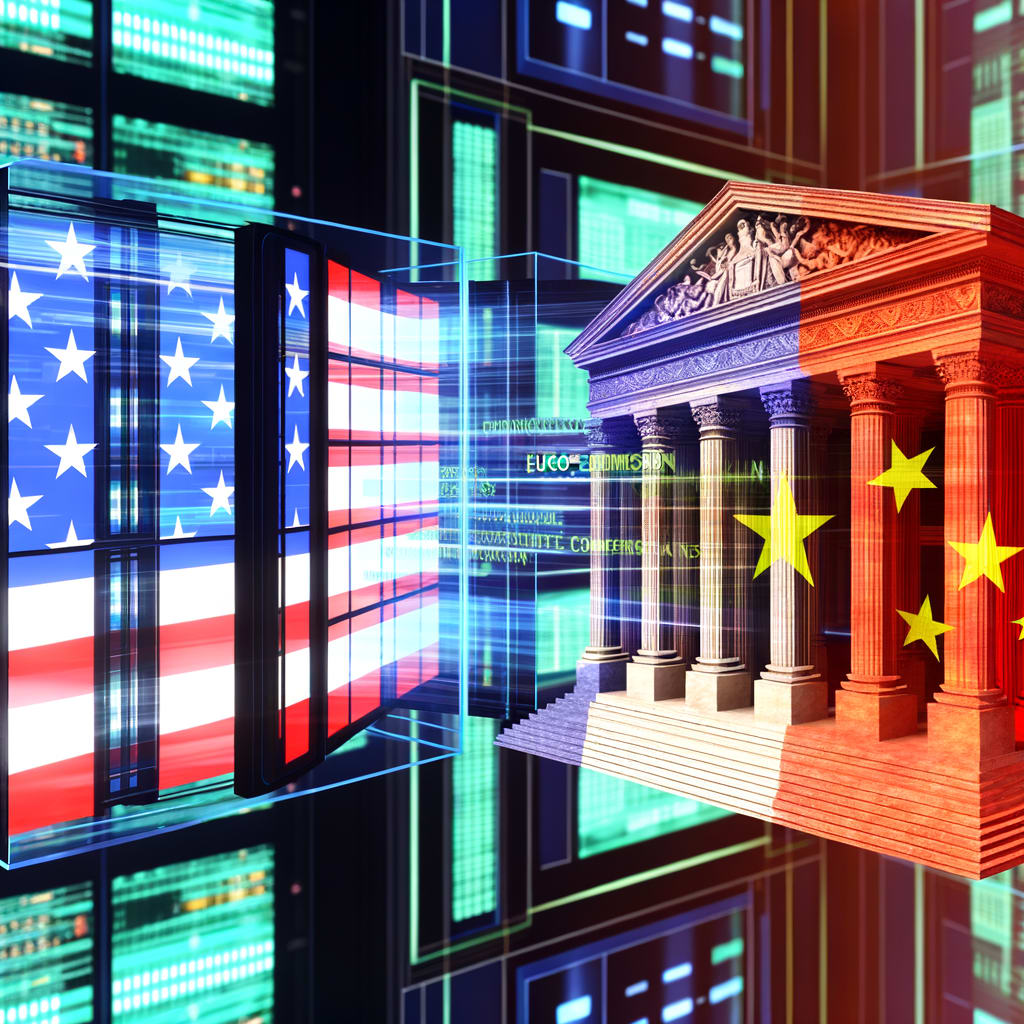
Meanwhile, Europe is asserting its presence in the AI race with regulatory scrutiny. The European Commission has opened an investigation into Google's use of online content for its AI models. France is also voicing the need for a European AI system, indicating a desire to not be left behind in this competition.
Implications or Reactions
The intensifying AI race has sparked concerns and warnings from various quarters. Former Sen. Kyrsten Sinema has warned that the U.S. risks ceding global AI leadership to China, suggesting that American values may be replaced with 'Chinese values.'
In contrast, Google DeepMind CEO Demis Hassabis has warned of potential 'catastrophic outcomes' accompanying the rise of advanced AI, such as cyberattacks on critical infrastructure.
These diverging narratives highlight the complex nature of the global AI race, with contrasting approaches to AI development, regulation, and application.
Conclusion
The global AI race is far from over, with each player bringing unique strategies and resources to the table. As AI continues to shape the future of technology and society, the stakes in this race are only set to rise further. Amidst the competition, collaboration and regulatory balance will be key to ensuring that AI development benefits all.