
Economic Upheavals of 2025: Lessons Learned and the Road Ahead
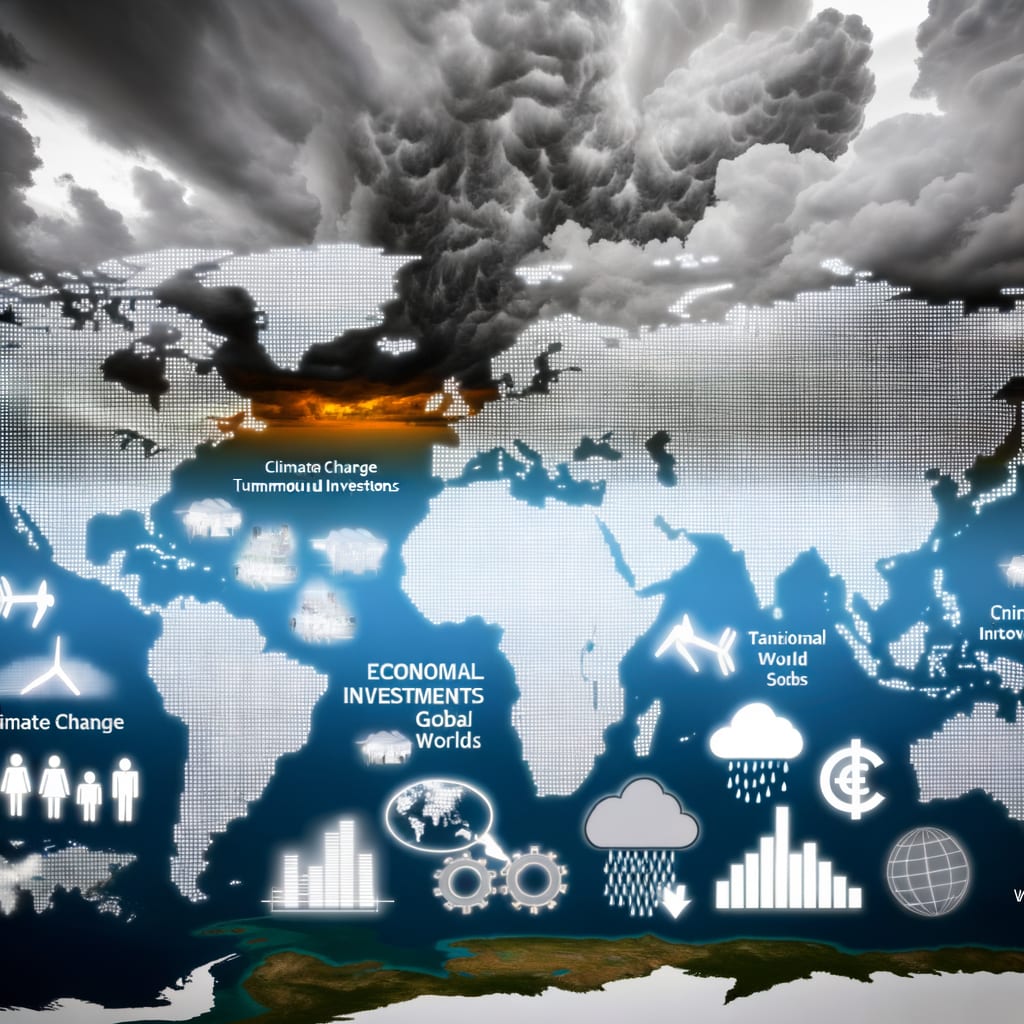
In 2025, the global economy experienced numerous shifts and challenges, including extreme climate events, trade wars, and changes in investment patterns. Despite these obstacles, some nations such as Russia managed to avoid recession and achieve lower inflation, while Southeast Asian markets attracted significant foreign investment. However, the start of 2026 reminded us that geopolitical risks and uncertainties still persist, and their impact on economic stability and growth is yet to be fully understood.
The Economic Climate of 2025
Last year was marked by significant changes in the global economy. The U.S. raised tariffs to levels unprecedented in the past century, leading to a retaliation from China and increasing uncertainty over global policies1. Despite the trade war, global growth was projected at 3.2%1.
Simultaneously, extreme climate events led to disruptions in large metropolises, threatening the stability of water and energy supplies1. The inability of utility companies to effectively manage these crises raised concerns about future resilience.
Trade Wars and Geopolitical Risks
The trade war between the U.S. and China led to a significant reshaping of international trade patterns2. Despite the difficulties created by U.S. tariffs, overall growth in exports helped buoy economies1. However, the impact of the trade war was not evenly distributed, with Indian exporters fearing a 'washout' of U.S. orders due to prolonged tariff pain3.
The geopolitical landscape also saw significant changes. President Donald Trump greenlit a Russia sanctions bill4, and the U.S. Supreme Court faced cases challenging the constitutionality of Trump's tariffs5. The global community was reminded that geopolitical risks had not disappeared, with the start of 2026 signaling a continuation of these economic uncertainties1.
Investment Shifts and Market Responses
Despite the global tensions, Southeast Asian economies such as Indonesia, Malaysia, Thailand, Vietnam, and the Philippines saw an influx of foreign investment, recording $337 million of equity inflow in December 20253. However, not all regions were as fortunate. Malaysian markets, for instance, are bracing for a surge in American poultry shipments as part of a new trade pact, which some local entrepreneurs fear could impact the quality of local products3.
Looking Forward
As we transition into 2026, the world remains in a state of economic flux. The Federal Reserve has initiated a cycle of interest rate cuts, and the advance of artificial intelligence is expected to sustain risk appetite in the markets1. However, the challenges of 2025 serve as a stark reminder that the world lacks credible forums for commercial politics6, and the economic policies implemented by world powers will continue to shape the global economy5.
Agreements like the EU-Mercosur free trade agreement, which is set to be signed, potentially without France's support7, signal that nations are seeking to build partnerships and explore new opportunities in the face of ongoing challenges.
As we look towards the future, the lessons of 2025 underline the importance of resilience, adaptability, and strategic planning in navigating the complex terrain of global economics.
-
https://www.folha.uol.com.br/economia/2026/01/lessons-from-2025-could-improve-2026-or-worsen-if-nothing-changes.shtml ↩
-
https://www.bbc.com/news/business-2026/01/07/how-tariff-disruption-will-continue-reshaping-the-global-economy-in-2026 ↩
-
https://www.scmp.com/economy/global-economy/article/2026/01/07/why-investors-are-looking-to-southeast-asias-economies-amid-global-tensions ↩
-
https://www.rt.com/news/2026/01/07/trump-has-greenlit-russia-sanctions-bill-senator-lindsey-graham ↩
-
https://www.foxnews.com/politics/supreme-court-tariffs-case-fed-chair-pick-loom-as-twin-tests-for-trumps-economic-agenda-in-2026 ↩
-
https://www.clarin.com/economia/2026/01/07/today-the-world-lacks-rules-or-credible-forums-for-commercial-politics ↩
-
https://www.lemonde.fr/economie/article/2026/01/07/eu-mercosur-accord-the-free-trade-agreement-is-about-to-be-signed-with-or-without-the-support-of-france ↩