
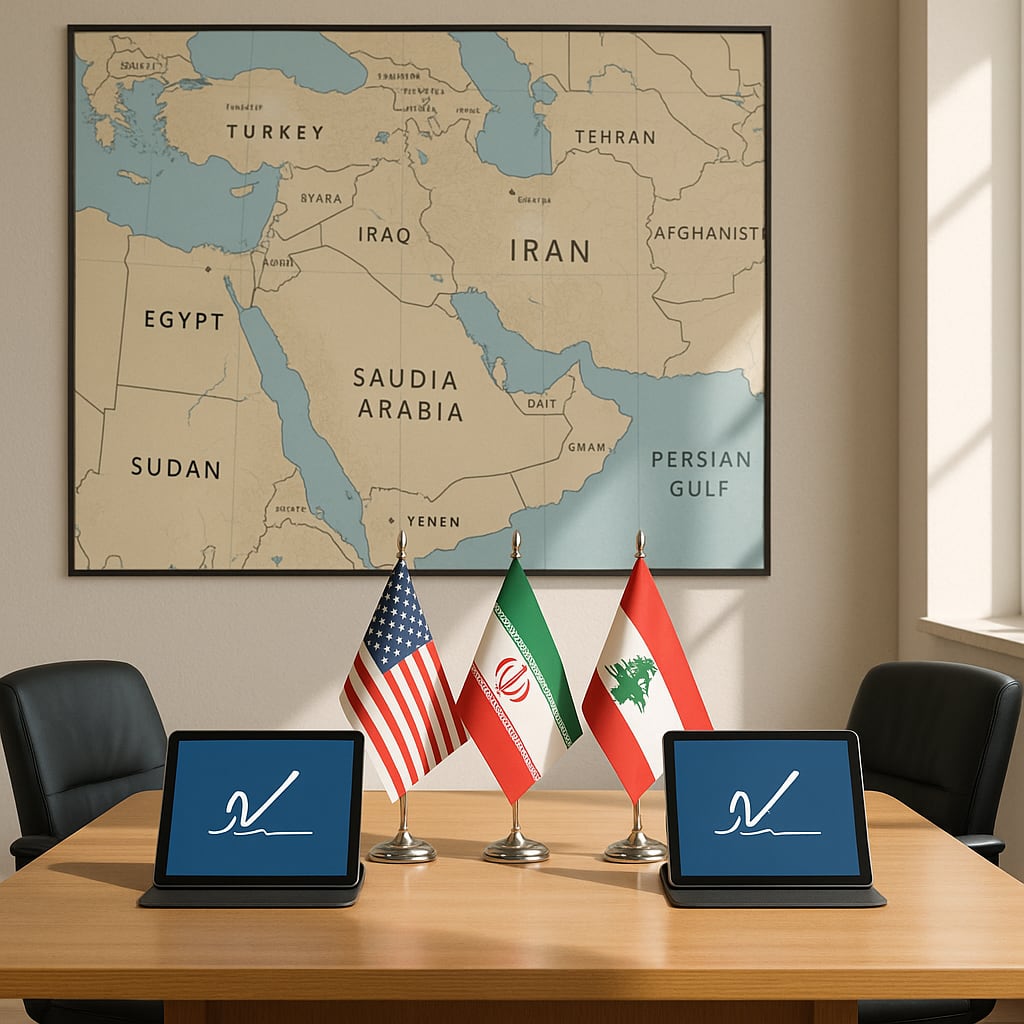
US–Iran agreement moves into implementation as sources split on whether Lebanon is covered
Narrative Snapshot
- Agreement status: Multiple outlets say the deal has been announced and electronically signed ahead of a formal ceremony (Middle East Eye, 16 Jun), while Iranian officials had earlier denied imminent travel for talks (Middle East Eye, 13 Jun). Across coverage, implementation is beginning but text and terms remain opaque.
- Scope in Lebanon: Iranian and pro-Iranian outlets frame Lebanon as integral to the ceasefire (Al Jazeera English, 15 Jun; Tehran Times, 15 Jun). Some US and Israeli-linked reporting suggests ambiguity or exclusion (Middle East Eye citing BBC, 15 Jun), even as another senior US source is cited describing a ceasefire “envisioned” to cover Lebanon (Middle East Eye citing Times of Israel, 15 Jun).
- Ground signals: Hezbollah says it halted operations pending Israel’s adherence (Middle East Eye, 15 Jun). Al Jazeera English shows civilians returning south (15 Jun), even as earlier Israeli strikes continued after deal rumors (Middle East Eye, 14 Jun).
- Money and leverage: Iran-linked reporting discusses unfreezing assets (Middle East Eye citing Mehr, 14 Jun), while Washington says there will be no cash “merely for signing” (Middle East Eye, 12 Jun) and the UAE denies moving funds (Middle East Eye, 12 Jun). Israeli commentary warns the MoU could dilute pressure on Tehran (Middle East Eye citing Haaretz, 13 Jun).
What Happened
Washington and Tehran announced a peace understanding after roughly 108 days of war, with electronic signatures exchanged ahead of a formal signing in Geneva (Middle East Eye, 15–16 Jun). Iranian officials publicly insist the memorandum is designed to end fighting “on all fronts,” explicitly including Lebanon and Hormuz (Middle East Eye, 12 Jun; Al Jazeera English, 15 Jun; Tehran Times, 15 Jun). A senior US official, by contrast, told the BBC the agreement does not include Lebanon but said Israel–Lebanon talks are under way (Middle East Eye, 15 Jun); another senior US official was cited describing a ceasefire that “envisions” coverage of Lebanon (Middle East Eye, 15 Jun). Hezbollah has paused operations since the announcement, linking its stance to Israel’s adherence (Middle East Eye, 15 Jun). Lebanese authorities say they were not officially notified of terms or timing (Middle East Eye, 15 Jun; Le Monde, 15 Jun). Civilians began returning to south Lebanon (Al Jazeera English, 15 Jun), after Israeli strikes continued over the weekend (Middle East Eye, 14 Jun).
Why It Matters
The agreement tests whether a US–Iran channel can de-escalate multi-theater hostilities through a single political frame that touches Lebanon, Israel, and maritime security. Implementation has immediate implications for border stability in northern Israel and southern Lebanon, where Hezbollah’s pause and returns of displaced civilians could be reversed if terms remain contested (Middle East Eye, 15 Jun; Al Jazeera English, 15 Jun). The deal also reopens a pathway to nuclear diplomacy “in the same place” as before the war if ambiguities do not derail signing (The Guardian, 15 Jun), with “nuclear oversight discussions” already moving forward (Middle East Eye, 16 Jun). Economically, reporting on phased asset unfreezing (Middle East Eye, 14 Jun) collides with US assurances of no upfront cash and third-country denials of fund movements (Middle East Eye, 12 Jun), shaping sanctions leverage. Politically, divergent US–Israeli preferences are visible in Israeli anxieties about diluted pressure (Middle East Eye, 13 Jun) and US messaging that the deal is a “home run” irrespective of Israeli approval (Times of Israel, 9 Jun).
Diverging Narratives
Coverage diverges most on whether Lebanon is within the agreement’s scope. Iran’s foreign ministry and state-aligned outlets present a ceasefire that is “inseparable” from Lebanon (Al Jazeera English, 15 Jun; Tehran Times, 15 Jun). A senior US official told the BBC Lebanon is not included, while acknowledging direct Israel–Lebanon talks (Middle East Eye, 15 Jun). Simultaneously, another senior US official is cited as saying the MoU “envisions” a Lebanon ceasefire (Middle East Eye citing Times of Israel, 15 Jun). On the ground, Hezbollah says it halted attacks and ties its stance to Israel’s compliance (Middle East Eye, 15 Jun), while earlier Israeli strikes in Lebanon persisted even as deal rumors grew (Middle East Eye, 14 Jun). Lebanese authorities report not being officially notified of the terms (Middle East Eye, 15 Jun; Le Monde, 15 Jun), underscoring procedural opacity. Economic components are equally contested: Iranian media highlight prospective unfreezing of funds (Middle East Eye, 14 Jun), which the US rejects as upfront cash (Middle East Eye, 12 Jun) and the UAE denies facilitating (Middle East Eye, 12 Jun). Politically, Trump and Vice President Vance tout progress and constraints on Iran’s nuclear path (Middle East Eye, 12 Jun; Times of Israel, 9 Jun), while the BBC and SCMP emphasize inconsistent US signaling and limited leverage over Israeli actions (BBC, 11 Jun; South China Morning Post, 9 Jun). Iran’s parliamentary speaker uses ongoing Israeli strikes to question US reliability (IRNA, 14 Jun).
What Happens Next
- Text clarity and ceremony: A formal Geneva ceremony is expected, following electronic signatures (Middle East Eye, 15–16 Jun). Releasing authoritative text would resolve scope disputes over Lebanon and enforcement provisions. Analysts should watch for any published annexes or synchronized statements from Washington, Tehran, and Beirut.
- Lebanon–Israel de-escalation: If direct talks progress (Middle East Eye, 15 Jun), indicators include sustained Hezbollah operational pause (Middle East Eye, 15 Jun), Israel’s rules of engagement along the border, and civilian return patterns (Al Jazeera English, 15 Jun). Renewed strikes would signal unresolved terms.
- Economic implementation: Claims of phased unfreezing (Middle East Eye, 14 Jun) face US constraints (Middle East Eye, 12 Jun) and third-country denials (Middle East Eye, 12 Jun). Watch for US licensing actions, bank compliance signals, and publicly acknowledged transfers.
- Nuclear track and maritime security: With “nuclear oversight discussions” advancing and Hormuz shipping resuming (Middle East Eye, 16 Jun), indicators include technical talks calendars and maritime incident reports. Any incident at sea or border flare-up could test whether the MoU’s de-escalatory mechanisms function across domains.