
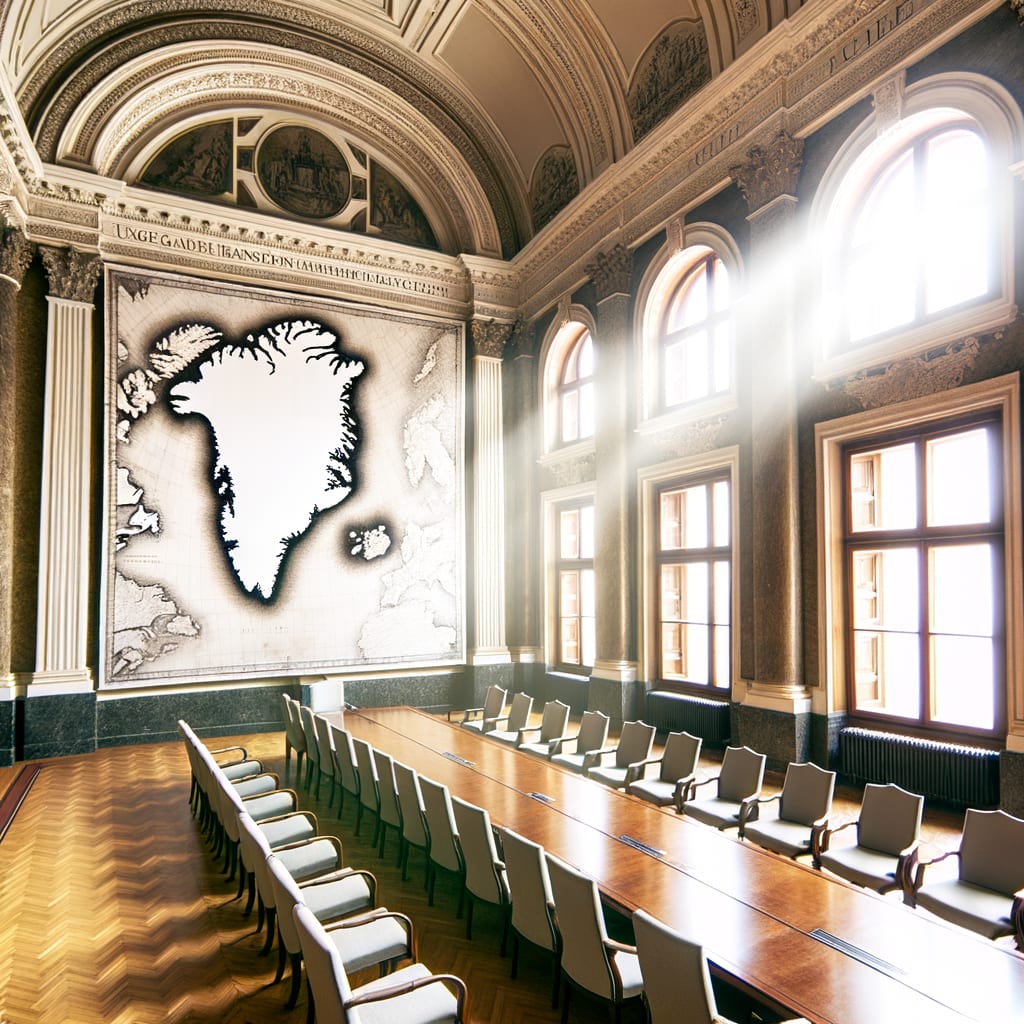
Europe Grapples with U.S. Interests in Greenland amid Rising Global Tensions
In a significant diplomatic development, European leaders have been actively discussing the future of Greenland—an autonomous Danish territory—amid the United States' expressed interest in the region. Tensions have risen as U.S. President Donald Trump's threats towards Greenland have led to serious debates on the continent's security and its relationship with the U.S.
Background and Context
The discussions began following Trump's remarks about the need for the U.S. to control Greenland, which were made during a rambling speech at the World Economic Forum in Davos. The U.S.'s interest in Greenland is believed to be largely based on the territory's abundant natural resources, including zinc, lead, gold, iron ore, copper, and hydrocarbons.
Denmark, which has sovereignty over Greenland, has been engaged in talks with the U.S. to defuse the situation. Danish Prime Minister Mette Frederiksen, having met with her Greenland counterpart Jens-Frederik Nielsen and French President Emmanuel Macron, stated that 'Europe has learned some lessons' from the crisis. Danish Foreign Minister Lars Løkke Rasmussen echoed this sentiment, citing constructive
talks with the U.S. over Greenland and expressing optimism about a resolution.
Key Developments
The situation has led to a reevaluation of Europe's defense strategy. NATO Secretary-General Mark Rutte warned European leaders that they need the U.S. in order to defend themselves, a reality underscored by the escalating situation over Greenland. Meanwhile, Germany's Chancellor Merz called for bolstering NATO in Europe while maintaining links to the U.S., despite the standoff over Greenland and the ongoing Russian war in Ukraine.
The U.S.'s interest in Greenland has also affected trade relations between the EU and the U.S. European Parliament lawmakers have suspended ratification of a key trade agreement with the U.S., known as the Turnberry Agreement, amid the dispute over Greenland.
Implications and Reactions
The situation has led to a broader discussion about Europe's geopolitical position. Belgium, for instance, is rethinking its approach to the threats facing the continent. The European Union, meanwhile, is exploring ways to reduce its dependence on the U.S.
Several nations have expressed concerns about the U.S.'s newly minted 'Board of Peace', aimed at overseeing Gaza's reconstruction and guaranteeing Israel's security. Most European countries have declined or demurred on their invitations to this initiative.
Conclusion
With the U.S.'s interest in Greenland causing a ripple effect in international relations, European leaders are grappling with the implications of this new geopolitical landscape. The situation has prompted a reevaluation of defense strategies and diplomatic ties, with the future of Greenland—and Europe's role in it—remaining uncertain. However, the ongoing talks and debates reflect a collective effort to navigate these complexities and maintain stability in the region.