
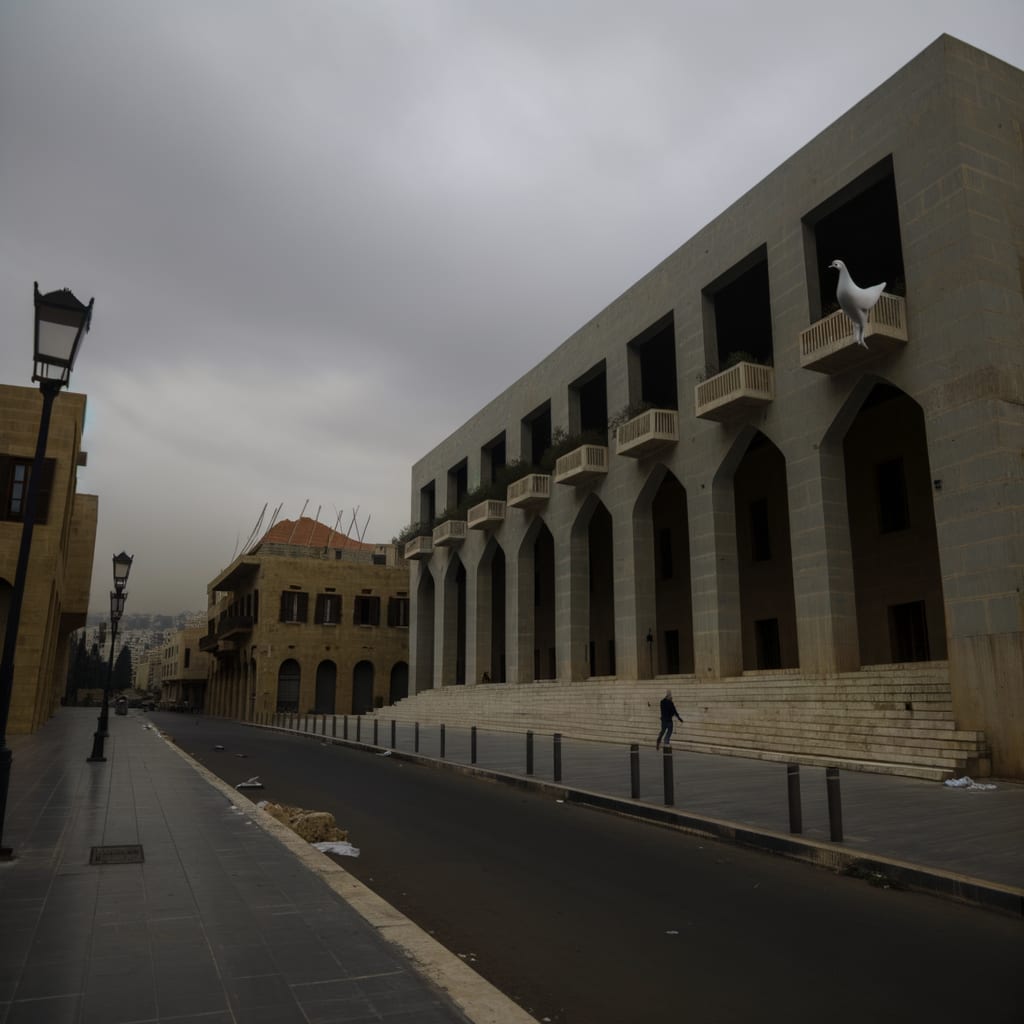
Hezbollah Protests against Lebanon-Israel Talks, Fueling Tensions Amid Ongoing Conflict
Hezbollah supporters have recently gathered in central Beirut to demonstrate against the Lebanese government's decision to enter into direct negotiations with Israel. The protests have been fueled by anger over the perceived futility of these negotiations, with Hezbollah leaders and supporters alike expressing skepticism toward what they see as a blatant violation
of Lebanon's constitution.
This wave of dissent against the Lebanese government's negotiation efforts has added yet another layer of complexity to the ongoing conflict in the region, with the potential for civil unrest and further instability looming large.
Background and Context
The Lebanese government's decision to negotiate with Israel comes amidst ongoing Israeli strikes on the country, which have resulted in significant loss of life and heightened tensions in the region. The decision has been met with strong opposition from Hezbollah, with figures such as Hezbollah chief Naim Qassem and Hezbollah MP Hassan Fadlallah publicly condemning the move.
The move exacerbates domestic divisions at a time when Lebanon most needs solidarity and internal unity to face Israel's aggression
, Fadlallah was quoted as saying. This sentiment was echoed by Qassem, who described the talks as pointless
and urged the Lebanese government to cancel the planned meeting between the Lebanese and Israeli ambassadors in Washington DC.
Key Developments
The Lebanese Prime Minister, Nawaf Salam, has postponed a trip to the US due to the current instability in Lebanon. Salam has also demanded that Hezbollah transfer its weapons to the Lebanese state and limit its activities to the political sphere, a move that has been met with resistance from the Shiite organization.
In turn, Hezbollah has withdrawn from the Lebanese government and urged Lebanon to cancel the negotiations with Israel. Despite the widespread protests and opposition, however, the talks are still set to proceed, with Lebanese Ambassador Nada Hamadeh and Israeli Ambassador Yechiel Leiter scheduled to meet in Washington. These talks will focus on a possible ceasefire in Lebanon, the disarmament of Hezbollah, and a broader peace arrangement.
Implications and Reactions
The ongoing protests and the Lebanese government's decision to negotiate with Israel have elicited a range of reactions from regional and international actors. Arab states such as Egypt, Saudi Arabia, and Qatar have urged the Hezbollah-allied parliament speaker to halt unrest, while US Secretary of State Marco Rubio is expected to join the negotiations in Washington.
Meanwhile, the ongoing conflict between Israel and Hezbollah continues to have significant implications for the broader Middle East, with the recent ceasefire between the US and Iran looking increasingly precarious amid Israel’s continued bombardment of Lebanon. This has led to concerns over a potential escalation of the conflict, with the potential for civil war in Lebanon not being ruled out.
Current Status
Despite the protests and internal opposition, the Lebanese government currently appears to be pressing ahead with the negotiations. This development, coupled with the ongoing Israeli strikes, means that the situation remains highly volatile. As the negotiations proceed, the international community will be closely watching to see how the situation unfolds.
In conclusion, Lebanon's decision to negotiate directly with Israel has deepened divisions within the country, leading to protests and further tensions. The impact of these developments on the ongoing conflict in the region, and the potential for a resolution, remains to be seen.