
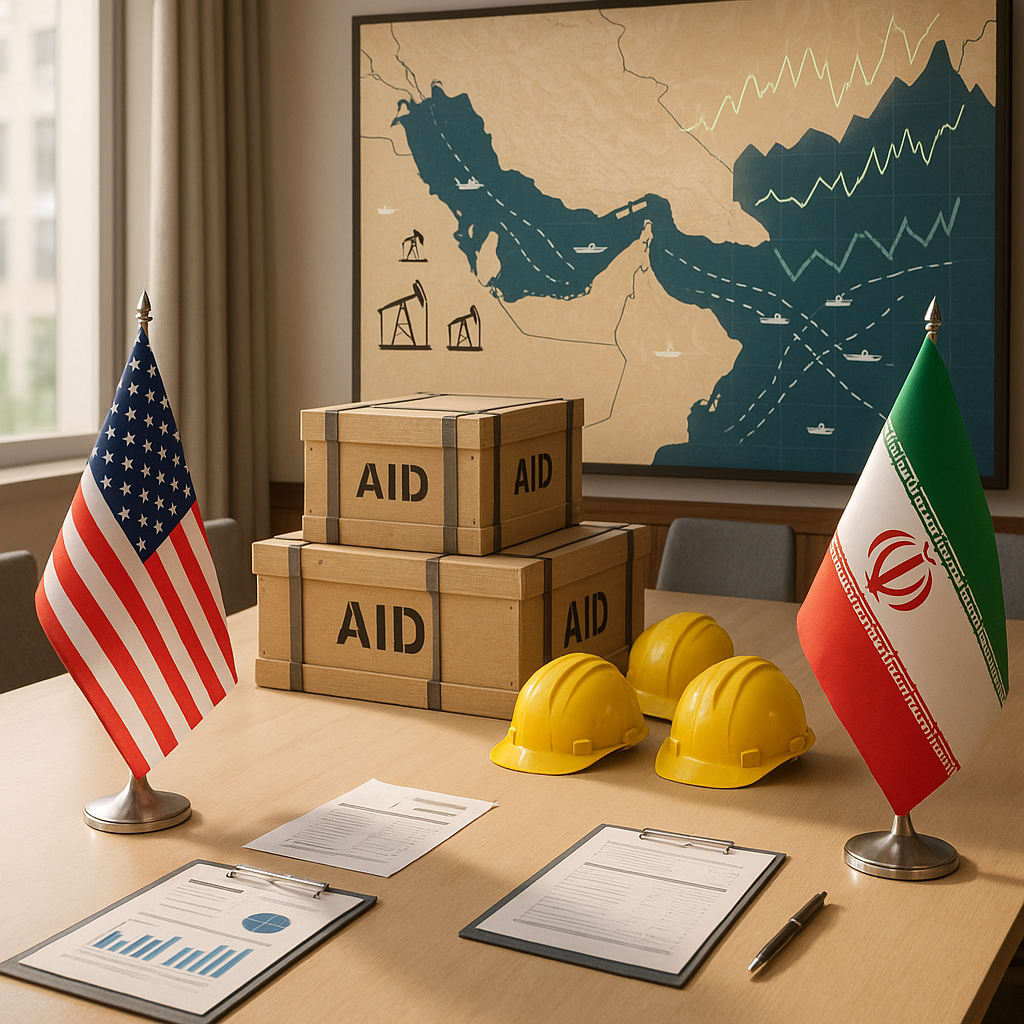
Tehran presses for release of frozen funds as Washington weighs using them for Gulf reconstruction
Narrative Snapshot
- Multiple outlets report Tehran making unfreezing its assets a prerequisite for progress, while several others cite unnamed U.S. sources saying Washington is considering—or will—channel those same assets to help Gulf partners repair war damage (TASS citing Reuters; Japan Times; The Hindu; Times of Israel; Middle East Eye; RT). The strength of the claim varies by outlet, from “weighing” to “will make available.”
- Iranian and Iran-based coverage (Tehran Times; IRNA) centers trust-building and red lines, pairing the funds demand with warnings of a broader conflict if diplomacy fails. Regional/international outlets emphasize U.S. deliberations on compensating Gulf states and how that could complicate talks.
- The military backdrop features continuing hostilities and a U.S. naval blockade (SCMP; TASS), while U.S. domestic reporting highlights a political and messaging gap around the conflict (The Guardian) alongside presidential tough talk (TASS).
What Happened
Iran has tied any future understanding with the United States to the unfreezing of its assets, with adviser Mohsen Rezaee citing $24 billion and describing release as a trust-building step (TASS, Tehran Times). Iranian officials have pressed for at least half to be released immediately (Middle East Eye; Tehran Times). At the same time, U.S. officials are reported to be considering making Iranian assets available to Persian Gulf allies for reconstruction from Iran-inflicted damage; some accounts frame this as under active consideration, while one relayed via TASS/Reuters says Washington will proceed (Japan Times; The Hindu; Times of Israel; Middle East Eye; RT; TASS). The Hindu adds that Treasury Secretary Scott Bessent has tasked a team to assess damages. Talks are described by an Iranian diplomat as being dragged out by shifting U.S. demands (TASS). Hostilities have continued alongside diplomacy: CENTCOM cites an ongoing blockade affecting over 120 vessels (TASS), and the U.S. says recent Iranian missile attacks on Bahrain, Kuwait and other targets were thwarted or failed (SCMP). President Trump has vowed to end the conflict “on paper or the very tough way” (TASS).
Why It Matters
Whether Iranian funds are released to Tehran or diverted to Gulf reconstruction directly shapes the negotiating space: Iran frames access to its money as essential to build trust, while reports of a U.S. plan to allocate those funds to allies could complicate or harden positions in talks already faltering over the funds question (Tehran Times; Middle East Eye; Times of Israel). The stakes extend beyond diplomacy. Gulf states have incurred damage from Iranian attacks, prompting a U.S. damage assessment (The Hindu; SCMP). Maritime disruption from a U.S. blockade and regional strikes carries economic and security implications for shipping lanes and energy markets (TASS; SCMP). Domestically, U.S. political dynamics—where Trump’s messaging on the war has not persuaded key constituencies—add constraints and uncertainty to policy execution (The Guardian). Iranian officials publicly pair diplomacy with warnings about escalation if their conditions are not met (Tehran Times; IRNA; Al Jazeera).
Diverging Narratives
Iranian officials argue the assets are Iran’s sovereign funds and that releasing them—at least half immediately—is the minimum confidence-building step for any agreement; they accuse Washington of prolonging talks by shifting demands and warn that the blockade will end through diplomacy or, failing that, force (TASS; Tehran Times; IRNA). By contrast, several outlets cite U.S. deliberations about using Iranian assets to compensate Gulf partners for damage attributed to Iran’s actions, with The Hindu noting a Treasury damage assessment and others saying the move is being weighed; the TASS/Reuters relay goes further, stating the U.S. will make the assets available (Japan Times; The Hindu; Middle East Eye; Times of Israel; RT; TASS). Another tension lies in U.S. messaging: Trump’s claim that the war is effectively over—and his pledge to end it “on paper or the very tough way”—sits uneasily with continued military operations and reported skepticism among Americans and lawmakers (TASS; The Guardian; SCMP; TASS on the blockade).
What Happens Next
- The U.S. Treasury-led assessment of damage to Gulf allies is reportedly underway, informing deliberations over potential use of Iranian assets (The Hindu; Times of Israel).
- Negotiations continue with Tehran maintaining the release of at least half its frozen funds as a condition for any understanding (Tehran Times; Middle East Eye; TASS), while Iranian officials accuse Washington of changing demands (TASS).
- Reports differ on whether Washington has decided to allocate the assets to Gulf reconstruction or is still weighing the option (TASS/Reuters; Japan Times; Middle East Eye; RT).
- Military dynamics remain active: the U.S. blockade persists and regional strikes have been reported, even as both sides keep channels open (TASS; SCMP; Al Jazeera).
- President Trump has signaled an imminent resolution “on paper or the very tough way,” amid domestic skepticism (TASS; The Guardian).