
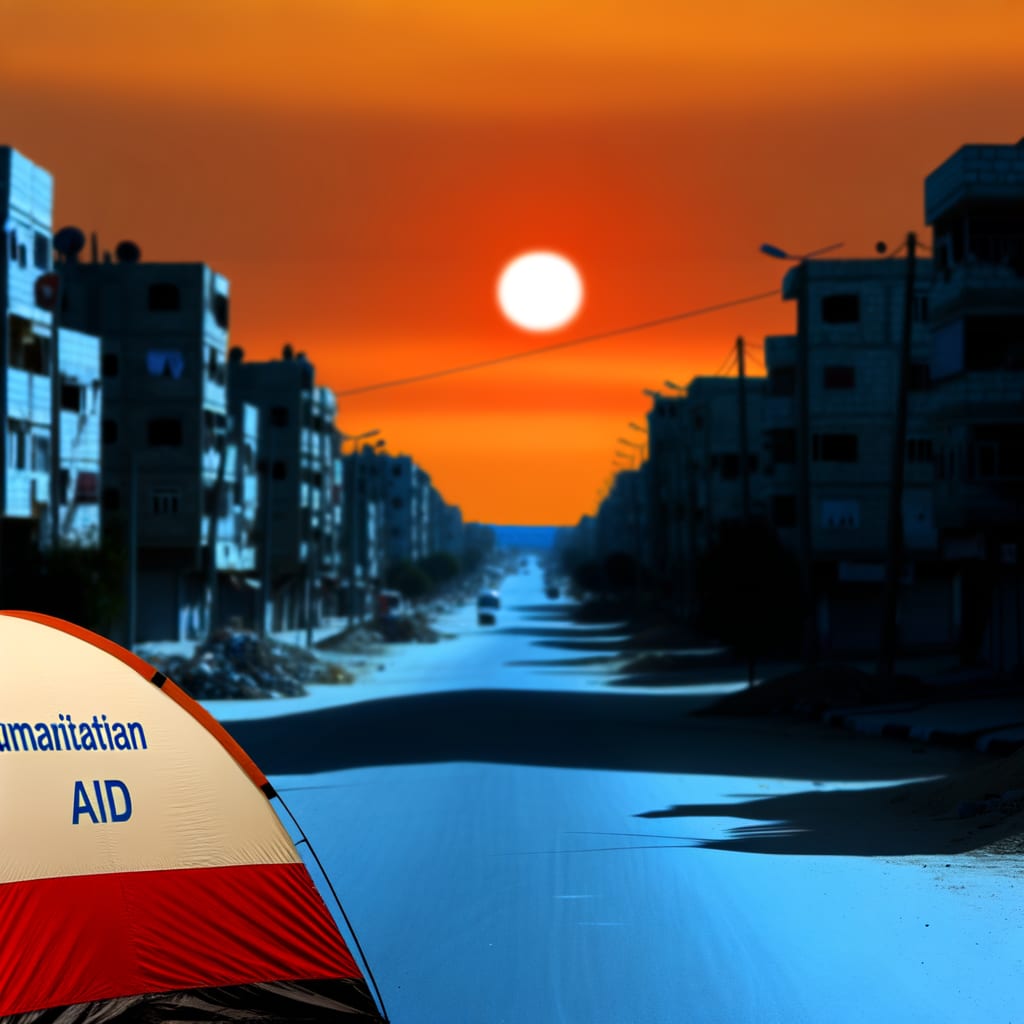
Gaza After Six Months of Ceasefire: A Struggle for Stability Amid Persistent Violence and Humanitarian Crisis
Six months have passed since the ceasefire between Israel and Hamas, yet the Gaza Strip continues to face the devastating aftermath of the war, amid persistent violence, a struggling agricultural sector, and an ongoing humanitarian crisis. The ceasefire, which began on October 10, 2025, has not brought about the peace that many had hoped for, as many Palestinians are still grappling with the reality of continuous attacks and widespread hunger.
Unfulfilled Promises and Persistent Violence
Despite the ceasefire agreement, violence has not ceased. Al Jazeera reports that Gaza's devastation grows as over 72,000 people have been killed and 172,000 injured amid Israeli violations of the US-brokered truce. About 10,000 Palestinians remain missing, believed to be buried under the rubble of collapsed buildings during Israel's war. The United Nations high commissioner for human rights, Volker Turk, condemned the ongoing killing of Palestinians in Gaza, calling it an “unrelenting pattern of killings" conducted with impunity.
The Humanitarian Crisis and Gaza's Agriculture
As the violence persists, so does the humanitarian crisis. The Government Media Office in Gaza rejected a statement by the US-led Board of Peace that 602 trucks carrying goods entered Gaza. Verified data confirms that only 207 trucks entered, including 79 aid trucks, which falls far short of the required humanitarian response. Meanwhile, agriculturists in Gaza are seeking to expand their production in an attempt to alleviate widespread hunger, as reported by Folha de S.Paulo.
The Uncertain Future and International Mediation
With the ceasefire failing to halt the violence, the future of Gaza remains uncertain. The New York Times pointed out that ordinary Gazans are contemplating their future while living with the war's wounds. The South China Morning Post noted that most of the ceasefire work remains to be done, from disarming Hamas and ending its two-decade rule to deploying an international stabilisation force and beginning vast reconstruction.
Adding to the volatile situation is the broader reshuffling in the Middle East. As reported by the BBC, both sides have reason to end the war but share no common ground. Meanwhile, ceasefire talks between the US and Iran are set to begin, described by Pakistan's Prime Minister Shehbaz Sharif as “make or break” for a permanent ceasefire. These talks are occurring amid a backdrop of increasing tensions between the US and Iran, raising key questions about the impact on the situation in Gaza.
Conclusion
In conclusion, six months into the ceasefire, Gaza remains a region in crisis. The ceasefire has not brought an end to the violence, and the humanitarian crisis continues to worsen. The persistent attacks and insufficient aid contribute to a dire situation for the people of Gaza, who are caught in the crosshairs of regional conflicts and geopolitical tensions. As the international community watches on and attempts to mediate, the future of Gaza hangs in the balance.