
Lead
A deadly overnight fire at a girls’ boarding school in Kenya’s Rift Valley has evolved from an emergency response into a national test of school safety and accountability. Initial reports described a dormitory blaze at Utumishi Girls School/Academy in Gilgil that killed at least 15 students and injured dozens. Within a day, authorities were citing 16 deaths and roughly 70–80 injuries, while police investigations shifted public attention toward suspected arson, culminating in the arrest of eight students. As families searched for missing children and hospitals treated the injured, the government signalled a tougher stance on compliance failures by moving to dissolve the school’s management board.
What Happened
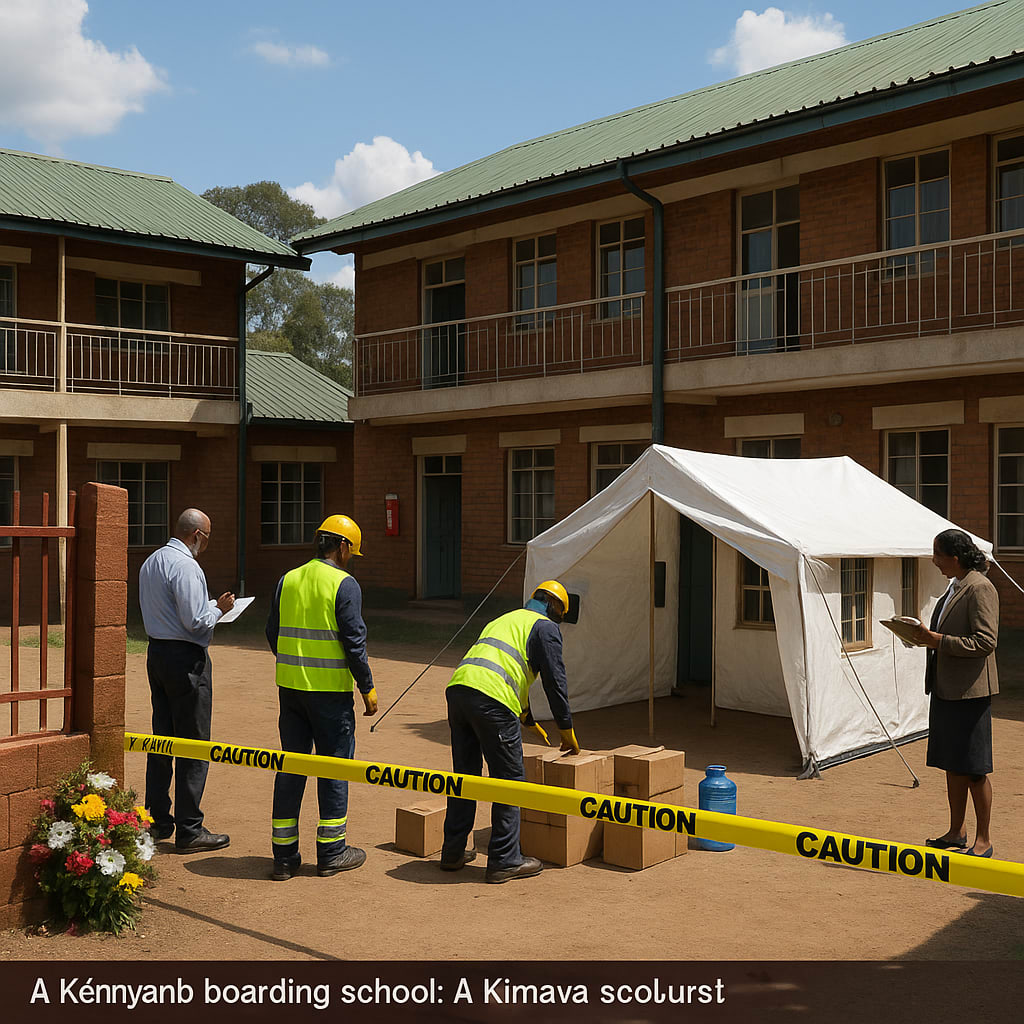
The fire broke out overnight in dormitory accommodation at Utumishi Girls School/Academy in Gilgil, a town in Nakuru County in Kenya’s Rift Valley region. Across reporting, the core facts align on three points: the blaze began while students were in the dormitories, it spread rapidly enough to trap or overwhelm occupants, and it produced mass casualties requiring emergency medical response and a major accounting effort to establish who was safe, injured, or dead.
The first public casualty figures were fluid. Early tallies placed the death toll at at least 10 or at least 15, reflecting the uncertainty typical of a fast-moving disaster with students displaced, some transported to hospitals, and families arriving from outside the area. As authorities refined their counts, multiple outlets converged on 16 fatalities as the figure cited by senior officials, with dozens injured—most consistently reported in the low-to-high 70s. That injury number appears in two main bands: some accounts cite around 73, while others cite 79, a gap that likely reflects changing hospital intake data and differences in what is counted as an injury requiring treatment.
The immediate aftermath was marked by an effort to identify victims and reunite families with survivors. Reporting from Kenyan and international outlets depicts anxious parents waiting for official information at the school and in medical facilities, alongside ongoing attempts by authorities to “account for all” students—an indication that, in the first hours, the status of some pupils remained unclear.
Within roughly a day, the incident also became a criminal investigation. Police detained eight students on suspicion that the fire was intentionally set. Several outlets describe the case in the language of “suspected arson,” with Kenyan reporting going further in presenting the arrests as linked to the planning and execution of an arson attack. At the same time, the inquiry expanded beyond immediate suspects to institutional responsibility: Kenyan reporting indicates that the government dissolved the school’s board after a probe highlighted safety compliance failures.
National leaders entered the story early. Kenya’s president publicly mourned the victims and directed authorities to focus on rescue, treatment, and response—an intervention that, in Kenyan coverage, places the tragedy at the level of national concern rather than a local accident.
Why It Matters
The Gilgil fire has reopened a recurring and politically sensitive question in Kenya and across parts of Africa: how safe are boarding schools, and how effectively are safety regulations enforced in practice? Boarding schools concentrate large numbers of children in dormitories, often at night, making fire prevention measures—alarm systems, safe electrical infrastructure, accessible exits, evacuation drills, and staff preparedness—decisive. The scale of casualties in this incident, along with the large injury count, underscores how quickly dormitory fires can overwhelm escape routes and emergency response capacity.
The shift from disaster response to allegations of arson raises the stakes further. If the fire is ultimately treated as an intentional act, it becomes not only a safety failure but also a question of student welfare, discipline, and the pressures within school environments. That framing also influences what reforms are prioritised: infrastructure and enforcement on one hand, or behavioural and security measures on the other—often with different political and social implications.
The government move to dissolve the school’s board, as reported in Kenyan outlets, signals that authorities are prepared to attach consequences to governance lapses. That matters in a system where accountability for safety compliance can be fragmented among school administrations, local officials, and national ministries. Public grief—shown in scenes of families seeking answers—adds urgency and can translate into political pressure for inspections, budget allocations, or tougher oversight, especially when the victims are children.
Diverging Narratives
While the underlying event is consistent across coverage, outlets diverge in what they foreground and how they describe causality and responsibility.
1) Death toll and injury figures: uncertainty versus consolidation
Early reporting in some outlets uses “at least 10” or “at least 15,” while later updates settle on 16 dead. Similarly, injuries cluster around 73 in some reporting and 79 in others. The divergence is less about contradiction than about timing and counting: as the night’s chaos gives way to hospital records and confirmed identifications, numbers change. Some outlets highlight that authorities were still accounting for students, keeping the focus on uncertainty and ongoing rescue/verification. Others present the later official totals more definitively, emphasising the scale of the tragedy as settled fact.
2) Cause: disaster framing versus criminal framing
A major split concerns emphasis on the cause of the blaze. Early accounts focus on the fire as an emergency—dormitory engulfed, casualties, rescue, and a scramble for information. Subsequent coverage, especially after police action, pivots toward a crime narrative: eight students arrested and the fire treated as suspected arson. Some reporting maintains cautious language (“suspected,” “on suspicion”), stressing the investigation is ongoing. Kenyan reporting is more expansive on investigative direction and institutional failings, pairing arrests with claims of safety regulation non-compliance and administrative consequences.
3) Accountability: individual perpetrators versus systemic failures
International outlets often present the arrests as the central new development, with limited detail on governance. Kenyan outlets place heavier weight on systemic accountability, including the dissolution of the school board and calls for broader protections against fires and similar tragedies in schools. This difference reflects editorial priorities: global coverage tends to privilege the dramatic pivot to arson allegations, while domestic coverage connects the event to regulatory enforcement, institutional oversight, and recurrent safety concerns affecting Kenyan families.
4) Human impact: families and community versus official statements
Some coverage centres the human scenes—grieving families, parents waiting for news, and the difficulty of identifying victims—while others lean on official briefings from the education ministry, local officials, and police. Both approaches convey the same crisis, but one frames it primarily as a community catastrophe and the other as an event managed through institutions and state response.
Current Situation
As of the latest reporting, the most widely repeated official figures are 16 students dead and dozens injured, with injury counts reported in the 70s. Authorities have moved from emergency response into investigation and administrative action. Eight students have been arrested on suspicion of arson, and the case remains under police inquiry. Separately, Kenyan reporting indicates the government has dissolved the school’s board after a probe pointed to safety compliance failures—suggesting forthcoming scrutiny of dormitory standards and enforcement mechanisms.
The immediate outlook is defined by three parallel processes: continued medical care for the injured; formal identification and support for bereaved families; and investigative steps that will determine whether the fire is treated primarily as a criminal act, a regulatory failure, or both. In the near term, public confidence will hinge on transparent casualty accounting, credible investigative updates, and visible measures to prevent a repeat in Kenya’s boarding schools.