
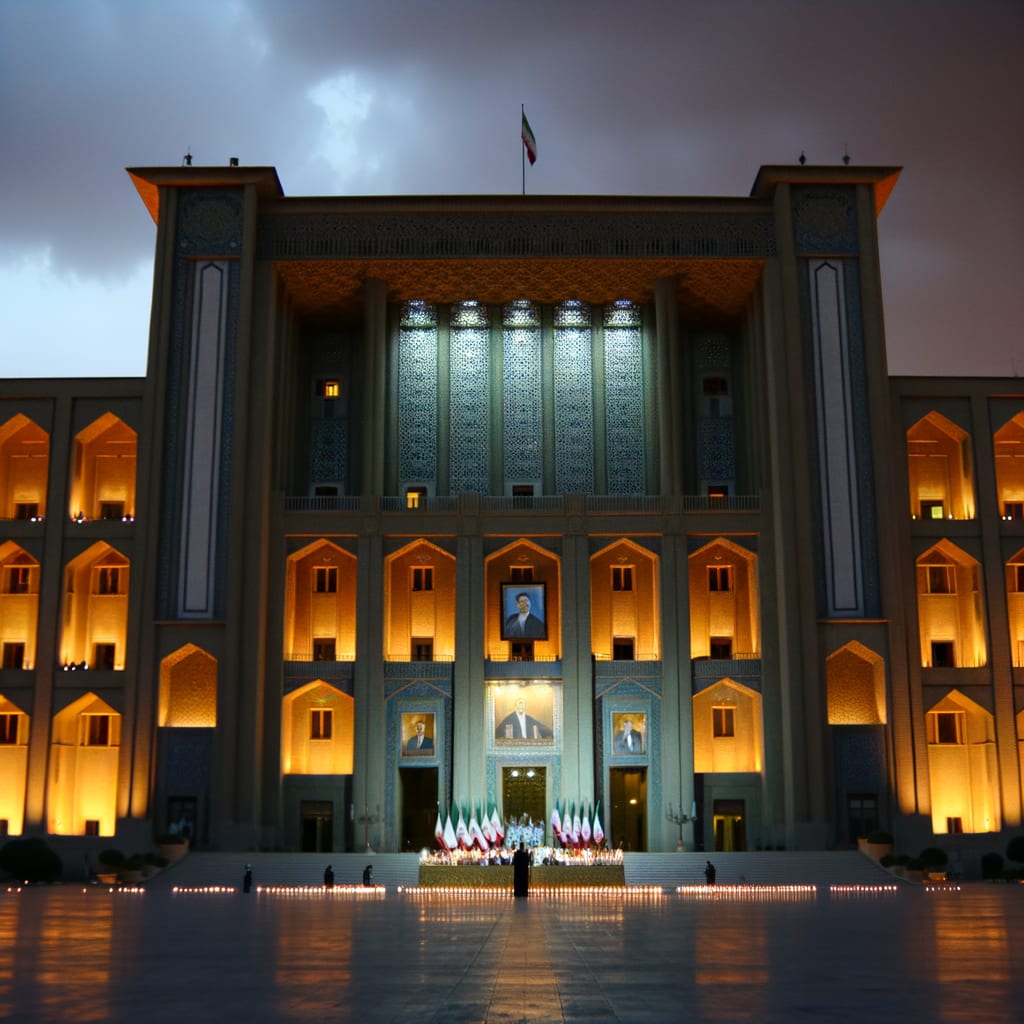
Iran's Leadership Change Amid Rising Tensions
In a significant political transition following the death of Iran's Supreme Leader, Ali Khamenei, his son, Mojtaba Khamenei, has been appointed as the new supreme leader. This internal reshuffle comes amidst escalating tensions in the region, with the US and Israel launching airstrikes across Iran and the Strait of Hormuz becoming a focal point for potential conflict.
Background and Context
Ali Khamenei led Iran from 1989 until his death during the opening wave of US-Israeli strikes on Tehran on February 28. His son, Mojtaba Khamenei, was selected as his successor by Iran's Assembly of Experts, who are tasked with vetting and selecting the supreme leader. Mojtaba, born on September 8, 1969, in the holy city of Mashhad in eastern Iran, is known as a discreet figure at official ceremonies and in the media.
Following Ali Khamenei's death, an interim three-member leadership council was formed, which included President Masoud Pezeshkian, judiciary chief Gholam-Hossein Mohseni-Ejei, and a cleric representing the Guardian Council. The Expediency Discernment Council has recently approved the transfer of key leadership powers to this interim council, preventing a leadership vacuum during this emergency.
Current Developments
The leadership transition and the ongoing conflict have led to international reactions, with both support and criticism emerging. US President Donald Trump expressed dissatisfaction with Mojtaba Khamenei's appointment, arguing that Iran's capabilities had been significantly weakened due to recent US military actions.
On the other hand, North Korea extended support, respecting Iran's choice of supreme leader and condemning the military attack against Iran by the US and Israel. China also considered the leadership change as Iran's domestic matter, urging respect for Iran's sovereignty and warning against attempts to reshape the country's political system from outside.
Despite the tension, Iran's security chief Ali Larijani posted a warning that the Strait of Hormuz will either be a Strait of peace and prosperity for all or will be a Strait of defeat and suffering for warmongers
.
Implications and Reactions
The Iranian government reported that 1,230 people were killed in US-Israeli strikes since Saturday, with the conflict spilling out into other countries in the region. Iran maintained it did not carry out any attacks towards Turkey or Azerbaijan and warned that it would act if foreign territory were used to launch attacks against it.
Meanwhile, US forces claimed to have struck or sunk over 20 Iranian ships since the country launched its attacks on Tehran. The US Central Command further reported that a total of 43 Iranian vessels had been sunk or damaged since the start of the conflict.
Conclusion
The political transition in Iran, coupled with escalating regional tensions, has drawn mixed international reactions. As the conflict continues, the focus is on how Iran's new leadership will navigate these volatile circumstances. With the Strait of Hormuz at the center of potential conflict, the region waits with bated breath for the next development.