
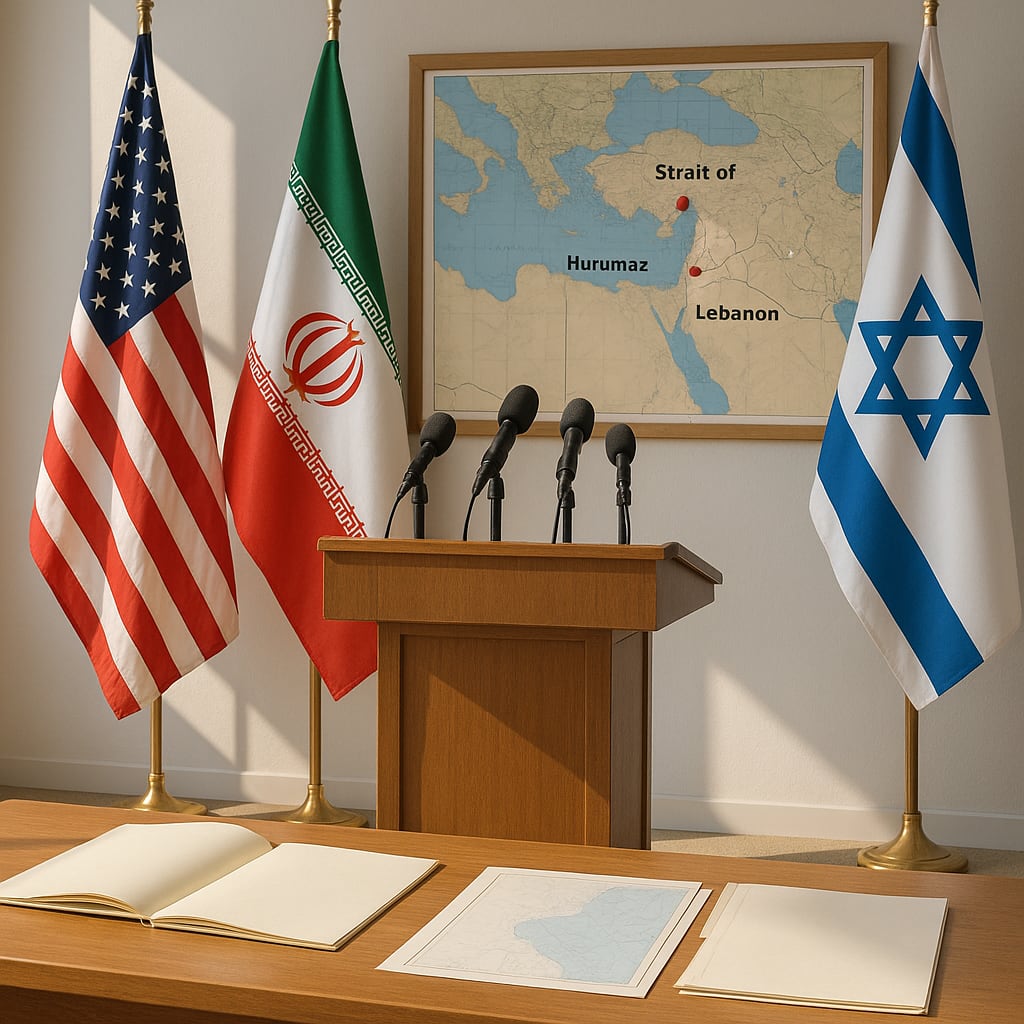
Vance defends US–Iran MoU, warns Israel to respect the process as talks slip and Lebanon’s inclusion remains disputed
Narrative Snapshot
- Across US, Israeli, and regional outlets, there is broad agreement that JD Vance mounted an unusually forceful public defense of the US–Iran memorandum, pairing assurances about continued leverage with sharp criticism of Israeli hardliners (Al Jazeera, Times of Israel, Fox News, The Guardian, Le Monde).
- Coverage diverges on the deal’s scope in Lebanon: BBC reporting (via Middle East Eye) says Lebanon is excluded, while a senior US official cited by the Times of Israel (via Middle East Eye) says a ceasefire vision extends to Lebanon without conditioning it on Israeli withdrawal. Iran, by contrast, warns any Israeli attack or continued occupation in Lebanon would breach the MoU (IRNA; Middle East Eye).
- Implementation remains opaque: Vance called the MoU “very general,” with key details—nuclear inspections and maritime reopening—still to be worked out (The Guardian). Switzerland-based talks were then delayed, undercutting early expectations of a swift signing (ANSA; RT; Middle East Eye).
- Israeli political emphasis centers on rejecting constraints and sustaining operations in Lebanon (Middle East Eye; Al Jazeera), while Vance underscores US aid and isolation risks for Israel, framing Trump as Israel’s sole remaining ally (The Guardian; The Hindu; Times of Israel).
What Happened
Following announcement of a US–Iran memorandum of understanding to end hostilities and reopen the Strait of Hormuz, the White House put JD Vance forward to defend the document and rebuff Israeli criticism. Vance argued Israel “can’t…kill” its way out of security problems, said civilian deaths in Beirut are unacceptable, and warned that Trump is Israel’s only remaining ally, explicitly referencing US defense aid (Middle East Eye; Al Jazeera; Fox News; The Guardian). He described the MoU as “very general,” with the return of nuclear inspectors and maritime reopening still under negotiation (The Guardian). Swiss-hosted follow-on talks expected by week’s end slipped, with Vance not traveling as planned and Bern confirming a postponement (ANSA; RT; Middle East Eye). Israeli ministers Itamar Ben-Gvir and Bezalel Smotrich urged rejecting the deal and continuing operations in Lebanon (Middle East Eye; Al Jazeera). Tehran warned that Israeli attacks or continued occupation in Lebanon would violate the MoU (IRNA). Lebanese officials said they were not briefed on terms or timing (Middle East Eye).
Why It Matters
- US–Israel alignment: Vance’s public rebuke signals a sharper American willingness to leverage aid and diplomatic isolation to constrain Israel’s operational choices, testing a core alliance norm that sensitive disputes are handled quietly (The Guardian; The Hindu; Times of Israel).
- Coercion-to-diplomacy pivot: The MoU, framed by Vance as intentionally general, reflects a return to negotiated risk-reduction after months of coercion, consistent with a recurring US pattern on Iran policy identified by Indian coverage (The Hindu; The Guardian).
- Regional linkage: Disagreement over whether Lebanon is covered exposes the difficulty of compartmentalizing Iran-related de-escalation from conflict dynamics along the Israel–Lebanon front. Tehran’s stance that Israeli action in Lebanon would breach the MoU elevates escalation risks tied to interpretation disputes (IRNA; Middle East Eye).
- Maritime and nuclear regimes: Reopening Hormuz and the prospective return of inspectors would reinsert economic and verification institutions into crisis management, but only if the MoU’s ambiguities are resolved and parties comply (The Guardian; ANSA). Israeli concerns the deal weakens pressure on enriched uranium stockpiles highlight unresolved nonproliferation leverage questions (Middle East Eye).
Diverging Narratives
- Scope and obligations: While a senior US official (via the Times of Israel) is cited as envisioning a ceasefire reaching Lebanon without requiring Israeli withdrawal, BBC reporting (via Middle East Eye) says Lebanon is outside the MoU. Iran asserts any Israeli attack or continued occupation in Lebanon violates the agreement—an interpretation that, if not shared by Washington, sets up enforcement friction (IRNA; Middle East Eye).
- Leverage vs restraint: Vance insists Iran will not receive relief absent a final deal, portraying Washington as holding decisive leverage (Times of Israel). Israeli ministers argue the agreement unduly constrains Israel’s campaign in Lebanon (Middle East Eye; Al Jazeera). Vance’s warning that civilian-killing strikes are unacceptable and that “you can’t kill your way out” foregrounds restraint as a security imperative (Middle East Eye; Al Jazeera; Fox News).
- Strategic framing: Al Jazeera reports Vance cast the war as a US “victory” irrespective of negotiation outcomes, contrasting with Israeli fears that the MoU dilutes pressure on Tehran’s nuclear advances (Al Jazeera; Middle East Eye). Russian state outlets highlight Israel’s refusal to withdraw from Lebanon and emphasize a US–Israeli rift (RT; TASS).
- Process credibility: Early signals of imminent signing in Switzerland (ANSA) and possible Vance travel (Middle East Eye) were followed by postponement and Iranian denials of travel plans, raising questions about coordination and the negotiators’ control over timelines (Middle East Eye; RT).
What Happens Next
- Clarification of Lebanon’s status: Watch for US and Iranian statements explicitly defining whether and how Lebanon is covered. Indicators include any US conditioning of military aid, explicit ceasefire terms referencing Lebanon, and Iranian warnings or linkage to compliance (Middle East Eye; IRNA).
- Negotiation logistics and sequencing: Swiss scheduling updates, Vance’s travel, and any joint communiqué on inspectors’ return or Hormuz reopening will signal whether the “very general” MoU is consolidating into implementable steps (ANSA; The Guardian; RT).
- Israeli policy choices: Cabinet signals on operations in Lebanon, responses from Ben-Gvir/Smotrich, and any reference to withdrawal or rules of engagement will show whether Jerusalem aligns with or resists the MoU’s envisioned de-escalation (Middle East Eye; Al Jazeera; RT).
- Economic and verification levers: Concrete moves on IAEA inspector access and Iran’s stated maritime fee plans at Hormuz, alongside US statements that relief awaits a final deal, will reveal the balance between incentives and enforcement tools shaping compliance (The Guardian; The Guardian link on maritime fees; Times of Israel).