
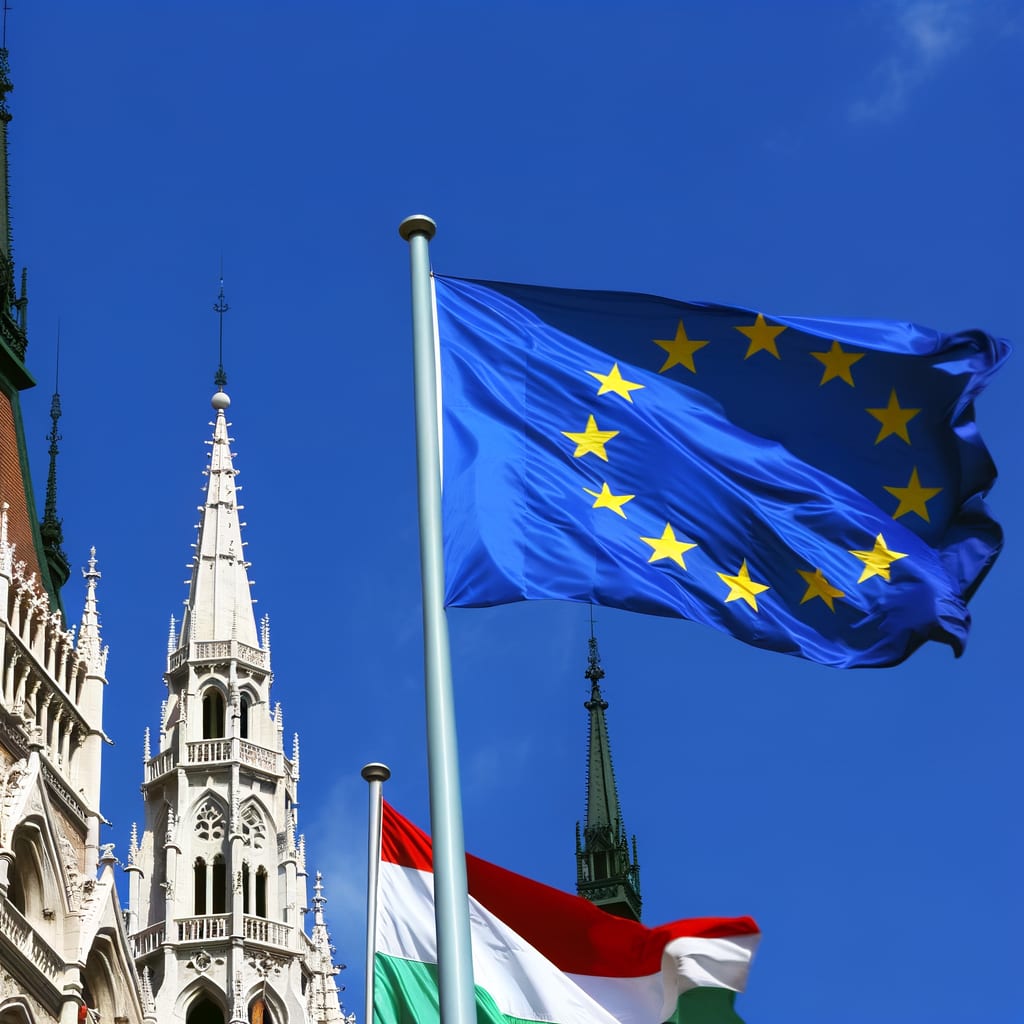
Hungary's Election: A Geopolitical Chessboard
Key Facts
Hungary's upcoming election is drawing global attention, as it not only stands as a referendum on Europe's right but also holds crucial implications for major world powers. With polls indicating a potentially tight race, incumbent Prime Minister Viktor Orban is facing a significant challenge from the pro-European opposition leader Peter Magyar.
Background
Having dominated Hungary's political landscape for 16 years, Orban's rule has been marked by constant adjustments to the country's political system, garnering him both praise and criticism. His tenure has seen a strengthening of ties with major powers, including China, Russia, and the US under President Donald Trump. This, coupled with his self-styled illiberal democrat
approach, has positioned him as a divisive figure not only in Hungary but across Europe.
Key Developments
Recent polls show Orban's Fidesz party trailing Peter Magyar's Tisza Party by 19 to 23 points among likely voters. This has been fueled by a grassroots movement across rural Hungary, with first-time activists rallying support for the opposition.
In a surprising turn, Orban's policies affecting the Roma minority have put their votes in play in this pivotal election. Past governmental policies towards this community might tip the scales against Orban's party.
However, concerns about the election's integrity and monitoring have been raised. A group of European lawmakers has called for the removal of a former Kremlin interpreter from the Organisation for Security and Cooperation in Europe (OSCE) mission set to independently monitor Hungary's election. Simultaneously, a documentary is raising fresh questions about the country's electoral system's credibility.
Geopolitical Implications
The election is seen as a wider geopolitical game, with major world powers closely watching the outcome. Orban's defeat could potentially dent China's influence in Europe, given his close ties with the country. The relationship between Orban's government and the Kremlin has also come under scrutiny, with some observers alleging Russian interference in the election.
The election results could have significant implications for the European Union as well. Orban has long exploited the EU's rules to oppose key moves and extract more funding, leading to his characterization as a 'Trojan horse'. His opponent, Peter Magyar, has expressed his intention to mend ties with the EU, a stance that has garnered support from some EU members.
Conclusion
As Hungarian citizens prepare to cast their votes, the election's outcome is expected to reverberate beyond the country's borders. The election, set for April 12, is not just an internal competition but a part of a broader geopolitical landscape. The international community will be closely observing the developments, with the results potentially reshaping alliances and power dynamics in the region.