
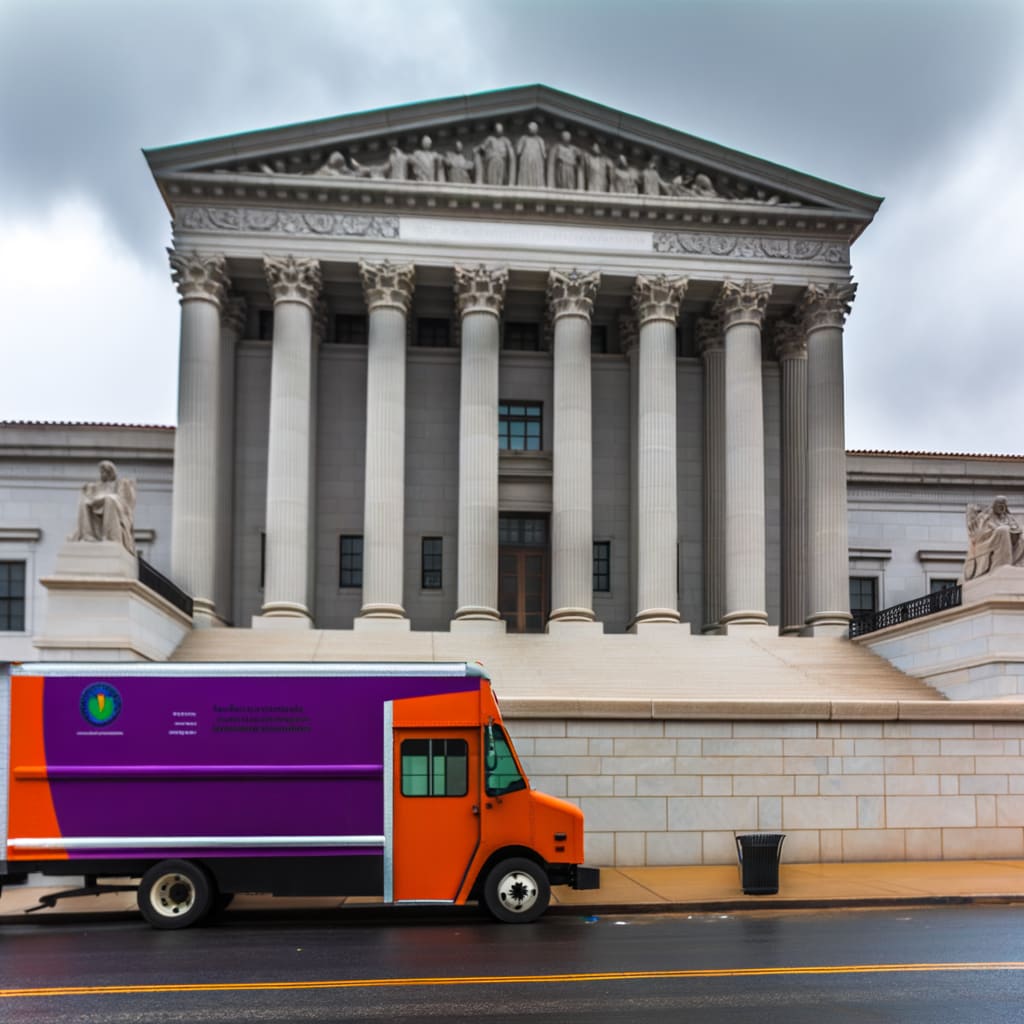
FedEx Sues U.S. Government Over Tariffs As Trump's Trade Policy Faces Setback
Global courier giant FedEx has filed a lawsuit against the U.S. government seeking reimbursements for emergency tariffs imposed by President Donald Trump. This move follows the recent U.S. Supreme Court ruling that deemed these taxes illegal, as they were based on a 1977 law. As a result, the Trump administration has had to recalibrate its trade strategy, leading to increased uncertainty for businesses across sectors.
Trump's Tariff Policy Under Fire
The Supreme Court ruled that Trump's use of the International Emergency Economic Powers Act to impose tariffs on most U.S. trading partners was unconstitutional. In a 6-3 decision, the court found that the Constitution gives Congress — not the president — authority over tariffs. This decision, however, is not the final word, as multiple legal avenues remain that could allow Trump to reassert aggressive trade powers.
Following this ruling, Trump has announced an increase in his new global import tariff from 10% to 15%, using the Trade Act of 1974. The U.S. trade representative, Jamieson Greer, stated that the tariffs for some countries may even exceed this figure, although no specific trading partners were named.
Implications for Businesses and Countries
The new tariff regime is predicted to impact around 25% of Brazilian exports to the U.S., according to the Ministry of Development, Industry and Trade. However, some businesses, such as Brazilian aircraft manufacturer Embraer and American airlines, could benefit from the change in tariff policy.
China, a major trading partner of the U.S., has urged Washington to lift the tariffs, arguing they now violate even U.S. domestic law. The U.S. has decided to keep China tariffs at their current level, which varies from 35% to 50% depending on the product.
The U.S. Justice Department has received over 900 requests for refunds of Trump tariffs from various companies, including FedEx, since the tariffs were deemed illegal. The administration has previously indicated it would pay, but by the president's own admission, it could be years before the matter is settled.
The Next Steps
Despite the Supreme Court setback, Greer maintains that U.S. policy on tariffs hasn't changed,
and the U.S. won't pull out of deals with the UK, EU, and other parties. Trump's commitment to the broader trade fight remains, as he has vowed to use alternative authorities to keep tariffs in place.
The return to aggressive trade policy using different statutes, albeit temporary, is seen as a recalibration — not a retreat — from one of the defining pillars of Trump’s second-term agenda. However, the administration's shift in strategy has raised concerns about potential economic instability and uncertainty for businesses.