
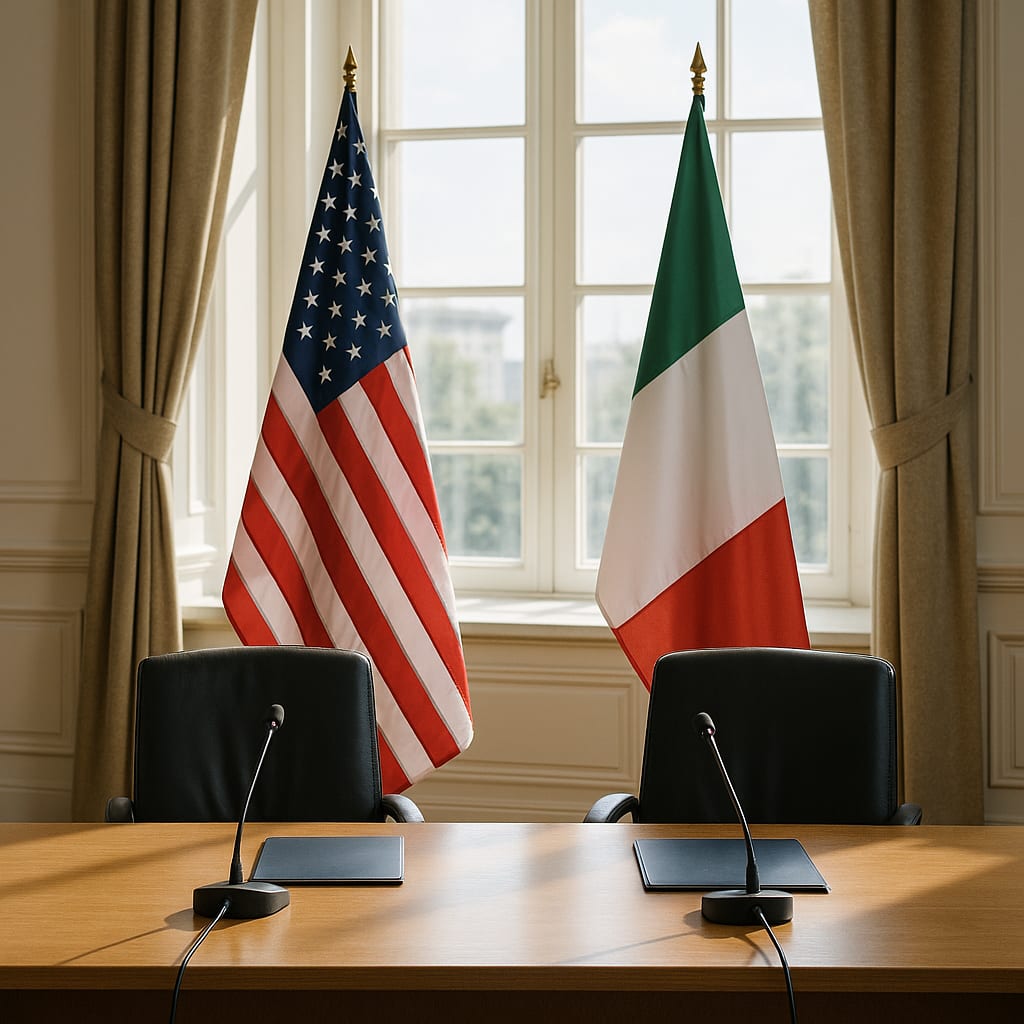
Italy cancels US diplomatic visit after Trump claims Meloni “begged” for G7 photo; Rome rejects account
Narrative Snapshot
- Italian outlets center national dignity and protocol: La Repubblica highlights Trump’s claim he agreed to a photo “out of pity,” while ANSA amplifies Meloni’s retort, “I and Italy never beg.”
- International reporting converges on the policy consequence: a canceled foreign minister visit. SCMP, Le Monde, DW, Al Jazeera, Folha de S.Paulo, and the Times of Israel foreground Antonio Tajani’s decision and his view that the remarks “offend the whole of Italy.”
- Anglo-American coverage situates the spat in a broader downturn: the BBC and the Guardian link frayed ties to Trump’s Iran policy; Fox News frames a “simmering rift” following what had been close alignment.
- Alternative frames emphasize rupture vs context: RT underscores a “row with Washington,” while Middle East Eye underscores concurrent G7 diplomacy, noting Italy’s call for Israel to act as a “positive player” after a US–Iran deal.
What Happened
In a phone interview with Italy’s La7, US President Donald Trump said Giorgia Meloni “begged” him for a photo on the sidelines of the G7 in Évian and that he agreed “out of pity,” as reported by La Repubblica. Meloni publicly rejected the account as “completely made up,” adding she was “astonished” (ANSA; BBC; Sky News; the Guardian). Italy’s foreign minister, Antonio Tajani, then canceled a planned Sunday–Monday visit to the United States, calling Trump’s words “grave and offensive” and saying they offended all of Italy (SCMP; Le Monde; Times of Israel; Al Jazeera; DW; Folha). The Guardian noted the pair had held several one‑to‑one meetings at the summit despite earlier tensions tied to Iran policy. The episode unfolded against a G7 backdrop already shaped by efforts to manage Trump’s engagement (the Guardian, 15 June; Japan Times, 13 June).
Why It Matters
This is not only a personal exchange but a disruption of bilateral diplomacy between long‑standing NATO and G7 partners. Canceling the Italian foreign minister’s Washington trip removes a channel for managing disputes at a moment when allies are aligning on Iran‑ and Israel‑related crises (BBC; the Guardian; Middle East Eye). It also reinforces a structural challenge other G7 leaders anticipated: adapting multilateral agendas and alliance management to an unpredictable US approach to partners (the Guardian, 15 June; Japan Times, 13 June). For decision‑makers, the episode shows how leader‑level rhetoric can trigger immediate institutional consequences—complicating coordination on sanctions, defense postures, and Middle East diplomacy—and places added weight on European intra‑EU and G7 mechanisms to sustain policy continuity when bilateral ties are strained.
Diverging Narratives
- Competing accounts: Trump’s version—Meloni “begged” and he acceded “out of pity” (La Repubblica)—versus Meloni’s “totally invented”/“completely made up” rebuttal and assertion that “Italy never begs” (ANSA; BBC; Sky News; RT).
- Scope of affront: Italian and several international outlets emphasize national offense and institutional response, quoting Tajani that the remarks insult “the whole of Italy” and linking them directly to the trip’s cancellation (SCMP; Le Monde; Times of Israel; Al Jazeera; DW; Folha). Other coverage treats it primarily as a bilateral spat between two leaders once politically aligned (Fox News; the Guardian).
- Context for the rift: The BBC and the Guardian tie deteriorating ties to Trump’s Iran policy, including references to war involvement, while Middle East Eye references a US–Iran deal concluded around the summit and Italy’s call for Israel to be a “positive player.” Together, these suggest Middle East policy is the backdrop, but accounts differ on the latest inflection.
- G7 dynamics: The Guardian reports multiple one‑to‑one meetings in Évian that appeared to steady relations before the interview aired, highlighting a tension between summit‑stage engagement and post‑summit rhetoric.
What Happens Next
- Diplomatic channel reset: The key indicator is whether Rome reschedules Tajani’s Washington visit or substitutes alternative formats (e.g., phone calls, third‑country sideline meetings). Any move to put the visit back on the calendar would signal de‑escalation; prolonged silence would confirm a sustained freeze (SCMP; Le Monde).
- Public positioning by principals: Watch for further statements from Meloni doubling down on alliance expectations—she has already contrasted US treatment of “enemies” and “allies” (Japan Times, 20 June)—or any clarifying remarks from Trump that could lower the temperature. Either would shape whether working‑level ties can proceed.
- Multilateral workarounds: Given pre‑existing concerns about managing Trump at the G7 (the Guardian, 15 June; Japan Times, 13 June), monitor whether Italy channels sensitive Middle East coordination more through EU/G7 fora than bilaterally. Signals include Italy’s continued public framing on Israel’s role post‑US–Iran developments (Middle East Eye) and visible reliance on summit chairs for agenda management.