
Lead
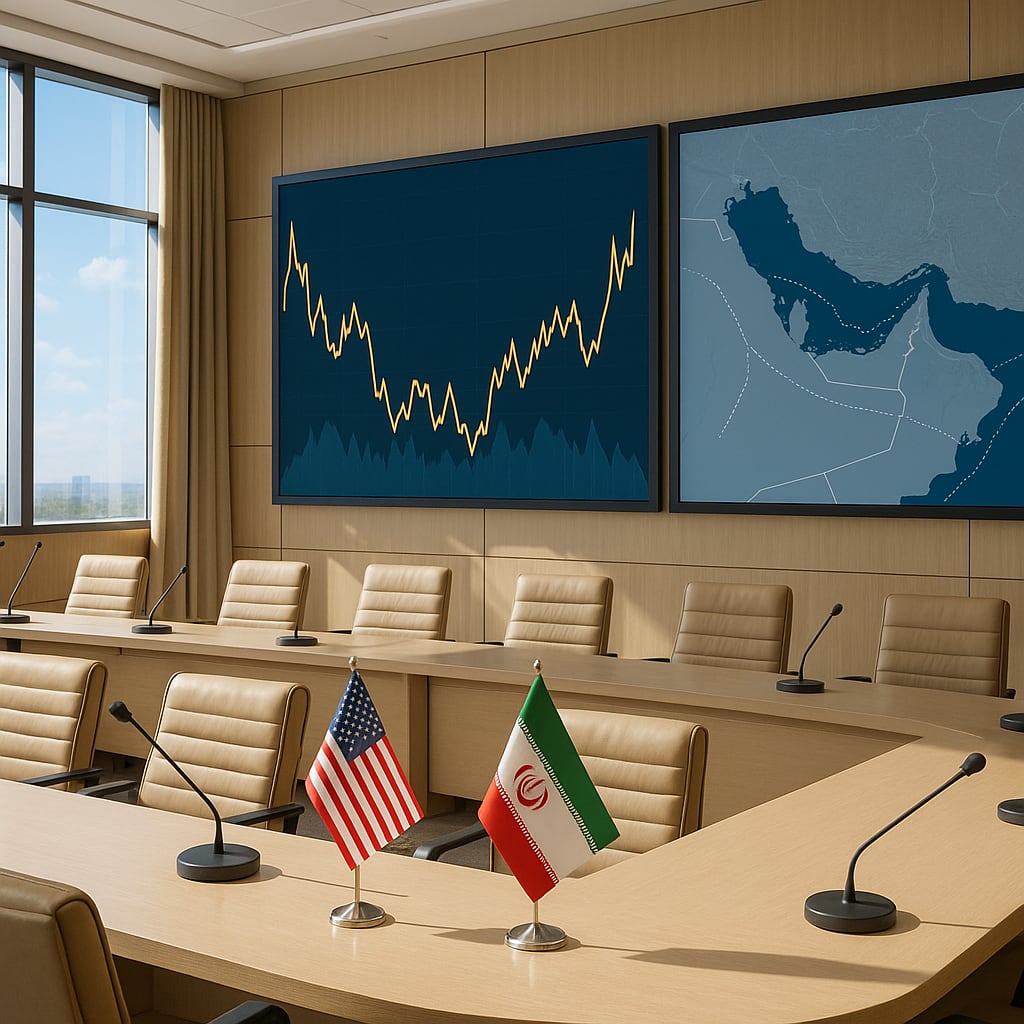
A fragile U.S.–Iran ceasefire is being tested by renewed military exchanges even as negotiators try to keep peace talks alive, and oil markets are swinging sharply on each new signal of escalation or compromise. Across international coverage, the common picture is of a conflict that has not returned to all-out war but is no longer behaving like a stable truce: drone incidents, limited strikes, and political hard lines are colliding with an urgent effort—often mediated through regional diplomacy—to restore predictability in the Strait of Hormuz and calm global energy prices.
What Happened
Over recent days, the central fact repeated across outlets is that hostilities resumed despite an announced ceasefire and ongoing talks. U.S. action has been described in two closely related ways: as new strikes on Iranian-linked targets and as defensive measures against Iranian drones. Reporting converges on the immediate trigger for the market move on 28 May: renewed military activity involving U.S. forces and Iranian drones, which raised doubts about whether the ceasefire framework could hold.
At the same time, the diplomatic track has remained active. Multiple accounts describe negotiations in progress—frequently associated with Qatar as a venue and with regional intermediaries involved—framed as an attempt to prevent a wider war and to address security in and around Hormuz. Several outlets also describe a political push from U.S. leadership for a “major” agreement rather than a partial deal, while Iranian officials have been portrayed as rejecting pressure and “excessive demands” and warning that Iran will not yield in negotiations.
The oil-price reaction has been anything but linear. Some coverage emphasizes a sharp jump on 28 May as traders repriced the risk of disruption after the new incidents. Other reporting, including market-wire style updates, highlights sessions where Brent and WTI moved the other way—falling below mid-$90s levels and even logging only marginal daily declines—reflecting the countervailing belief that diplomacy might succeed, or that actual physical supply had not yet been interrupted. By 29 May, some business coverage pointed to oil prices dropping again amid renewed optimism about a peace deal, even as the broader backdrop remained one of intermittent exchanges and unresolved negotiating demands.
Why It Matters
The significance of these events is less about any single strike or interception than the way they reinforce a new reality: crude prices are being driven by political risk signals rather than changes in immediate supply and demand. Across reporting, oil moves are repeatedly tied to the perceived likelihood of (1) escalation around Hormuz, (2) a durable ceasefire, or (3) an agreement that lowers the probability of renewed attacks.
That matters because Hormuz is treated by markets as a global choke point. Even without confirmed large-scale physical disruption, the risk premium—the price traders add for the possibility of future disruption—can jump quickly when ceasefire violations occur or when the drone-and-strike cycle resumes. The result is a feedback loop: battlefield and diplomatic headlines move crude; crude moves inflation expectations and market sentiment; and those economic pressures shape the political incentives to keep talks alive.
Politically, the episode underscores how narrow the corridor has become for compromise. U.S. negotiating language described as maximal—particularly demands centered on Iran’s enriched uranium—tightens the space for an agreement that Iranian leaders can accept. Iranian statements stressing resistance to pressure signal the opposite constraint: an insistence that talks not look like capitulation. International coverage also makes clear that U.S. leadership is managing not only Tehran but regional allies and domestic audiences, all while trying to prevent a return to broader hostilities.
For energy markets, the practical consequence is volatility rather than a single direction. The same week can produce price spikes on escalation fears and sharp drops on renewed peace hopes, with traders reacting to each data point about drones, strikes, and the tone of talks.
Diverging Narratives
Ceasefire “violation” vs. managed escalation
Some outlets treat the renewed U.S. action as a clear breach of a ceasefire framework—emphasizing the contradiction between “peace talks” and fresh strikes. Others present the same events as a defensive episode centered on intercepting Iranian drones, framing U.S. actions as reactive rather than escalatory. The underlying facts overlap—drones, U.S. military response, and a ceasefire under strain—but the framing changes the implied responsibility for the breakdown.
“War” framing vs. “crisis” framing
Regional coverage more readily describes the situation as an ongoing war with daily developments, while some Western reporting adopts the language of a ceasefire tested by incidents, focusing on whether the parties are “sliding back” into war rather than already in it. This difference shapes readers’ expectations: in one frame, incidents are chapters in a continuing conflict; in the other, they are deviations from an intended de-escalation path.
Market signal selection: spike, rebound, or decline
Energy coverage diverges sharply in which market moment is treated as most representative. Some emphasize intraday or day-over-day jumps—oil up several percent—after renewed hostilities. Others highlight broader downtrends over multiple sessions, including Brent falling below key thresholds in the mid-$90s and, later, drops tied to renewed hopes of a peace deal. These are not mutually exclusive facts; they reflect different editorial choices about whether the story is volatility (rapid swings) or direction (a net decline tied to diplomacy).
What drives oil: supply risk vs. geopolitics
One line of coverage treats the story primarily as geopolitics overriding fundamentals—prices moving because negotiations and military incidents are now the dominant variable. Another leans toward the possibility of a supply crunch and emphasizes warnings from industry voices about how quickly disruption could translate into scarcity. Both perspectives agree on sensitivity; they differ on whether the key issue is immediate physical shortage or a risk premium attached to the negotiating track.
Negotiating substance: uranium demands and scope of talks
Outlets also diverge on how central the nuclear file is at this stage. Some reporting foregrounds U.S. demands that Iran’s enriched uranium be handed over or destroyed as a core condition, implying a high bar for any settlement. Other coverage stresses Iranian claims that nuclear issues were not yet the focus, portraying negotiations as primarily about de-escalation and the broader security environment. The disagreement is less about whether nuclear issues matter than about whether they are already a formal make-or-break item in the current round.
Regional power lens vs. bilateral lens
Some international reporting emphasizes how the conflict is reshaping regional alignments and perceptions of U.S. power—suggesting Middle East rivals are converging on pushing Washington toward a deal. Other coverage stays tightly bilateral, treating this chiefly as a U.S.–Iran bargaining contest. The difference affects what is downplayed: the bilateral frame can minimize third-party leverage, while the regional frame can minimize the direct military and political calculations between Washington and Tehran.
Current Situation
The latest shared picture is of negotiations continuing under heavy strain, with neither side presenting itself as backing down and with the ceasefire repeatedly stressed by incidents involving drones and limited strikes. Oil prices, meanwhile, remain headline-driven: they can jump on signs the ceasefire is fraying and then slide on renewed optimism that a peace deal is within reach.
The immediate outlook, based on the combined coverage, is not a clear turn toward either full escalation or stable peace, but continued volatility—diplomatically and economically—until there is a durable agreement that reduces the probability of renewed exchanges and clarifies what each side must deliver. For markets and governments alike, the core uncertainty is the same: whether the talks can convert intermittent restraint into an enforceable de-escalation that survives the next provocation.