
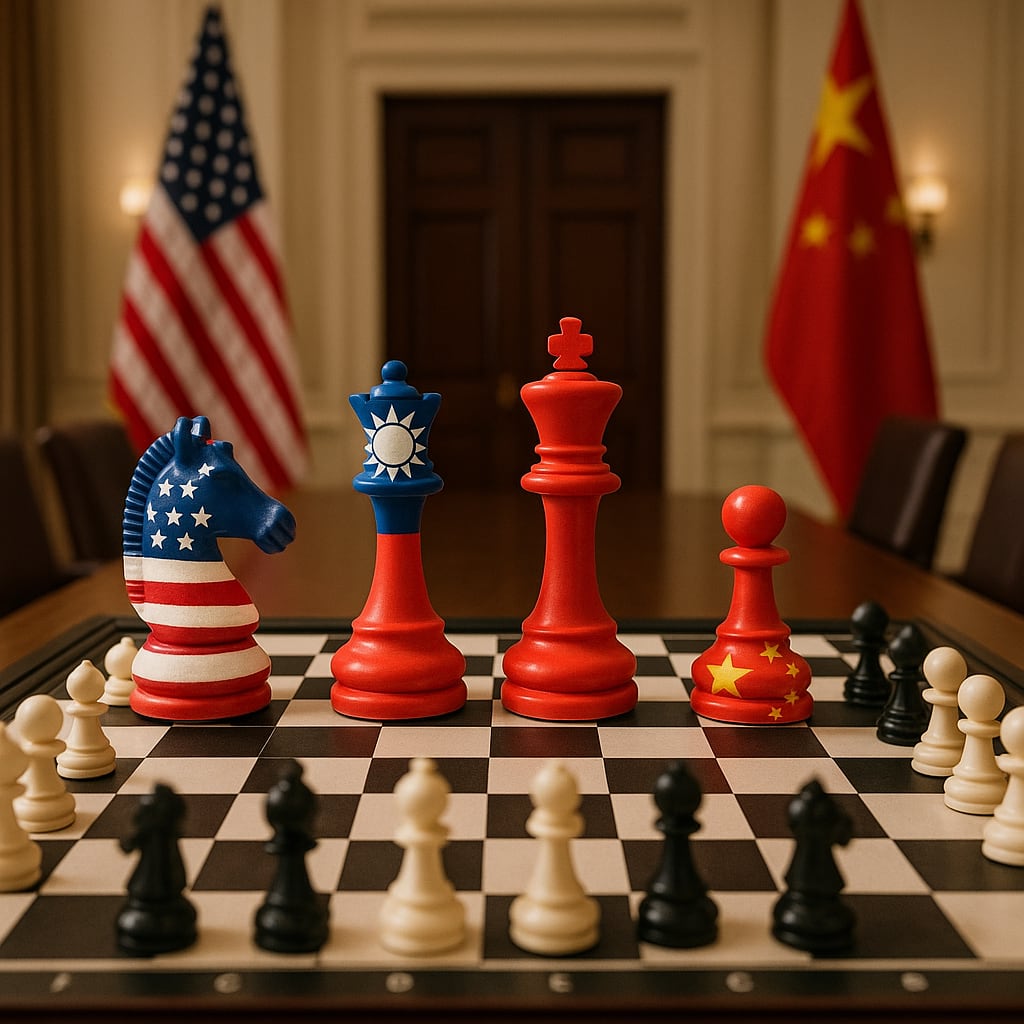
Trump's Potential Conversation with Taiwan Sparks Political Tensions
In a recent turn of events, U.S. President Donald Trump has indicated he may speak to Taiwan's President Lai Ching-te, breaking with years of diplomatic precedent. This potential conversation has sparked political tensions among China, Taiwan, and the U.S., particularly as it coincides with a debated $14 billion arms sales to Taiwan.
Background and Context
The U.S. and Taiwan have not had direct contact since Washington shifted diplomatic recognition from Taipei to Beijing in 1979. However, President Donald Trump has suggested that he might break this protocol, stating he would be open to speaking with the Taiwanese leader. This move was met with a positive response from President Lai, who confirmed his readiness to converse with Trump.
At the same time, the U.S. is contemplating a significant $14 billion arms deal with Taiwan. Trump has hinted that these arms sales could serve as a negotiating chip with Beijing, which claims Taiwan as an integral part of its territory.
Key Developments and Reactions
President Lai has been vocal about Taiwan's sovereignty, stating that the island's future will not be dictated by external forces.
In response to President Trump's comments, Lai asserted that Taiwan intends to continue purchasing weapons from the U.S. He defended the arms sales as the most vital deterrent
against regional conflict.
On the other hand, Beijing has reacted strongly to these developments. The State Council’s Taiwan Affairs Office accused Lai of destroying cross-strait peace
and filled his remarks with lies and deception, hostility and confrontation.
China's foreign ministry reiterated its firm opposition to any official U.S. interactions with Taiwan and urged the U.S. to respect the one-China policy.
Implications and Global Response
Analysts suggest that Trump's recent remarks about Taiwan are less indicative of closer U.S.-Taiwan ties and more a reflection of his unpredictable political strategies. This situation has sparked debates in Washington about the future of U.S. policy towards Taiwan and the potential shift in U.S.-China relations.
The international community has also noted the potential implications of this development. Taiwan's Deputy Foreign Minister Chen Ming-chi has sought confirmation from the U.S. about Trump's intention to speak with President Lai.
Current Status
As it stands, the potential conversation between President Trump and President Lai remains speculative, as does the final decision on the U.S. arms deal with Taiwan. Lai has emphasized that Taiwan will not provoke conflict nor give up its sovereignty, suggesting that the island nation is preparing for possible outcomes. Meanwhile, the global community awaits further developments in this tripartite political tension.