
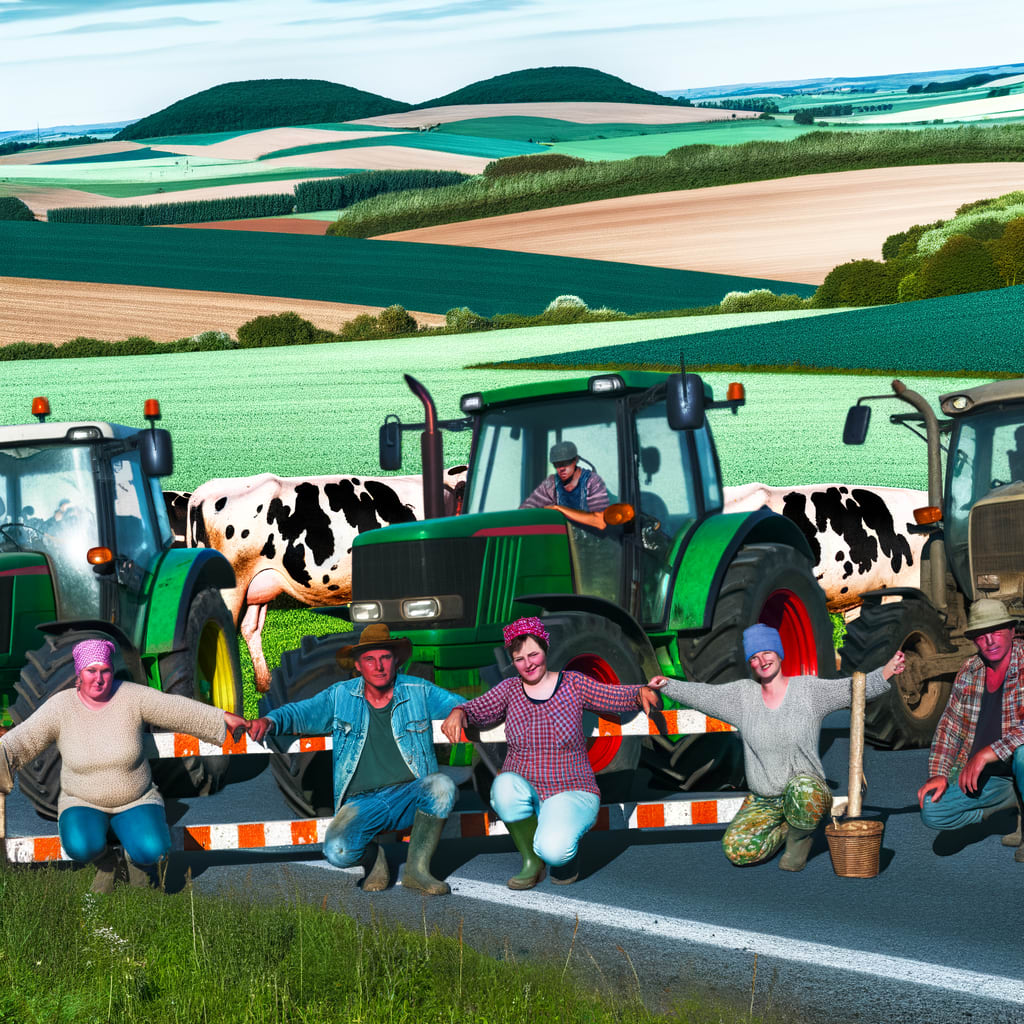
Massive Farmers' Protest Sweeps Across Europe, Clashing over EU-Mercosur Trade Deal
Tensions have escalated across Europe as thousands of farmers from multiple countries spearheaded a large-scale protest against the proposed EU-Mercosur trade pact. The demonstration, which has seen the involvement of tractors, blockades, and violent clashes, has placed EU leaders at odds while inciting widespread unrest amongst the agricultural community.
The Context
The main trigger for the protest is the impending agreement between the European Union and Mercosur, a South American trade bloc. Farmers fear that the pact will flood the European market with cheaper South American goods, undermining their livelihoods and the agricultural industry at large. Additionally, the crisis of contagious nodular dermatosis affecting livestock has further fueled the anger and mobilization of farmers, as reported by Le Monde.
The Protest
The protest reached its peak in Brussels, where a meeting of the European Union Council was taking place. Thousands of farmers, driving tractors, blocked roads and threw objects at buildings, including the European Parliament. Videos circulating on social media showed scenes of chaos, with burning tires, smoke, and confrontations with police, according to RT (Russia Today) and The Hindu.
The protest wasn't confined to Brussels; as Le Monde reported, the agricultural mobilization intensified in France, with convoys moving towards the European capital. In total, the French Interior Ministry recorded 80 actions involving 3,600 people across the country.
Political Response
In response to the escalating tension, French Minister Sébastien Lecornu has been trying to manage the farmers' anger against the government's handling of the nodular dermatosis crisis and the EU-Mercosur agreement. He organized a meeting with representatives from the four main agricultural organizations to discuss cattle vaccination and the trade agreement, Le Monde reported.
Meanwhile, the EU leaders' stance on the trade deal has been a contentious issue. French President Macron argued that the account did not balance and could not be signed, while Ursula von der Leyen, the President of the European Commission, deemed the agreement significant, as reported by La Repubblica.
Current Status and Implications
As the protests continue, the EU has delayed the Mercosur trade deal until January. France and Italy have also shown opposition to the trade agreement, with Italy's President of the Council, Giorgia Meloni, holding a strong position to trigger or not the immediate signing of the treaty, as reported by Le Monde.
The farmers' protest and the EU-Mercosur trade agreement have intensified agricultural mobilizations across Europe, bringing the issues of farming reforms, trade policy, and the management of livestock diseases to the forefront. As the situation continues to unfold, the outcomes of these protests will not only affect the European agricultural community but also the future of trade relations between the EU and South America.