
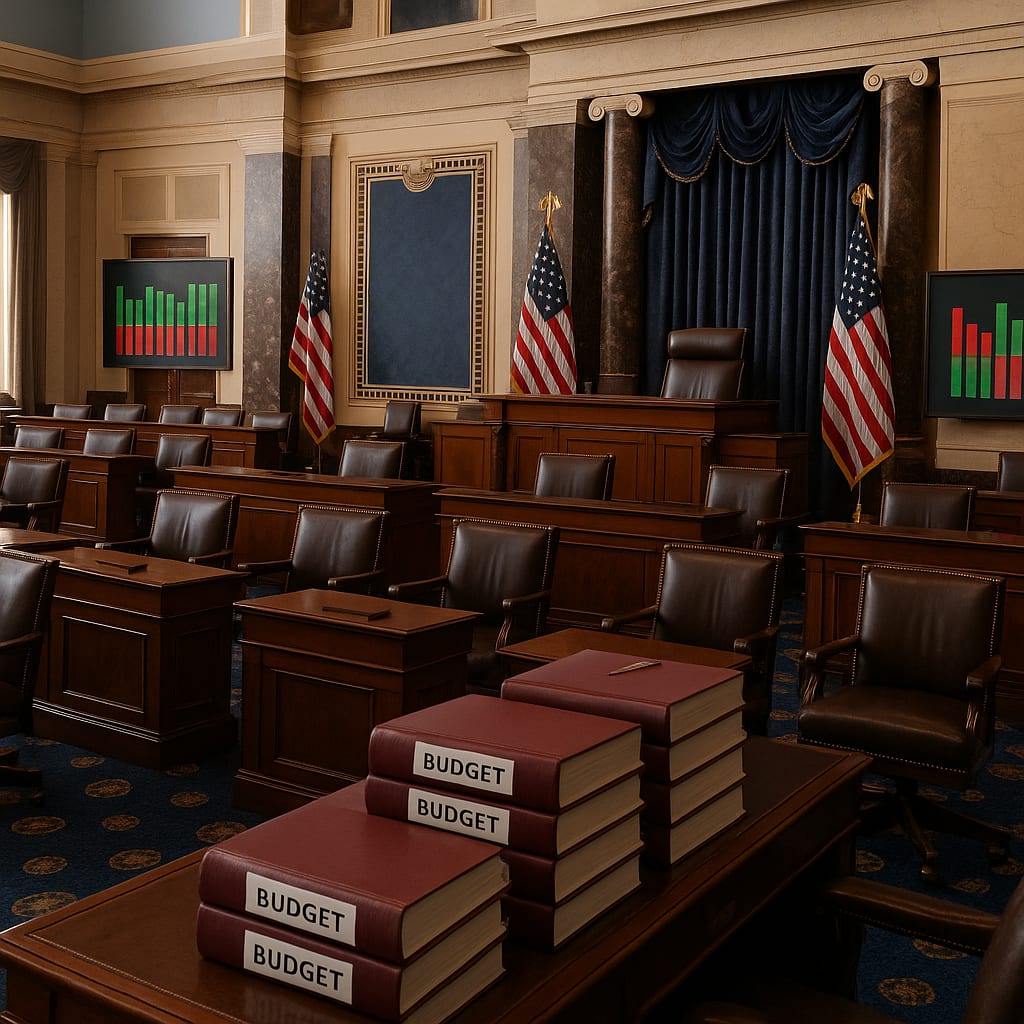
US Senate approves $70bn for ICE and Border Patrol after all-night session; bids to curb Trump settlement fund fail
Narrative Snapshot
- Points of agreement: outlets concur on the 52–47 vote, the roughly $70bn price tag, and a marathon “vote‑a‑rama” that stretched overnight (The Hindu; Deutsche Welle; The Guardian; CBC).
- Framing diverges: Fox News and the South China Morning Post cast the outcome as a clear win for Donald Trump’s agenda, while Le Monde and The Guardian foreground unified Democratic opposition and the procedural hardball that accompanied it (Fox News, June 5; SCMP; Le Monde; The Guardian).
- The sharpest emphasis split is over the Justice Department’s proposed “anti-weaponisation” settlement fund: international and Canadian coverage stress that attempts to bar or limit it failed, whereas a string of Fox News reports details weeks of Republican infighting over whether to kill it outright (CBC; The Hindu; Al Jazeera, June 5; Fox News, June 1–4).
- Sidebars and optics: the BBC highlights Republicans scrapping $1bn for a new White House ballroom amid resistance to the DOJ fund, while Brazil’s Folha and Italy’s Corriere frame the package as a relaunch or “offensive” in immigration enforcement (BBC; Folha de S.Paulo; Corriere della Sera).
What Happened
After an all‑night “vote‑a‑rama,” the Senate voted 52–47 to pass a roughly $70bn package to fund Immigration and Customs Enforcement and the Border Patrol for the next three years, spanning the remainder of Donald Trump’s term (The Hindu; Deutsche Welle; The Guardian; CBC). Democrats forced a series of votes aimed at constraining or eliminating the administration’s proposed $1.8–$2bn Justice Department “anti‑weaponisation” settlement fund, but those efforts failed (Al Jazeera, June 4–5; CBC; South China Morning Post; The Hindu). In the days leading up to passage, the Justice Department paused the fund amid GOP unrest, yet Republican attempts to permanently kill it fell short (Fox News, June 1, 3–4). Republicans also removed a separate $1bn proposal for a White House ballroom (BBC). Senate Democratic leader Chuck Schumer denounced the late‑night vote (Fox News, June 5). The bill now heads to the House (Deutsche Welle; Le Monde).
Why It Matters
The package locks in multiyear resources for ICE and the Border Patrol, shaping the federal government’s enforcement capacity at the US border through 2029 (The Hindu; Deutsche Welle). For the White House, multiple outlets describe the vote as a marquee legislative achievement on immigration enforcement (Fox News, June 5; South China Morning Post), even as the fight over the DOJ’s settlement fund exposed tactical rifts inside the GOP (Fox News, June 1–4, 6). Unified Democratic opposition and the overnight amendment gauntlet underscored how immigration and executive‑branch accountability remain tightly linked in current congressional strategy (Le Monde; The Guardian; Al Jazeera, June 4–5; CBC). The BBC’s note on axing high‑profile ancillary spending points to the political salience of optics in must‑pass security debates (BBC). Beyond Washington, international coverage frames the move as a significant expansion—or relaunch—of US immigration enforcement priorities (Folha de S.Paulo; Corriere della Sera).
Diverging Narratives
Republican champions emphasize restoring resources for frontline agencies. Lindsey Graham said he was “very proud of my Republican colleagues for… making sure that Border Patrol and ICE are fully funded” (The Guardian). Fox News likewise presents the vote as stitching together a functional GOP majority for a core Trump priority (Fox News, June 5). Democrats, by contrast, opposed the bill “en bloc” (Le Monde) and concentrated fire on the DOJ “anti‑weaponisation” fund, forcing votes to constrain or block it (Al Jazeera, June 4–5; CBC; The Hindu; SCMP).
Inside the GOP, Fox News documents a separate storyline: senators insisting the administration kill the DOJ fund before advancing enforcement money; a failed push by a dozen Republicans to permanently bar it; and continuing splits visible in votes on other conservative priorities, such as voter ID (Fox News, June 1–4, 6). International outlets largely track the substantive outcome and partisanship, with Folha describing a Trump “ofensiva migratória,” while the BBC spotlights the symbolic trimming of a $1bn ballroom request amid the fight over the DOJ fund (Folha de S.Paulo; BBC).
What Happens Next
The bill must still clear the House of Representatives before it can be enacted (Deutsche Welle; Le Monde). Al Jazeera underscores that House action is the next procedural step following the Senate’s vote‑a‑rama (Al Jazeera, June 5). Debate over the DOJ “anti‑weaponisation” settlement fund remains unresolved legislatively: the Justice Department paused it, attempts to permanently bar it in the Senate failed, and Democrats used procedural votes to keep it in the spotlight (Fox News, June 1, 4; CBC; Al Jazeera, June 4–5; SCMP; The Hindu). Coverage also signals that intraparty disagreements on ancillary issues—evident in the collapsed voter ID push—could persist alongside House consideration (Fox News, June 6).