
Iran’s team says it was ordered to exit the US within hours after World Cup opener; US officials confirm rapid-departure rule for upcoming matches
Narrative Snapshot
- Broad alignment: Multiple outlets report Iran had to return to its Mexico base hours after the Los Angeles match, with US officials confirming the team must depart within hours after group-stage games in Los Angeles and Seattle (CBC News; Al Jazeera; Middle East Eye, 17 Jun live update).
- Point of contention: Iran’s coach and Iranian media blame political interference by US authorities and FIFA; other coverage frames the constraints as visa and entry-rule issues, noting at least one player quickly received a new multi-entry visa (Tehran Times; Al Jazeera; Folha de S.Paulo; TASS/RT report initial expiry).
- Stakes widely flagged: Competitive integrity and athlete welfare versus host-state control over borders. US courts have also been asked to weigh in on in-stadium political symbols, upholding FIFA’s ban on Iran’s pre-1979 flag in Los Angeles (Fox News).
- Social context: Reports highlight divided diasporic audiences and protests, even as many fans cheered the team during the match (Al Jazeera; South China Morning Post; Fox News; Middle East Eye).
What Happened
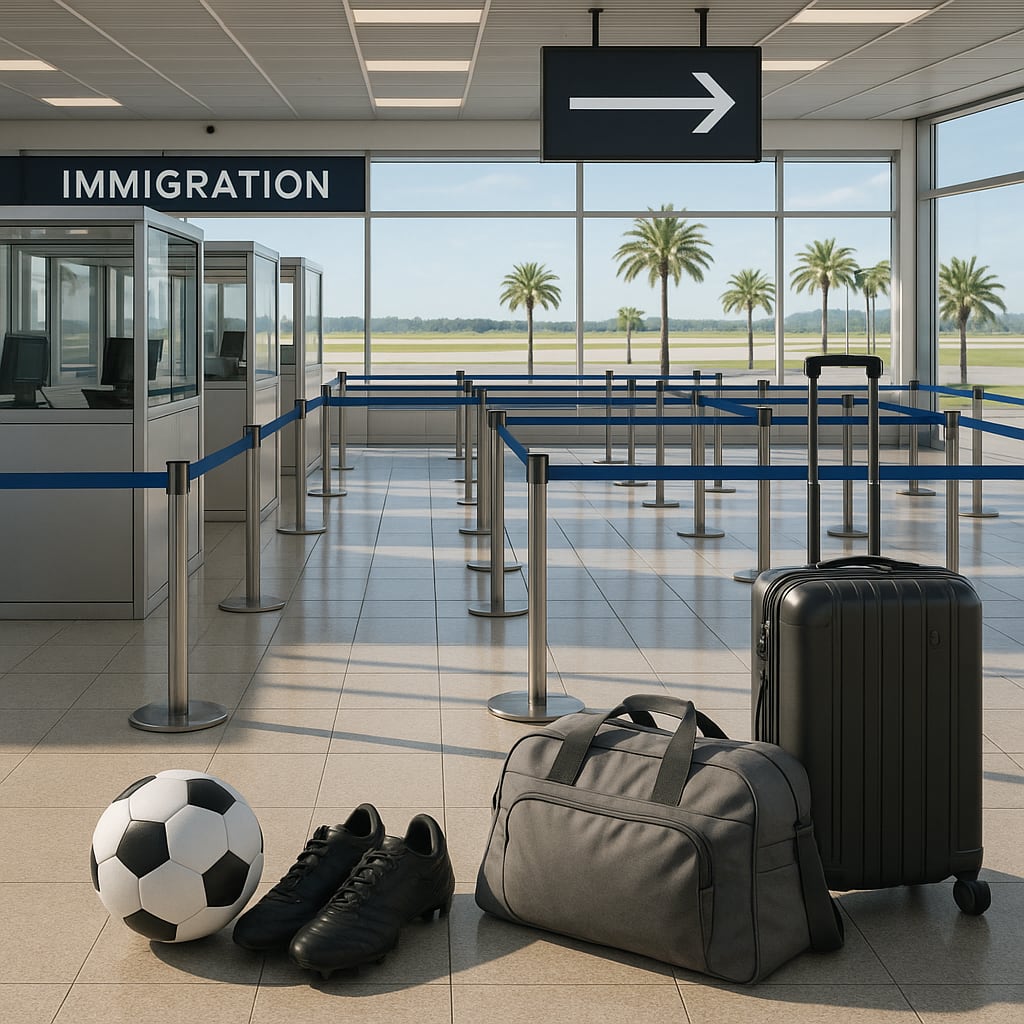
Iran drew 2-2 with New Zealand in its World Cup opener in Inglewood, California (CBC News; Fox News; Al Jazeera; Tehran Times, 17 Jun). Hours after the final whistle, head coach Amir Ghalenoei said the team was ordered to leave the United States and return to its training base in Tijuana, Mexico, contrary to its plan to remain in Los Angeles overnight to aid recovery (CBC News; Fox News). Ghalenoei described the situation as oppressive and criticized travel restrictions (Al Jazeera; Tehran Times). Middle East Eye reported airport delays for captain Mehdi Taremi and assistant coach Saeed Alhoui in Los Angeles (16 Jun live update). Iranian winger Mehdi Torabi’s US visa reportedly expired after the opener, before authorities issued a new multi-entry visa (TASS; Folha de S.Paulo; Al Jazeera). US officials confirmed that Iran must depart within hours after its group-stage matches in Los Angeles and Seattle (Middle East Eye, 17 Jun live update).
Why It Matters
The episode tests how a tri-nation World Cup manages competing imperatives: host-state border sovereignty and security on one side, and FIFA’s commitments to athlete welfare and tournament integrity on the other. Coverage documents repeated frictions at the US border affecting a national team, accredited officials, and supporters, including the Palestinian FA president being denied a US visa and fans’ difficulties crossing from Mexico to US host cities (The Guardian; Middle East Eye, 11, 12, and 17 Jun). Domestic legal authority within host jurisdictions is also salient: a Los Angeles court upheld FIFA’s ban on Iran’s pre-1979 flag, underscoring that tournament rules may be litigated in real time under US law (Fox News). The timing—hours after a US-Iran agreement to end more than 100 days of conflict—highlights how geopolitical thaw does not automatically translate into eased event logistics (South China Morning Post; Middle East Eye, 15 Jun).
Diverging Narratives
Iran’s camp characterizes itself as uniquely constrained: Ghalenoei called his squad “oppressed” and accused FIFA and US authorities of unfair treatment, citing immediate post-match departures, airport delays, and the abandonment of a US-based camp for security and visa reasons (CBC News; Tehran Times; Middle East Eye, 16–17 Jun; RT). Other reporting presents the situation principally as a function of entry rules and visa categories rather than punitive intent, noting that Torabi was quickly granted a new multi-entry visa after the opener (Folha de S.Paulo; Al Jazeera; TASS/RT on the initial expiry). US officials confirmed the leave-within-hours requirement but, in the coverage available, did not publicly detail the rationale (Middle East Eye, 17 Jun live update). Media emphasis also varies: some outlets underscore sport’s capacity to rally divided communities behind Team Melli during the match (Al Jazeera; Middle East Eye, 16 Jun), while others foreground persistent protests and competing symbols in the stands and in Los Angeles communities (South China Morning Post; Fox News; Al Jazeera, 15–16 Jun). A basic procedural uncertainty remains: according to multiple reports, the coach did not specify which authority ordered the immediate departures (CBC News; Fox News).
What Happens Next
- Border and visa administration: Indicators include whether US authorities extend dwell times post-match or issue uniform multi-entry visas for Iran’s delegation. Middle East Eye reports a standing requirement to depart within hours; Folha’s account of Torabi’s new visa suggests case-by-case flexibility (MEE, 17 Jun live update; Folha de S.Paulo).
- FIFA–host coordination: Watch for any public guidance from FIFA or the US Host Committee clarifying responsibilities on recovery windows, transport, and border processing for cross-border teams. Iran remains based in Tijuana, keeping cross-border logistics central to competitive conditions (RT).
- Legal environment at venues: The Los Angeles ruling upholding FIFA’s flag ban could invite further challenges as matches move to other US jurisdictions. Monitor for appeals or analogous suits that could affect stadium governance (Fox News).
- Access for officials and fans: Tracking additional visa denials or delays—beyond the Palestinian FA case and Mexico–US fan crossings—will indicate whether these are isolated incidents or a broader pattern during US-hosted matches (The Guardian; Middle East Eye, 11, 12, 17 Jun).