
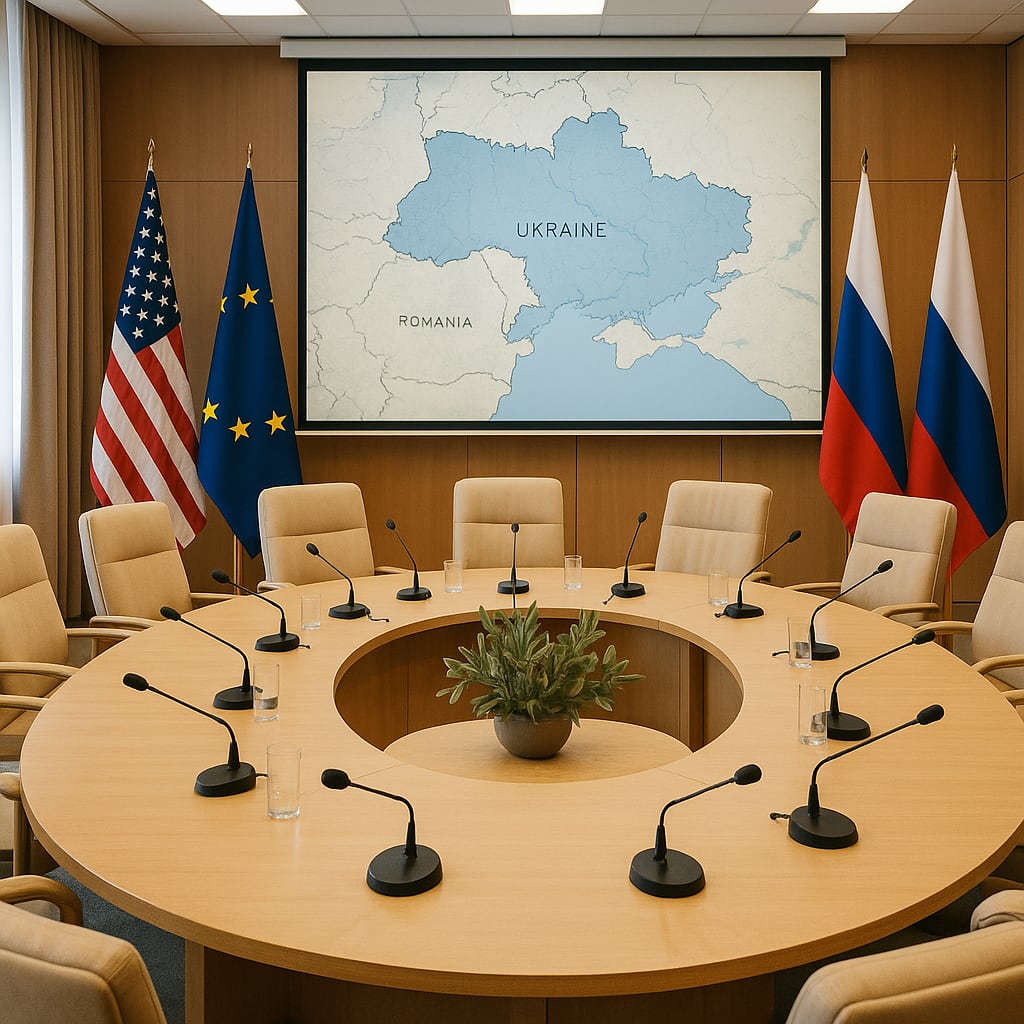
At G7, Trump urges Russia to “make a deal” on Ukraine as Europeans press him to host talks
Narrative Snapshot
- Convergence and emphasis: Across Western outlets, Trump’s on-camera push for Moscow to “make a deal” is paired with G7 backing for Kyiv and Zelensky’s argument that Russia is not winning (CBC; DW; Japan Times; Times of Israel). Russian state outlets foreground Trump’s “good” call with Putin and the claim that Putin is open to peace, alongside messaging that Washington awaits Zelensky’s assent (TASS).
- Process ambiguity: Pre-summit reporting noted no scheduled Trump–Zelensky bilateral (RT), yet multiple outlets later described a “very good” interaction involving Zelensky and G7 leaders, with Trump signaling renewed engagement (SCMP; CBC; Japan Times).
- Venue and agency: European leaders urged Trump to host Zelensky–Putin talks in the US (Guardian). The Kremlin said Putin received no G7 invite and suggested Zelensky could come to Moscow instead (TASS).
- Issue linkage: Coverage repeatedly ties Washington’s Ukraine focus to the near-term closure of a US–Iran accord (SCMP; Middle East Eye; TASS), with the G7 agenda also spanning sanctions on Russia, supply chains, and energy-security spillovers via the Strait of Hormuz (Times of Israel; SCMP).
What Happened
On Trump’s 80th birthday, both Vladimir Putin and Volodymyr Zelensky called him; a Russian aide said Trump stressed ending hostilities and readiness to influence Europeans (SCMP, 14 Jun). Trump later told TASS he had a “good” talk with Putin and that the Russian leader was open to peace (TASS, 15 Jun). Arriving at the G7 in Évian with a preliminary US–Iran accord in hand, Trump said Washington would refocus on Ukraine and that Russia should “make a deal,” after what he called a “very good” meeting involving Zelensky and G7 leaders (SCMP; CBC; DW; TASS, 15–16 Jun). European leaders urged Trump to host Zelensky–Putin talks in the US (Guardian, 16 Jun). The Kremlin said Putin had no G7 invite and that Zelensky could come to Moscow (TASS, 16 Jun). G7 leaders pledged support to Kyiv and fresh sanctions on Russia (Times of Israel, 17 Jun). Zelensky said leaders agreed Russia was not winning (Japan Times, 16 Jun).
Why It Matters
- Mediator and venue: European leaders publicly encouraging a US-hosted summit (Guardian) and RT’s reporting on EU concerns about being sidelined if Washington resumes direct Moscow talks (RT, 17 Jun) underscore a structural contest over who sets the diplomatic table. The venue question is itself strategic leverage.
- Bandwidth and sequencing: Multiple outlets tie Trump’s pivot to Ukraine to a near-final US–Iran accord, including a non-development/non-acquisition nuclear pledge (Middle East Eye, 12 Jun; 15 Jun; SCMP, 16–17 Jun; TASS, 15 Jun). This sequencing links European security to Middle East de-escalation and G7-wide energy and maritime security agendas.
- Coercion and incentives: G7 pledges of continued support and new Russia sanctions (Times of Israel) shape bargaining power, while Kremlin statements that Putin is “open to peace” and that Zelensky “can come to Moscow” (TASS, 15–16 Jun) frame negotiations on Moscow’s preferred terms. Trump’s remark that the war has “no impact” on the US (Kyiv Independent) sits uneasily with sustained allied commitments, with implications for durability of support.
Diverging Narratives
- Readiness and responsibility: Western outlets highlight Trump telling Moscow to “make a deal,” G7 alignment with Kyiv, and Zelensky’s claim Russia is not winning (DW; CBC; Japan Times). Russian state media depict Putin as open to peace and suggest the next step is Zelensky’s agreement, citing a US congresswoman’s post that “the US awaits Zelensky’s agreement” (TASS, 16 Jun; 15 Jun). The Kremlin’s offer that Zelensky “can always come to Moscow” (TASS, 16 Jun) contrasts with European calls for a US-hosted meeting (Guardian).
- Process status: RT describes the US-mediated peace process as in a “situational pause” due to the Iran war and reports EU unease about being sidelined (RT, 17 Jun). By contrast, SCMP and TASS frame the Iran file as enabling renewed focus on Ukraine (SCMP, 16 Jun; TASS, 15 Jun).
- Meeting optics: RT relayed that no formal Trump–Zelensky bilateral was scheduled (14 Jun), while subsequent reporting from multiple outlets emphasized a “very good” interaction in a G7 setting (SCMP; CBC; Japan Times), reflecting differing thresholds for what constitutes meaningful engagement.
- Domestic framing: Trump’s assertion that the war has “no impact” on the US (Kyiv Independent) diverges from G7 leaders’ emphasis on collective stakes and sanctions (Times of Israel), and from Macron’s summit agenda centering Ukraine after fresh Russian strikes, including on a UNESCO site (Guardian, 15 Jun).
What Happens Next
- Hosting decision: Watch for any formal US invitation to Zelensky and Putin for talks, and corresponding Kremlin signals. Europeans have urged a US-hosted meeting (Guardian), while Moscow says no G7 invite was received and proposes Moscow as a venue for Zelensky (TASS, 16 Jun). An announced venue would indicate which actors are setting the framework.
- Post-Iran bandwidth shift: Middle East Eye reported the US–Iran accord is expected to be signed in Geneva (15 Jun). Confirmation and initial implementation would test whether Washington’s promised refocus on Ukraine (TASS, 15 Jun; SCMP, 16 Jun) translates into concrete mediation steps or formats.
- Leverage and pressure: G7 commitments to Kyiv and fresh sanctions (Times of Israel) signal a coercive track alongside talks. Monitor additional EU/G7 measures and battlefield assessments, including Zelensky’s claim that Russia is not winning (Japan Times), as indicators of perceived negotiating strength.
- Contact patterns: Given conflicting reports on formal bilaterals (RT vs. SCMP/CBC/Japan Times), track whether future interactions are upgraded to formal leader-level sessions or remain multilateral sidelines, which will shape process control and timelines.