
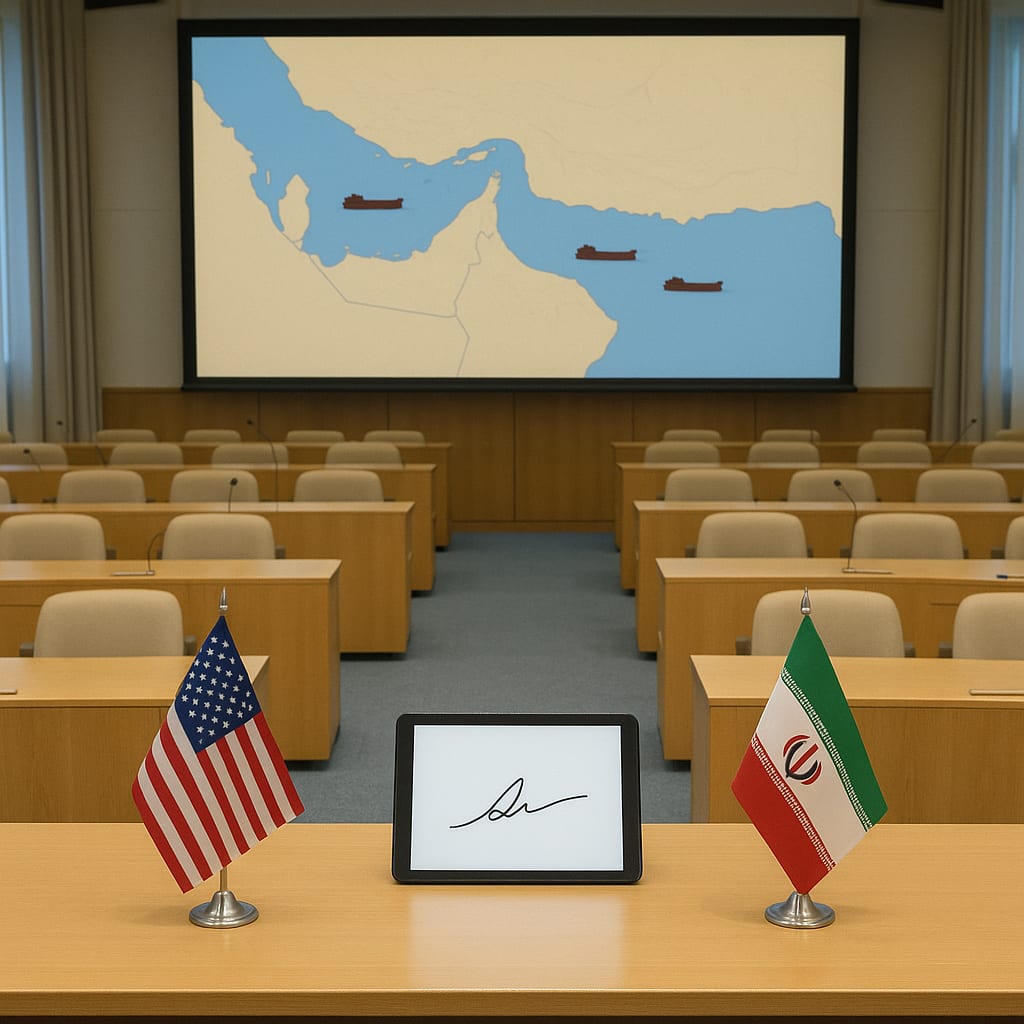
US and Iran sign 14-point interim accord for a 60-day ceasefire and reopening of the Strait of Hormuz
Narrative Snapshot
- Broad convergence: outlets describe a 14-point, time-bound framework that halts fighting for 60 days and reopens Hormuz, with phased steps and further negotiations to follow (Sky News, DW, Fox News, Al Jazeera).
- Key fault line: whether Lebanon is covered. Iranian and some regional outlets say the ceasefire extends to Lebanon; a senior US official told the BBC it does not, even as another US official cited by the Times of Israel said the vision still includes a Lebanon ceasefire (Middle East Eye, Times of Israel).
- Incentives framing diverges: Tehran-linked reporting spotlights unfreezing of assets; US officials stress “payment for performance” and “no cash up front,” and Republicans press for details (Middle East Eye, The Guardian).
- Messaging contrast: Iranian officials call the MoU evidence of US failure; Washington characterizes it as a general framework pending specifics, with the US force posture unchanged during the window (RT, The Guardian, Fox News).
What Happened
US and Iranian leaders digitally signed an interim 14-point memorandum of understanding establishing a 60-day cessation of hostilities and steps to reopen the Strait of Hormuz; a formal ceremony is scheduled in Geneva (Al Jazeera, Middle East Eye, Fox News). US officials released the initial text and read out its provisions, and Fox News published the full MoU; DW also summarized the document (Fox News, DW). The accord reportedly entered into effect earlier than planned, and initial shipping resumed through Hormuz (Times of Israel, Middle East Eye). Washington will maintain its current force posture during the 60-day period, with any drawdown tied to a final deal (Fox News). Pakistani mediation was acknowledged by both sides (Fox News). UN and G7 leaders welcomed the framework, and Germany signaled readiness to support regional stabilization efforts (Middle East Eye). Reporting diverged over whether Lebanon is explicitly included (Middle East Eye, Times of Israel).
Why It Matters
The agreement addresses immediate risks to a quarter of global seaborne oil and LNG flows by reopening a critical chokepoint (Sky News, The Guardian). It also re-establishes a sequencing logic—benefits for verifiable steps—that could channel crisis management back into institutional lanes, including potential IAEA access and resumed nuclear talks nearly where they left off before the war (The Guardian, New York Times). The MoU notably omits ballistic missile restrictions and regime-change aims, reflecting a narrow de-escalation instrument rather than a comprehensive settlement (The Guardian). European governments are positioning to underwrite implementation and diplomacy—watch for roles by Germany and G7 partners—while UN endorsement supplies political cover for compliance steps (Middle East Eye, The Guardian). Domestically in the US, skepticism among Republicans raises transparency and oversight pressures that could shape sanctioning authorities, asset releases, and the durability of any follow-on deal (The Guardian, Middle East Eye).
Diverging Narratives
- Geographical scope: Iran’s foreign minister argues any Israeli attack on Lebanon would violate the MoU and frames the counterparties as the US and Israel on one side (IRNA, Middle East Eye). A senior US official told the BBC the agreement does not include Lebanon, even as another senior US official cited by the Times of Israel said the framework still envisions a Lebanon ceasefire; Lebanon’s government says it was not briefed (Middle East Eye, Times of Israel).
- Economic incentives: Iranian state-affiliated reports highlight prospective unfreezing of funds during the 60-day period (Middle East Eye). By contrast, US officials emphasize “payment for performance,” insist no cash or frozen funds are released merely for signing, and stress allied concerns take precedence (Middle East Eye; The Guardian).
- Outcome framing and transparency: Iranian negotiators depict the MoU as a record of US failure and say Tehran achieved its objectives (RT; Times of Israel’s characterization of Iranian messaging). US messaging calls the document “very general,” with specifics to be negotiated; Republicans demand the full text and details (The Guardian). While Fox News published the MoU and DW summarized it, RT notes initial White House reticence pending a readout (Fox News, DW, RT).
- Maritime details and timing: Trump declared a “toll free” reopening and immediate lifting of the US naval blockade (Fox News). Iranian messaging cited by the Times of Israel indicates tolls after 60 days, and some outlets noted the agreement’s implementation began earlier than scheduled (Times of Israel).
What Happens Next
- Lebanon test case: If hostilities persist across the Blue Line, Iran says that would breach the MoU; a US official told the BBC Israel retains the right to respond to Hezbollah attacks (IRNA, Middle East Eye). Watch for cessation of cross-border strikes, Hezbollah claims of responsibility, and coordinated US–Iran statements on compliance.
- Hormuz normalization: Monitor sustained AIS traffic and port calls indicating a stable reopening. Conflicting signals on fees—“toll free” per Trump versus Iranian indications of tolls after 60 days—bear on shipping costs and insurance (Fox News, Times of Israel).
- Compliance-for-benefits sequencing: Indicators include IAEA access, any OFAC licensing or sanctions adjustments, and concrete timelines for asset unfreezing versus US “no cash until actions” posture (The Guardian; Middle East Eye).
- Follow-on negotiations: The New York Times and The Guardian flag nuclear talks resuming with Europe closely engaged; Germany has signaled support (NYT, Middle East Eye). Watch for a post-ceremony negotiating calendar, named envoys, and agenda setting on nuclear and maritime files.
- US domestic oversight and force posture: Republican scrutiny could condition implementation; the Pentagon plans no immediate drawdown absent a final deal (The Guardian, Fox News). Track congressional hearings, text releases, and any changes to regional deployments.