
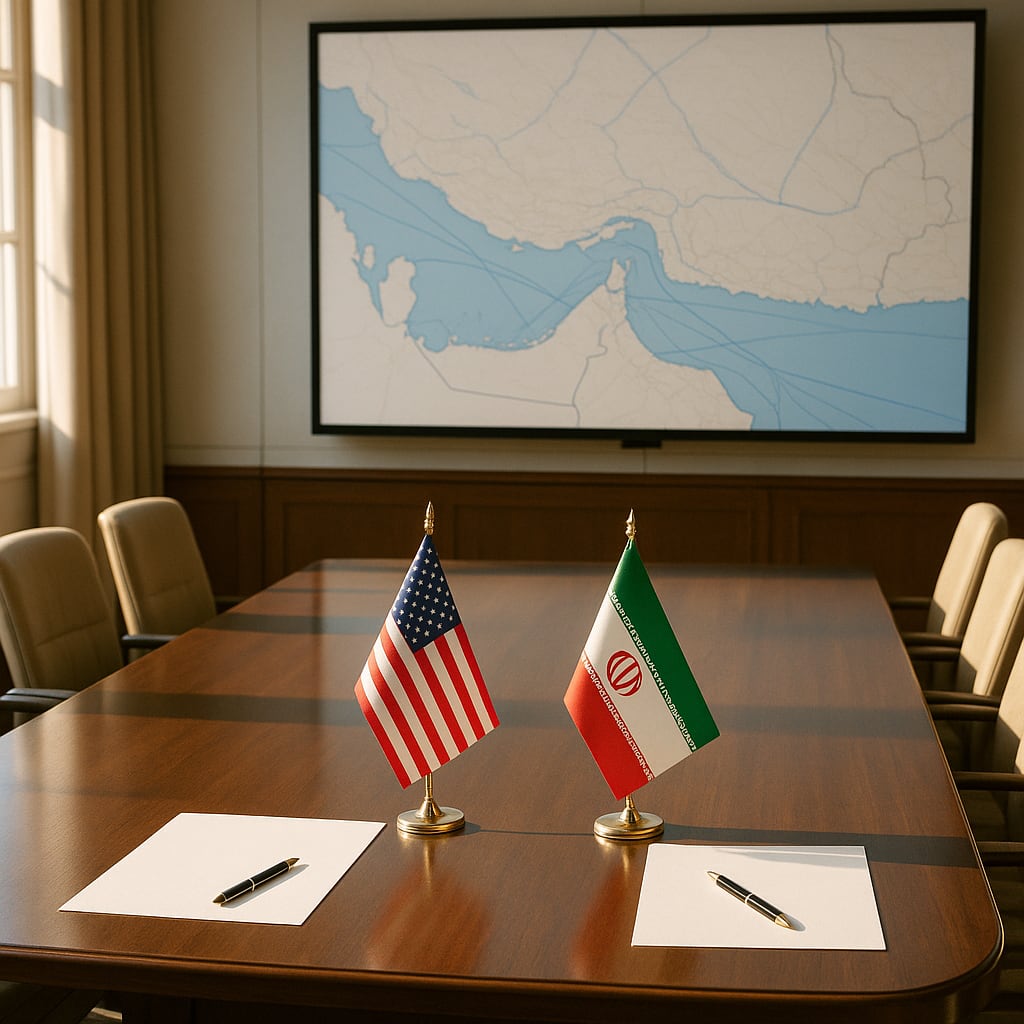
Lead
A fragile U.S.–Iran ceasefire is being propped up by a draft, time-limited political arrangement that multiple outlets describe as a 60‑day memorandum of understanding—yet the same reporting makes clear that it is not a settled deal. The common picture is of negotiators converging on a text meant to extend the truce, keep oil shipping moving through the Strait of Hormuz, and open a channel for nuclear talks, while final approvals—particularly from U.S. President Donald Trump and Iran’s top leadership—remain unresolved. Even as diplomacy advances on paper, reports of ongoing attacks on military facilities underscore how quickly the situation could slip back toward wider conflict.
What Happened
Across coverage from North America, Europe, the Middle East, and Asia, several core elements align.
First, negotiators from the United States and Iran have been engaged in talks aimed at stabilizing a ceasefire that had been under strain. A draft text—widely characterized as a memorandum of understanding—emerged from those discussions. The terms repeatedly described include: extending the ceasefire for roughly 60 days, facilitating maritime traffic through the Strait of Hormuz, and launching or resuming negotiations that touch Iran’s nuclear program, including constraints related to enriched uranium.
Second, the draft is portrayed as politically significant but procedurally incomplete. Multiple reports converge that Trump has not granted final approval, and that Iranian authorities also have decision-making steps remaining. This “nearly there but not final” status is reinforced by references to outstanding wording disputes and a sense that the White House is keeping decision space open.
Third, the public messaging has been inconsistent—sometimes sharply so. Early accounts circulating from Iranian state-linked media were met with U.S. pushback, with the White House disputing the idea that final terms had been agreed. That contradiction did not disappear as coverage moved into later days; instead it shifted into a narrower argument over what, exactly, is in the draft, whether the draft is the current draft, and whether sanctions relief is part of the arrangement.
Finally, the diplomatic track has unfolded alongside continued hostilities. Several outlets note that military strikes and fire have continued even as the putative deal was being circulated, highlighting a ceasefire environment that may exist more as a managed pause than as a clean halt to violence.
Why It Matters
The significance of the draft proposal is less about a single document than about what it tries to hold together at once: de-escalation, commerce, and longer-term strategic bargaining.
Shipping and energy security. The Strait of Hormuz is repeatedly treated as a central pillar of the talks. Keeping traffic flowing there is not simply a regional issue; it is a chokepoint with direct consequences for global energy markets, insurance rates, and the economic outlook in import-dependent countries. By putting Hormuz into the memorandum’s reported scope, negotiators appear to be trying to separate maritime stability from the larger, slower-moving political disputes that fueled the conflict.
A bridge to nuclear diplomacy. The reported linkage to nuclear talks—and to limits connected with enriched uranium—signals an attempt to move from crisis management toward structured negotiations. Whether the nuclear component is framed as a restart, a resumption, or a new track, its inclusion suggests that the ceasefire extension is being used as a runway for broader bargaining rather than a standalone truce.
Domestic politics and decision authority. The insistence in several reports that Trump has not approved the draft—and that Iran’s highest-level leadership must also sign off—speaks to a familiar dynamic: negotiators can narrow differences, but political leaders decide what risks to accept. In the U.S. context, the reported emphasis from Trump that Iran cannot “out-wait” him and that there would be no sanctions relief (at least not on the timeline Tehran might want) casts the draft as part of a coercive diplomacy posture rather than a mutual climbdown. In Iran’s context, references to skepticism at the top reinforce that internal consensus remains uncertain.
Regional spillover. The diplomatic story is also entangled with regional military activity. Coverage that pairs the U.S.–Iran draft with strikes elsewhere in the region underscores how easily negotiations can be destabilized by parallel fronts, allied actors, or miscalculation—particularly when ceasefires are partial, contested, or unevenly enforced.
Diverging Narratives
While the broad outline is shared, outlets diverge in emphasis and in how they attribute credibility to different claims.
Is this a “deal,” a “draft,” or a disputed rumor?
Some coverage presents the memorandum as essentially agreed by negotiators, with only leader-level approval pending. Other reporting foregrounds the idea that what has surfaced publicly may be incomplete, outdated, or not the finalized wording—suggesting that documents described in Western media do not match the current negotiating text. This is not merely semantic: if the draft is fluid, then reporting about specific clauses (especially sanctions and nuclear constraints) becomes harder to treat as settled.
Sanctions relief: included, excluded, or undefined.
A major point of tension in the narrative is sanctions relief. U.S.-side messaging highlighted in several outlets stresses that there would be no sanctions relief, at least not as a concession baked into the arrangement. Yet other reporting treats sanctions relief as part of what is being negotiated or as a contested element within the draft package. The result is a coverage split between (a) a ceasefire extension designed to buy time for talks without immediate economic concessions, and (b) a broader bargain in which sanctions are at least on the table, even if not agreed.
Hormuz as centerpiece vs. one issue among many.
Many reports place the Strait of Hormuz near the center of the draft’s purpose—keeping shipping lanes open and reducing the risk of escalation. Some outlets, however, distribute attention more evenly across a triad: ceasefire extension, Hormuz shipping, and nuclear talks. This difference matters because a Hormuz-first framing portrays the memorandum as urgent global economic stabilization, while a nuclear-first framing positions it as a strategic nonproliferation step.
The role of third parties and allies.
Several outlets emphasize that the draft has been circulated among U.S. allies, including Israel, underscoring that Washington is managing not only Tehran but also regional partners who could influence escalation dynamics. Other coverage keeps the focus tightly on bilateral U.S.–Iran talks, with less attention to allied buy-in. Where Israel and partners are emphasized, the story becomes one of coalition management and constraints on U.S. flexibility; where they are downplayed, it reads more like a direct bargaining channel.
On-the-ground violence: background noise or central evidence of fragility.
Some reporting treats continued attacks as an essential indicator that the ceasefire is shaky and that any memorandum may be difficult to implement. Other coverage treats the violence as context while concentrating on the diplomatic text and the approval process. The difference is one of interpretive weight: diplomacy as the dominant storyline versus diplomacy occurring in the shadow of an unstable battlefield reality.
Current Situation
The most consistent cross-source status is that a 60‑day ceasefire extension framework has been drafted at the negotiator level, with the intent to maintain maritime passage through the Strait of Hormuz and open a path toward nuclear discussions. The agreement is not finalized: U.S. leader approval is repeatedly described as pending, and Iranian leadership approval is also portrayed as necessary. Reporting also points to unresolved wording and changes to drafts, reinforcing that public versions of the text may not reflect the latest negotiating document.
At the same time, the ceasefire environment remains brittle, with continued strikes reported in the broader theater. The immediate outlook, as portrayed across outlets, is therefore conditional: diplomacy is advancing enough to produce a draft, but implementation and durability depend on top-level political decisions and on whether violence can be contained long enough for the memorandum to take effect.