
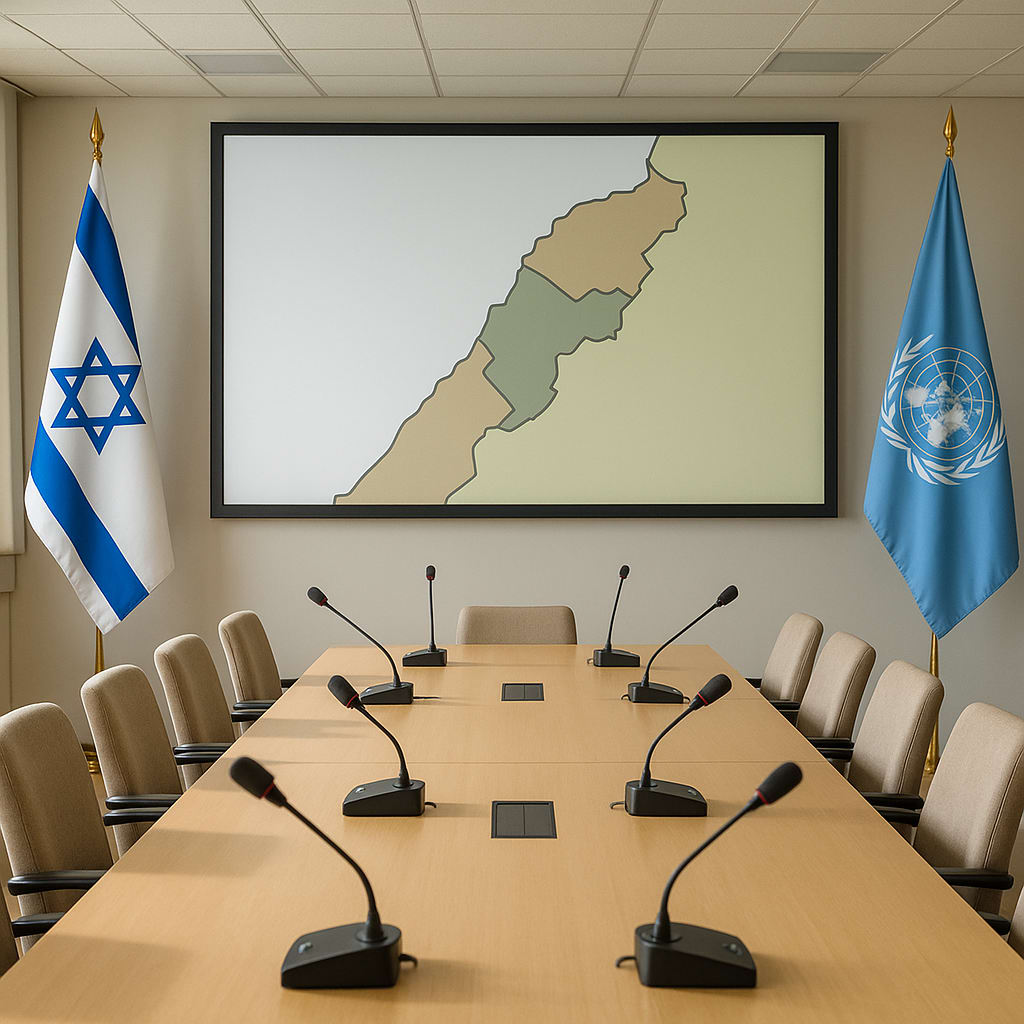
Israel says forces will remain in southern Lebanon as US–Iran deal advances; Beirut presses for full withdrawal
Narrative Snapshot
- Broad alignment: Israeli leaders say they will keep troops in “security zones” in southern Lebanon (and in parts of Syria and Gaza), describing this as necessary for border protection and deterrence. This is reported across Israeli, international, and Russian outlets.
- Key uncertainty: Whether the US–Iran memorandum covers Lebanon. Reports diverge: some say Lebanon is excluded; others say the ceasefire envisions Lebanon but without conditioning Israeli withdrawal.
- Competing emphases: Israeli sources foreground deterrence against Iran/Hezbollah and domestic political critique of the deal; Lebanese sources focus on displacement, governance, and demands for full withdrawal; Hezbollah stresses a continuing “self‑defence” rationale. An Al Jazeera investigation situates these moves within a wider pattern of territorial entrenchment across three fronts.
- What’s at stake: Implementation credibility of the US–Iran agreement, the security calculus along the Lebanon–Israel frontier, return of displaced civilians, and the risk that localized escalations could test or bypass the broader ceasefire architecture.
What Happened
Israeli officials said a withdrawal from southern Lebanon is “not currently on the table,” with any future pullback to be considered only under specific conditions after agreement with Beirut. Prime Minister Benjamin Netanyahu told President Donald Trump that Israel does not view itself as bound by Lebanon‑related provisions, according to Israeli media accounts, and Defense Minister Israel Katz said the IDF will remain indefinitely in security zones in Lebanon, Syria, and Gaza and would respond “with full force” if Iran attacks. Multiple outlets reported Israeli ministers’ rejection of the US–Iran deal’s applicability to Israel in Lebanon, while Israel’s opposition criticized Netanyahu’s handling. A senior US official told media the agreement with Iran does not include Lebanon but said Israel–Lebanon talks are underway; other reporting cited claims that a ceasefire vision includes Lebanon without mandating Israeli withdrawal. Lebanon warned displaced residents not to rush home amid continued Israeli presence; its prime minister vowed to push for full withdrawal and prisoner releases. Hezbollah said its self‑defence right persists under occupation. An Al Jazeera probe reported Israel expanded military control by about 1,000 sq km across three fronts.
Why It Matters
The positions reported here test whether a US–Iran framework can constrain violence on a front where the primary dynamics are Israeli–Lebanese and Israeli–Hezbollah. If Lebanon is outside the deal’s scope, or if the deal lacks enforceable provisions on Israeli posture, the ceasefire’s stabilizing effect may be limited along this frontier, even if it holds elsewhere. Israeli statements signal intent to institutionalize “security zones,” aligning with reporting on broader territorial entrenchment across Gaza, Lebanon, and Syria. Lebanese authorities’ caution to displaced residents underscores the humanitarian and governance costs of an unresolved security regime. Coverage also highlights questions about US leverage: skepticism that Washington can compel Israeli restraint (South China Morning Post) and Iranian claims that Israeli strikes show US unwillingness or inability to deliver commitments (IRNA). For decision‑makers, the gap between high‑level de‑escalation and ground‑level control measures will shape border stability, civilian returns, and escalation risks tied to Hezbollah’s stated “self‑defence” posture.
Diverging Narratives
- Scope of the deal: A senior US official told media the agreement with Iran does not include Lebanon, though direct Israel–Lebanon talks are underway. Other reports cite US sources saying the memorandum still envisions a ceasefire covering Lebanon; Russian and RT coverage similarly describe regional cessation language including Lebanon. Israeli media and officials emphasize that any deal is not conditioned on Israeli withdrawal.
- Security framing: Israeli leaders cast the security zones as necessary to protect communities and deter Hezbollah and Iran, asserting a right to respond to attacks “with full force.” Lebanese officials and municipal authorities focus on civilian safety and the conditions for return, with the prime minister pledging to pursue full withdrawal and prisoner releases. Hezbollah argues occupation legitimizes continued “self‑defence” and rejects linking Israeli withdrawal to its disarmament.
- Political optics: Israeli outlets report ministers slamming the US–Iran deal and opposition criticism of Netanyahu. International pieces register US admonitions after strikes in Beirut even as reporting questions Washington’s practical leverage over Israeli choices.
- Territorial control: An Al Jazeera investigation frames Israel’s expanded control across three fronts as masking strategic failures; Israeli officials present it as a security imperative.
What Happens Next
- Deal scope and text: Analysts should watch for the formal memorandum language and authoritative US explanations on Lebanon’s inclusion or exclusion. Inclusion with a ceasefire vision, absent withdrawal terms, would still leave Israel’s posture unchanged per current statements; explicit exclusion would formalize a separate track for Lebanon.
- Israel–Lebanon channel: Reports note direct talks “underway.” Indicators include any public articulation of conditions for an Israeli pullback, confidence‑building steps along the frontier, or third‑party facilitation details. Israeli officials have said any withdrawal would be gradual and conditional after agreement with Beirut.
- Deterrence–response cycle: Israeli leaders say they will retaliate forcefully if Iran or Hezbollah attack; US officials say Israel retains a self‑defence right if Hezbollah strikes. Monitors should track cross‑border incidents, claimed or unclaimed, and how quickly responses occur relative to ceasefire timelines.
- Civilian returns: Lebanese army and local authorities advise against immediate returns. Signals of de‑mining, safe‑passage corridors, or coordinated return plans would suggest stabilization; continued warnings and sporadic strikes would indicate protracted displacement.
- Domestic politics: Israeli cabinet and opposition reactions, and Lebanese cabinet commitments (e.g., on prisoners and withdrawal demands), will shape negotiating space and implementation tempo.