
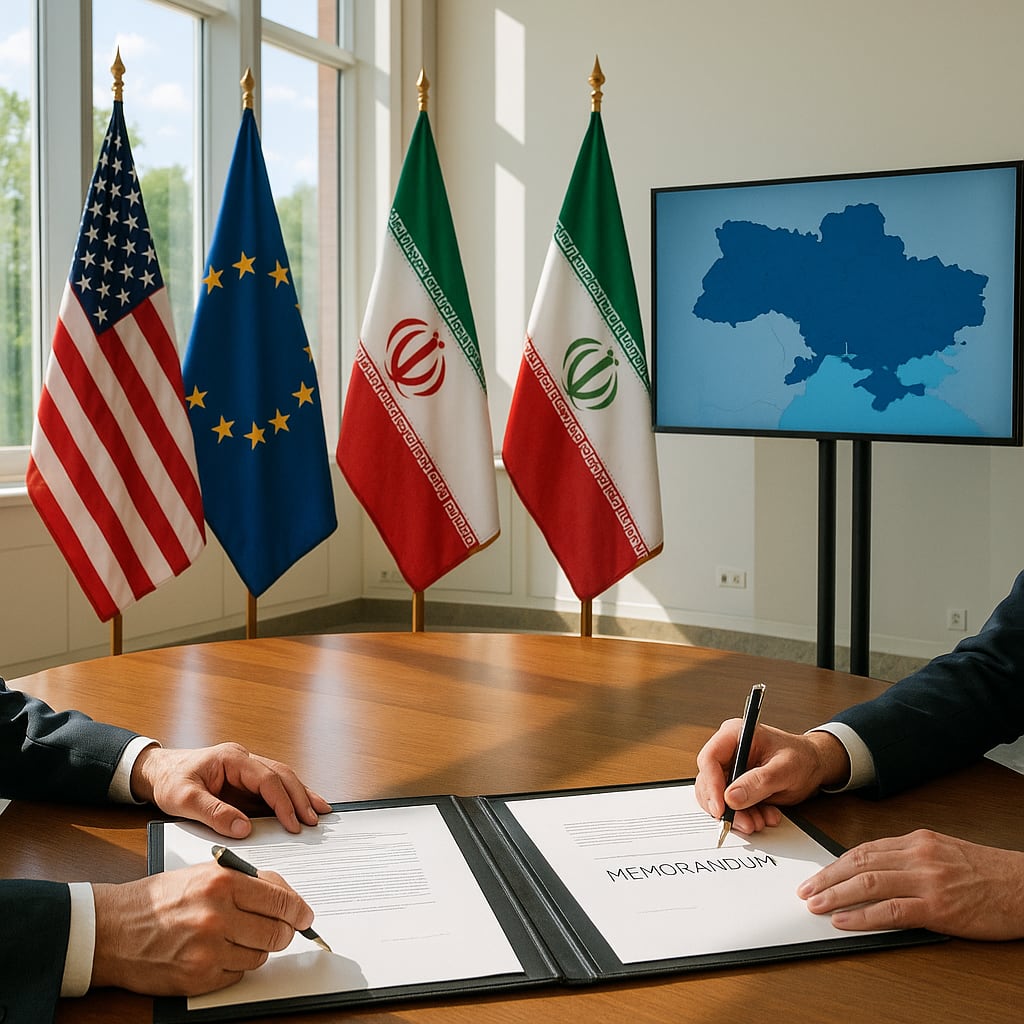
G7 in Évian backs US‑Iran preliminary deal and renewed Ukraine support as Trump signs MoU at Versailles
Narrative Snapshot
- European outlets frame Emmanuel Macron’s choreography—Évian agenda-setting and a high‑profile Versailles dinner—as instrumental in drawing Washington closer to the G7 line on Ukraine, emphasizing a “re‑synchronisation” and a “very deep change” in the US approach (Le Monde; The Guardian; La Repubblica; Corriere della Sera; Folha de S.Paulo). Parallel coverage fixates on optics, pageantry, and protocol missteps (The Guardian; Corriere della Sera; Clarín).
- Middle East–focused reporting concentrates on implementation ambiguities in the US‑Iran framework: control of the Strait of Hormuz, financial channels, and knock‑on effects in Lebanon, with officials denying fund movements and noting Beirut was not briefed on timing or terms (Middle East Eye; UAE denial; Lebanon official).
- US and international outlets agree the summit was anchored on Ukraine and Iran, with leaders endorsing the US‑Iran understanding and pledging to support implementation, even as some highlight Trump’s episodic mixed messaging (DW; Al Jazeera; The Hindu; New York Times; BBC).
What Happened
At the G7 summit in Évian‑les‑Bains, leaders centered discussions on Russia’s war in Ukraine and a preliminary US‑Iran agreement. Ahead of and during the summit, Donald Trump touted progress on reopening the Strait of Hormuz and said Iran had agreed not to develop or acquire nuclear weapons (Le Monde live; Middle East Eye). The G7 backed the US‑Iran framework and signaled readiness to help implement it (The Hindu; Corriere della Sera). Macron hosted Trump at Versailles, where Trump signed an Iran Memorandum of Understanding before dinner—a move Macron publicized, claiming it would enable a lasting Hormuz reopening and lower energy prices (Middle East Eye). European reporting depicted a US “re‑synchronisation” with G7 positions on Ukraine, as Trump met Volodymyr Zelensky and publicly urged Russia to “make a deal” (The Guardian; SCMP). Simultaneously, coverage noted Trump’s volatile style and contradictory signals (New York Times; BBC; ANSA).
Why It Matters
- Transatlantic alignment: European outlets credit Macron with narrowing gaps between Washington and the G7 on Ukraine, potentially strengthening collective leverage on sanctions, military support, and war‑termination parameters (Le Monde; The Guardian; La Repubblica). If sustained, this reduces uncertainty partners faced around US positions.
- Iran file institutionalization: G7 endorsement and stated willingness to contribute to implementation embed the US‑Iran framework in a multilateral context, creating hooks for European diplomatic and technical roles (The Hindu; DW). Macron’s claim that reopening Hormuz could ease energy prices links the deal to broader economic stabilization (Middle East Eye).
- Implementation frictions: Conflicting signals about Hormuz control, financing, and Lebanon’s role underscore the constraints of any rapid de‑escalation architecture (Middle East Eye; UAE denial). These touch core regional security equities and financial compliance regimes.
- Signaling to Moscow: Public US‑G7 cohesion and Zelensky’s engagement at Évian raise the diplomatic cost of Russian intransigence, though sources differ on the consistency of US messaging (The Guardian; SCMP; New York Times; BBC).
Diverging Narratives
- Consistency vs volatility: French and UK outlets highlight a “deep change” and alignment by Trump on Ukraine (The Guardian; Le Monde), while US coverage underscores oscillations that left Europeans scrambling (New York Times) and raises questions about strategic coherence (BBC).
- Optics vs policy substance: Several European and Latin American pieces dwell on Versailles’ symbolism, luxury, and even the dinner wine list, noting domestic political sensitivities (Corriere della Sera; The Guardian; Clarín; Folha de S.Paulo). Others prioritize policy outcomes: G7 backing for Ukraine and the Iran framework (The Hindu; DW; Al Jazeera).
- Iran implementation terms: Macron’s assertion that the agreement paves the way for a lasting Hormuz reopening contrasts with Iranian state media’s insistence that Tehran would not cede control of the strait (Middle East Eye). US officials say the deal will not hand Tehran cash, and the UAE denies moving frozen funds, reflecting contested financial mechanics (Middle East Eye).
- Process ambiguity: Switzerland reportedly expected an in‑person signing in Lucerne on Friday, yet Trump signed an MoU at Versailles days earlier; coverage records both timelines without clarifying the legal relationship between documents (ANSA; Middle East Eye). Lebanon, meanwhile, said it had not been briefed on terms or timing, pointing to regional consultation gaps (Middle East Eye).
What Happens Next
- Iran framework implementation: Watch for formal clarifications on the status of the Versailles‑signed MoU relative to any Swiss‑facilitated signing, and concrete G7 implementation roles referenced by leaders (ANSA; The Hindu; Middle East Eye). Indicators include statements on verification, missile/nuclear provisions, and any public mechanism for Hormuz security consistent with Iran’s stated red lines (Middle East Eye).
- Maritime and energy follow‑through: Monitor whether announced steps translate into practical, durable reopening of Hormuz and whether leaders substantiate claims of energy price relief (Le Monde live; Middle East Eye).
- Regional de‑escalation: Signals from Hezbollah and Lebanese authorities on ceasefire parameters will test whether the framework dampens front‑line activity; Lebanon’s noted lack of briefing is a risk marker (Middle East Eye).
- Ukraine coordination: Track whether the reported US‑G7 alignment persists in subsequent statements and aid decisions, and whether additional Trump‑Zelensky engagements occur as suggested (The Guardian; Corriere della Sera). Russian reactions to Trump’s public call to “make a deal” will shape diplomatic space (SCMP).