
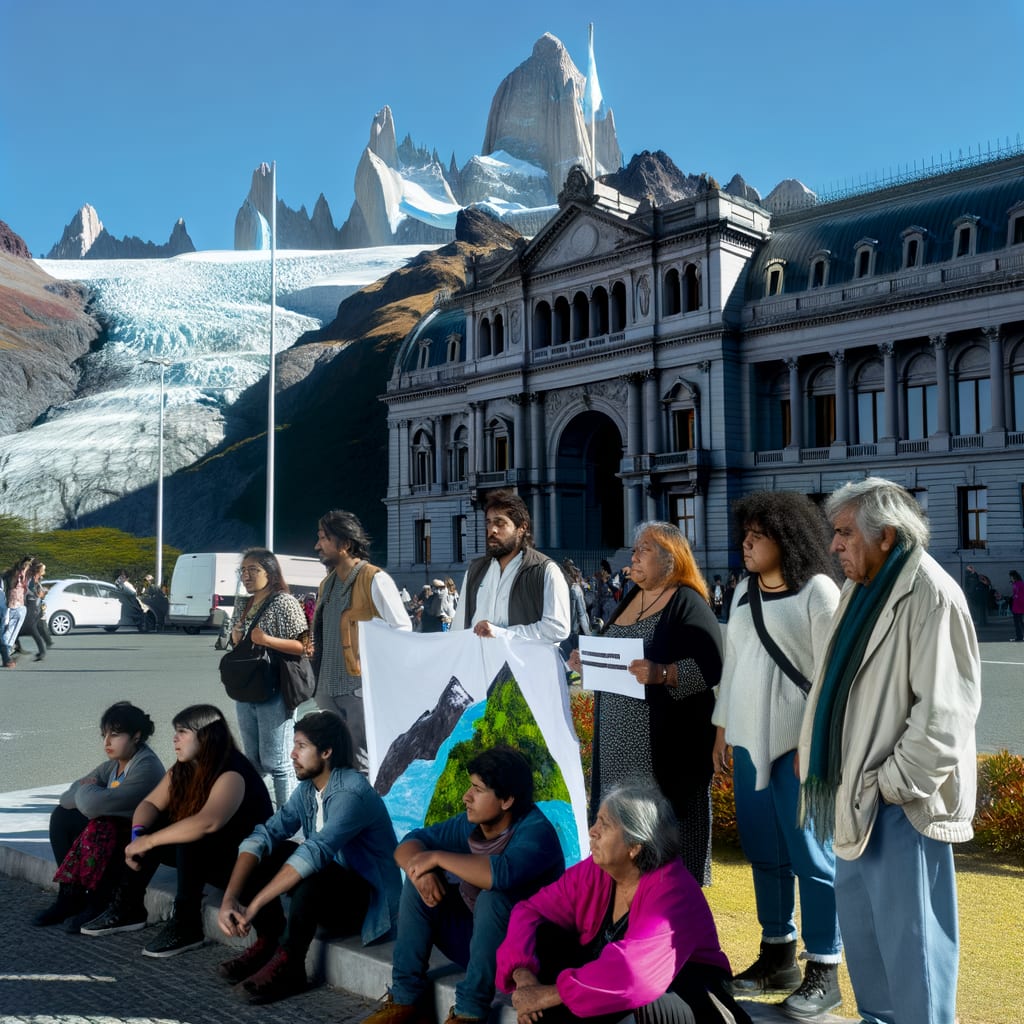
Argentina Passes Controversial Glacier Mining Bill Amid Protests
In a move that has sparked widespread protests and ignited environmental concerns, Argentina's congress has approved a bill that permits mining in ecologically sensitive glacier regions. The bill, initiated by libertarian President Javier Milei, allows provincial governments to redefine protected glacier areas to facilitate mining projects. The legislative change, which has been contentious, is set to make it easier to extract metals such as copper, lithium, and silver in frozen parts of the Andes mountains.
Background and Context
The new legislation, referred to as the glacier law,
was previously approved by the senate in February 2026 and subsequently by the Argentine Congress in the early hours of Friday, April 9. The reform aims to clear ambiguities that were causing uncertainty and hindering investments in the mining sector.
The bill's approval has been met with jubilation from the mining sector, who believe it will facilitate increased investment. According to reports, the sector is projected to export for USD 165,000,000 by 2035.
Key Developments and Details
Despite the government's optimism, the law has sparked significant resistance from environmentalists who fear the potential ecological impact of expanded mining operations. Thousands have demonstrated against the bill, with skirmishes reported between protesters and police and multiple arrests made.
Protesters argue that the new law threatens water resources, a concern echoed by scientists. Every drop of water counts,
highlighted one BBC News report, amplifying the fear for the future of Argentina's glaciers.
The new legislation permits extraction of lithium, copper, and gold even in ecologically sensitive zones. The move has been criticized not only by local environmentalists but also by international environmental advocacy groups. Greenpeace, for instance, has launched a class action in response to the bill's approval.
Implications and Reactions
The implications of this legislation are far-reaching. While it promises economic gains in terms of investments and exports, it simultaneously poses a significant risk to Argentina's glaciers and the broader environment.
Despite the government's approval, the law's future remains uncertain due to the fierce opposition it has encountered. The class action launched by Greenpeace and ongoing protests suggest that the battle over Argentina's glaciers is far from over.
Current Status and Conclusion
As it stands, the glacier law
has been approved, paving the way for expanded mining operations in Argentina's glacier regions. However, it remains to be seen how this will play out in the face of strong opposition and legal action by environmental groups.
The approval of the glacier mining bill has not only sparked a national debate over environmental conservation versus economic development but has also thrown a spotlight on the global issue of resource extraction in sensitive ecological zones. As the world watches, the unfolding events in Argentina will likely have implications for similar debates elsewhere.