
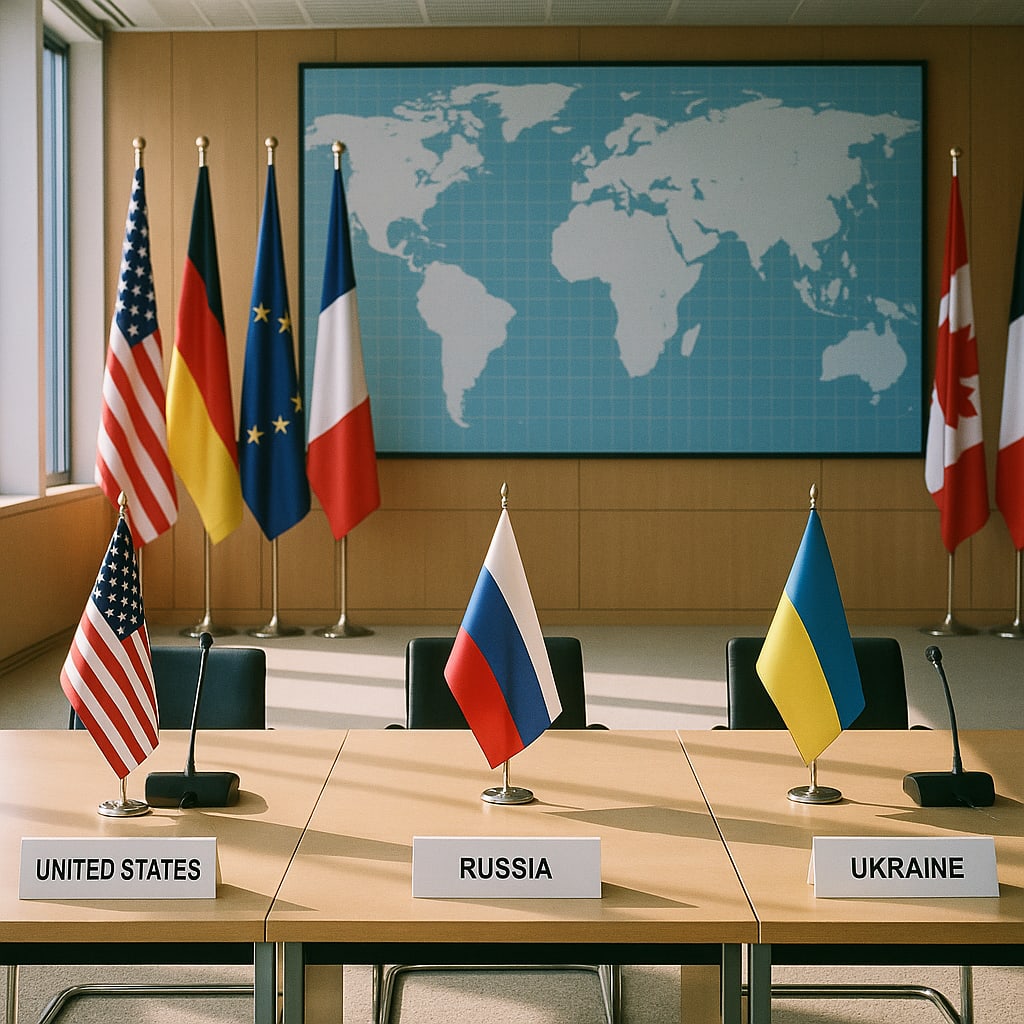
Ahead of the G7, Putin and Zelensky speak with Trump; Kremlin touts U.S. pressure on EU and Kyiv and a Kushner–Witkoff Moscow visit
Narrative Snapshot
- Russian official readouts, amplified by TASS and echoed by the Japan Times and South China Morning Post, stress that Trump told Putin he aims to end hostilities in Ukraine and is “ready to exert pressure” on the EU and Kyiv; they also flag a pending Moscow trip by U.S. envoys Jared Kushner and Steve Witkoff.
- Ukrainian-leaning and U.S. outlets highlight Zelensky’s outreach and continued engagement with Trump’s team; Fox News reports Zelensky’s birthday call and a vow to pursue peace talks at the G7, while the Kyiv Independent notes a “very positive” 8 June call with Kushner and Witkoff.
- RT, citing Bloomberg, reports no formal Trump–Zelensky bilateral at the G7, contrasting with Kremlin claims of momentum via back-channels.
- European coverage situates the diplomacy in a tightening context: Macron’s efforts to keep Trump engaged at Évian and Europe’s response to fresh Russian strikes, including fire damage at Kyiv’s Unesco-listed Pechersk Lavra (Guardian; Macron’s public condemnation).
What Happened
On 14 June, both Vladimir Putin and Volodymyr Zelensky held separate calls with U.S. President Donald Trump as he marked his 80th birthday. The Kremlin’s Yuri Ushakov said the Putin–Trump call ran about 55 minutes and that Trump emphasized ending hostilities in Ukraine and was ready to pressure the EU and Kyiv to achieve peace (TASS; South China Morning Post; Japan Times). Ushakov also said Trump and Putin agreed that U.S. envoys Jared Kushner and Steve Witkoff would visit Moscow soon (TASS). Fox News reported Zelensky congratulated Trump and pledged further Ukraine peace talks at the G7. RT, citing Bloomberg, reported no official Trump–Zelensky bilateral is scheduled at the Évian summit. The Guardian reported, based on TASS, that Trump told Putin the U.S. was nearing a peace deal with Iran; Deutsche Welle had already noted Trump’s similar claim days earlier. Macron has tailored the G7 agenda amid uncertainty over Trump’s full participation (Guardian).
Why It Matters
The calls converge with a G7 built around Ukraine, Gaza, and Iran, where allied coordination and U.S. leadership are pivotal (Guardian). The Kremlin’s portrayal of Trump’s readiness to pressure the EU and Kyiv points to alliance-management stakes for Europe: any shift in U.S. posture—public or via back-channels—could shape negotiating parameters and G7 communiqués (TASS; SCMP). The prominence of Kushner and Witkoff underscores an informal channel that Kyiv is already engaging (Kyiv Independent), while Moscow signals it expects those envoys in person soon (TASS). European political space is constrained by intensified Russian strikes, including a fire at the Kyiv Pechersk Lavra, which Paris publicly condemned (Guardian live). Separately, claims that a U.S.–Iran deal is “near” risk cross-theater linkage of diplomatic bandwidth and leverage (Guardian; DW). For policymakers, the mix of personalized diplomacy and summitry creates moving parts that could reframe ceasefire contours, sanctions coordination, and security assurances.
Diverging Narratives
Russian official accounts emphasize momentum through personal rapport and leverage: a “friendly and frank” call, U.S. pressure on European partners and Kyiv, and imminent envoy travel to Moscow (TASS; Japan Times; SCMP). La Repubblica adds Putin’s complaints about Ukrainian drones and a blunt “stop Kyiv” message, while TASS also relayed Putin’s admonition that Trump tell Zelensky to “remember the Holocaust,” highlighting Moscow’s polemical framing.
U.S. and Ukrainian-aligned reporting highlights outreach without endorsing Kremlin characterizations: Fox News focuses on Zelensky’s congratulatory call and intent to pursue peace talks at the G7, and the Kyiv Independent notes earlier “very positive” engagement with Kushner and Witkoff. At the same time, RT, citing Bloomberg, reports Trump has not slated a formal bilateral with Zelensky at the summit—suggesting limited on-camera alignment even as back-channels operate.
European outlets place the diplomacy inside summit management and battlefield context: the Guardian underscores Macron’s efforts to keep Trump engaged and Europe’s reaction to Russian strikes on Kyiv, including damage to a Unesco site, without validating Kremlin claims beyond attributing them to Ushakov.
What Happens Next
- Back-channel track to Moscow: Watch for confirmation, timing, and agenda of Kushner–Witkoff travel (TASS). Public readouts, interlocutor lists, or Moscow’s framing will indicate whether the channel is exploratory or negotiating substance.
- G7 engagement with Kyiv: RT reports no scheduled Trump–Zelensky bilateral, while Fox News says Zelensky intends more peace talks at the summit. Indicators include any ad hoc pull-asides, joint photos, or references to Ukraine in U.S. and G7 statements that reflect direct coordination.
- U.S. leverage on allies and Kyiv: TASS/SCMP report Trump’s readiness to pressure the EU and Kyiv. Analysts should track communiqués, U.S. briefing language, and EU responses for signs of convergence or pushback.
- Iran track bandwidth: The Guardian, citing the Kremlin aide, and DW’s prior reporting flag Trump’s claims of a near Iran deal. Any announcement could reallocate U.S. diplomatic attention during the G7 and influence European prioritization.
- European stance amid strikes: Following Macron’s condemnation of damage to the Kyiv Pechersk Lavra (Guardian live), monitor EU consultations for escalatory or protective measures tied to cultural heritage and civilian targeting.