
Lead
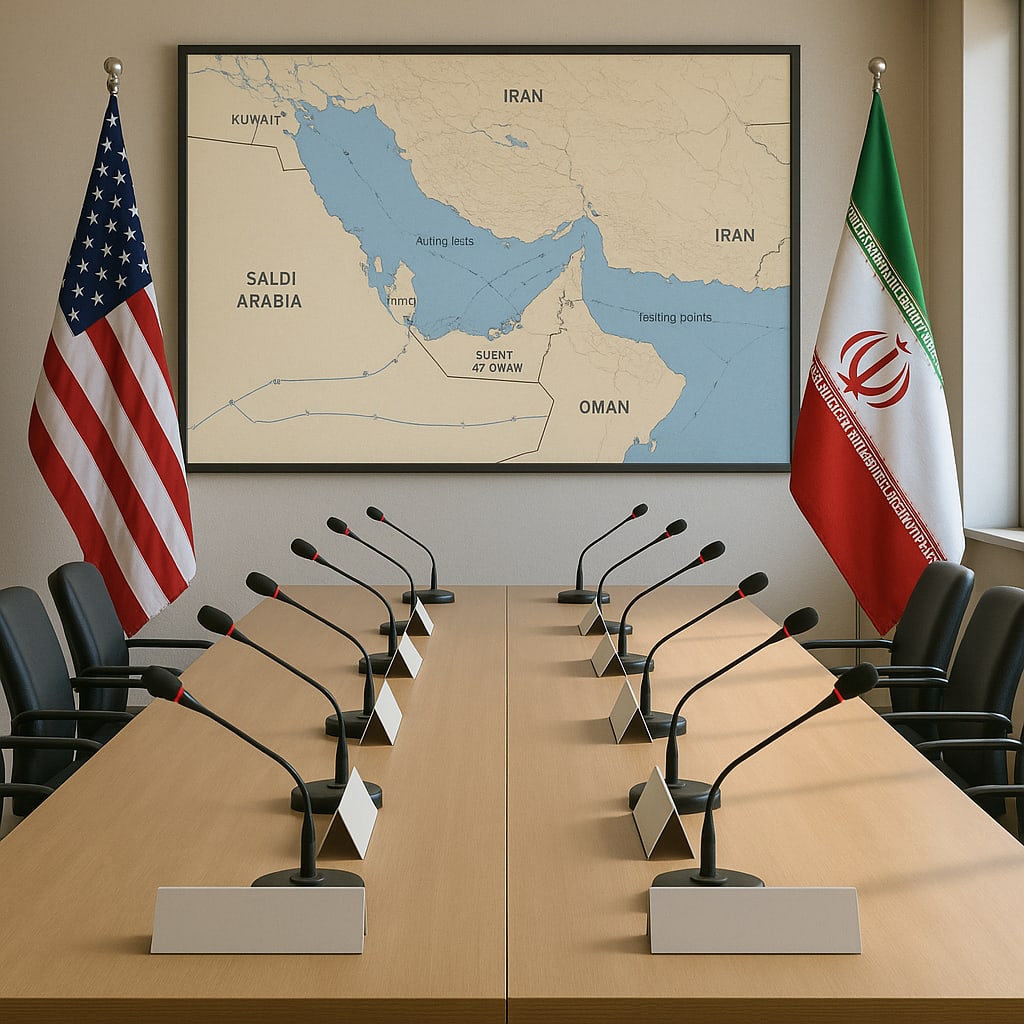
Diplomacy aimed at halting the escalating U.S.–Iran confrontation is being conducted in a fog of contradictory public messaging: Washington insists negotiations are advancing “rapidly” and “continuously,” while Iranian-linked outlets and officials signal pauses, frustration, and shifting goalposts. As the talks wobble, the military reality around them has hardened—most visibly through a U.S.-enforced naval blockade that is actively redirecting commercial shipping, and through new missile launches in the Gulf that regional militaries say they intercepted. The result is a negotiation track that neither side publicly wants to own if it fails, even as both keep raising the pressure.
What Happened
Over the final days of May and the first days of June, several elements moved in parallel: an indirect negotiation channel between Washington and Tehran, intensifying spillover fighting involving Lebanon, and a maritime blockade enforced by the U.S. military.
On the U.S. side, President Donald Trump offered a blend of reassurance and indifference. In public comments carried widely, he described the Iran talks as moving at a “rapid pace” and at times dismissed reports that negotiations had stalled as “fake news.” In separate remarks, he also projected detachment, telling a U.S. business network that he “couldn’t care less” if negotiations break down and calling the process “very boring.” At the same time, messaging attributed to Trump stressed that if talks were terminated, the blockade of Iran would continue—framed as pressure that would not necessarily mean a return to full-scale hostilities.
From Tehran, the public tone was more accusatory and more conditional. Iranian-linked reporting said the indirect talks and message exchanges had been suspended, and Iranian officials and parliamentarians emphasized that Iran preferred diplomacy but had “red lines” it would not cross. An Iranian diplomat was quoted characterizing U.S. demands as shifting—either being changed or newly introduced in ways that dragged out negotiations—suggesting Washington’s contradictory statements were part of tactics rather than confusion.
Around the diplomatic track, the military environment kept intruding. The U.S. Central Command disclosed that the blockade was not merely rhetorical: by May 31, U.S. forces had redirected 118 commercial vessels and disabled five. That kind of enforcement—by definition—puts global shipping and insurance calculations into the diplomatic equation, particularly for energy markets. In the first days of June, regional security tensions also surged: U.S. military statements and Israeli-linked live reporting described Iranian missiles fired toward Kuwait and Bahrain, with projectiles either intercepted, falling short, or breaking apart. The same reporting connected the Gulf launches to U.S. strikes on an oil tanker said to have been attempting to breach the blockade.
Meanwhile, Israel’s operations in Lebanon remained a flashpoint for the negotiations’ viability. Iranian media reports tied Tehran’s pause in contacts to Israeli orders for deeper military action in Lebanon. Trump, in comments circulated internationally, said Israel would “dial back” fighting in Lebanon and was also reported to have called Israel’s prime minister and pushed to halt attacks on Beirut—portrayed as a step to prevent the Lebanon front from derailing talks.
By June 2, the U.S. administration began sketching a longer time horizon. Secretary of State Marco Rubio said a second stage of negotiations could take 30 to 90 days and would require expert-level meetings to work through details—an acknowledgment, at least institutionally, that a rapid political announcement would not by itself settle the conflict’s mechanics.
Why It Matters
The central stakes go beyond a bilateral ceasefire. Three interconnected arenas—nuclear constraints, maritime access, and regional war dynamics—are being implicitly negotiated in tandem.
First, the nuclear file has not disappeared even if the immediate crisis is military. Trump publicly asserted Iran had promised not to develop or buy nuclear weapons, while also emphasizing the distinction between production and acquisition. That rhetorical parsing signals how nuclear commitments are being treated as both a bargaining chip and a messaging tool for domestic and allied audiences. Tehran’s insistence on red lines suggests that any nuclear-related commitments are being packaged with demands around sovereignty and security guarantees.
Second, the blockade has become an economic instrument with global reach. Redirecting more than a hundred commercial vessels is not a symbolic sanction; it is a live intervention in trade routes that can affect freight costs, delivery schedules, and risk premiums. For Gulf states and major importers, the practical question is how long elevated maritime risk will last—and whether it can be managed by partial understandings short of a comprehensive agreement.
Third, Lebanon’s battlefield is functioning as a spoiler and leverage point. Reports linking the status of U.S.–Iran contacts to Israeli escalation in Lebanon show how Tehran frames the negotiations as inseparable from Israel’s actions, while Washington presents itself as capable of restraining its ally to keep diplomacy afloat. If the Lebanon front expands, it risks turning talks about “ending the war” into talks about containing a regional one.
Finally, the episode underscores the fragility of crisis diplomacy conducted through indirect channels and public soundbites. Even when formal backchannels exist, public claims of momentum or suspension can reshape expectations, harden positions, and invite escalatory “tests” at sea or in the air designed to improve bargaining leverage.
Diverging Narratives
Across outlets and regions, the most striking split is not over whether talks exist, but over whether they are meaningfully progressing—and who is to blame for the drift.
U.S.-centered framing emphasizes continuity and control. Trump’s repeated insistence that talks are moving quickly and are happening “continuously” portrays the U.S. as steering the process, dismissing reports of a stall as misinformation. Even the threat to continue the blockade if talks end is framed as a managed pressure campaign, not a slide into uncontrolled warfare. When Rubio outlines a 30–90 day “second stage,” it places the negotiations in a bureaucratic, staged process—signaling seriousness and a pathway, while implicitly lowering expectations of immediate breakthroughs.
Iranian-aligned framing emphasizes inconsistency, coercion, and shifting demands. Claims that Washington keeps altering its requirements cast the U.S. as negotiating in bad faith or at least with maximalist aims. The suggestion that contradictory U.S. statements are tactical turns Washington’s mixed messaging into evidence of deliberate manipulation. Iranian parliamentary messaging that the blockade will end “either through talks or military action” underscores that coercion is met with coercive options—while still presenting diplomacy as preferred.
European international coverage tends to foreground the contradiction itself as the story: negotiations appearing stalled while Trump claims the opposite, with the Lebanon fighting presented as a variable that repeatedly knocks the process off course. This approach places less weight on any single leader’s claims and more on the observable pattern: a diplomatic track repeatedly disrupted by battlefield decisions and retaliatory moves.
Regional and Russian state-linked narratives give heavier emphasis to Israel’s role as a destabilizer. The idea that escalation in Lebanon undermines Washington–Tehran diplomacy is used to argue that the war’s continuation is not simply a U.S.–Iran binary but is propelled by allied choices that reshape the negotiating environment. In this framing, Israel is not a background actor but a primary driver of diplomatic setbacks.
There are also disputed facts and contested attribution. Whether talks were truly “halted” or merely paused—and whether that pause was a negotiating maneuver or a reaction to Lebanon—remains contested in public reporting. Similarly, accounts differ in what they treat as definitive: public presidential statements versus Iranian media claims of suspension, and military communiqués about missile interceptions versus political narratives about retaliation and deterrence. Rather than converging on a shared description, the coverage converges on a shared reality: messaging has become part of the negotiating battlefield.
Current Situation
As of June 3, the diplomatic channel remains publicly alive but operationally uncertain. The U.S. president continues to insist negotiations are ongoing, while Iranian messaging has highlighted pauses and complaints about U.S. demands. The U.S. administration has also signaled that any substantive second phase could take between a month and three months, dependent on expert-level work—suggesting that even if political contact continues, technical and security details are not close to resolution.
On the military side, the blockade remains in force and actively enforced, and the Gulf has seen new projectile launches toward neighboring states that U.S. and regional defenses claim to have intercepted or that fell short. That combination—continued coercive maritime enforcement plus episodic regional strikes—means negotiations are proceeding under pressure that is not easing.
The immediate outlook is therefore defined by a paradox visible across coverage: leaders and officials say they do not seek broader war, yet the instruments they are using to gain leverage—blockade enforcement, retaliatory strikes, and pressure tied to the Lebanon front—raise the costs of delay and increase the chances that a single incident at sea or in the air becomes the next turning point in the talks.