
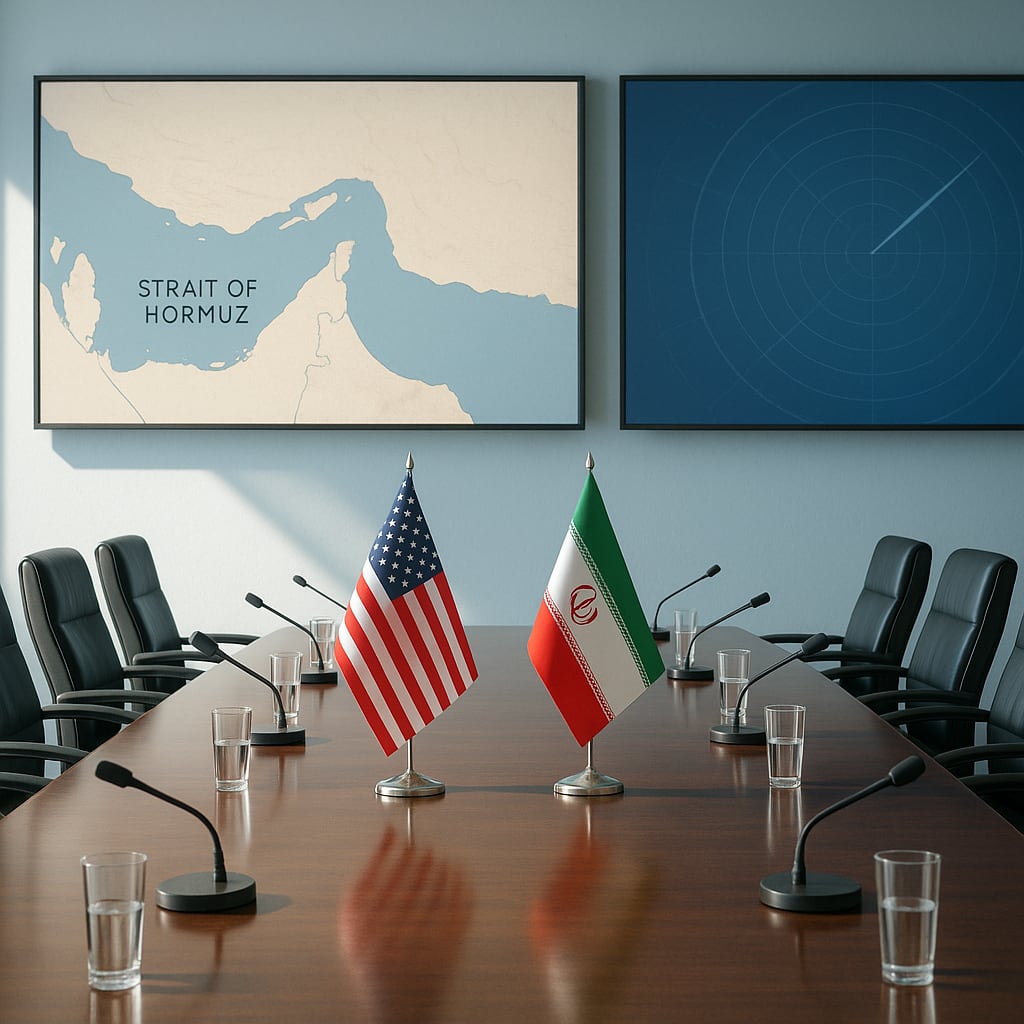
US and Iran trade strikes as fragile ceasefire frays; Tehran reassesses talks while Washington insists a deal remains possible
Narrative Snapshot
- Areas of agreement: Across mainstream outlets, there is consensus that US forces conducted significant strikes on Iranian military assets following the downing of a US Army Apache near the Strait of Hormuz, and that this has placed a fragile truce under acute strain (The Guardian, DW, Al Jazeera, SCMP, ANSA, Middle East Eye).
- Divergence on compliance and intent: US officials frame the strikes as self-defense and operationally effective, including claims of major degradation of Iranian air defenses (CENTCOM via Middle East Eye; Trump and Pentagon rhetoric via TASS). Iranian officials characterize US actions as truce violations that have undermined diplomacy (Tehran Times) and rendered the ceasefire “meaningless” (DW).
- Negotiation trajectory split: Some reporting says talks are still on track or close (The Guardian; Middle East Eye citing CNN; Times of Israel), while other coverage highlights slippage to a longer timeline or collapse risk (The Guardian’s First Thing; DW).
- Regional vector: Israeli reporting emphasizes a US warning that led Jerusalem to stand down a major Iran strike (Times of Israel; La Repubblica), whereas Iranian and Arab outlets stress the risk to foreign forces and a call for regional states to curb US–Israeli attacks (Middle East Eye).
What Happened
Following the crash/downing of a US Army Apache near the Strait of Hormuz, which President Trump blamed on Iran, Washington launched strikes on Iranian targets, described by CENTCOM as “self-defense” actions (SCMP; Middle East Eye). Trump claimed US attacks destroyed about 55% of military capabilities Iran had restored during the ceasefire, focusing on radars and air defenses (TASS). The Pentagon chief said the US had used the ceasefire period to refine targeting intelligence (TASS). Iran’s Foreign Ministry said repeated US truce breaches undermined diplomacy, and Tehran moved to “reassess” engagement in talks (Tehran Times; The Guardian). Iranian messaging warned foreign forces near its territory faced persistent risk (Middle East Eye). RT reported Iran launched retaliatory missiles at US-linked sites in Bahrain, Jordan, and Kuwait; other outlets reported US–Iran exchanges but did not corroborate the specific target list (RT; The Guardian; Middle East Eye). In parallel, Israel reportedly halted a planned Iran strike after a US warning it would be “on its own” (Times of Israel; La Repubblica).
Why It Matters
The episode tests whether wartime ceasefires between the US and Iran can function as durable de-escalation mechanisms when both sides continue to calibrate force under a diplomatic umbrella (Al Jazeera; The Guardian; Middle East Eye). It exposes alliance-management frictions: US warnings reportedly constrained Israeli action, even as Israel continued operations in Lebanon, highlighting the interdependence—and tension—between US regional strategy and Israeli threat perceptions (Times of Israel; Al Jazeera; La Repubblica). It elevates risk to US force posture and host nations: Iranian officials flagged foreign bases as potential collateral or direct targets, and RT reported strikes into Bahrain, Jordan, and Kuwait—countries central to CENTCOM logistics (Middle East Eye; RT). Politically, Washington’s mixed timelines and rhetoric—from imminent deal to months away, and promises to “hit Iran hard”—underscore domestic pressures and the difficulty of sustaining diplomatic signaling credibility (The Guardian; DW; Middle East Eye). Normatively, repeated “self-defense” strikes during a truce complicate future ceasefire design, verification, and third-party mediation.
Diverging Narratives
- Cause and legality: The US presents the latest operations as proportionate “self-defense” in response to the helicopter incident and as tactically successful in degrading Iranian systems (CENTCOM via Middle East Eye; TASS). Tehran asserts Washington violated the truce repeatedly, eroding the diplomatic track and making the ceasefire meaningless (Tehran Times; DW). Mainstream Western outlets emphasize the truce’s fragility rather than declaring it void (The Guardian).
- State of the talks: Signals vary from “very close” or “final throes” (The Guardian; Times of Israel) to “could be months away” (The Guardian’s First Thing) and “close to collapse” (DW). CNN’s line, relayed by Middle East Eye, maintains talks remain on track despite the exchange of strikes.
- Battlefield effects: Trump’s assertion that 55% of Iran’s restored capabilities were destroyed is reported by TASS without independent confirmation in other cited outlets. RT’s account of Iranian missile strikes on US-linked sites in three countries is not corroborated elsewhere in the provided material, though several sources confirm reciprocal attacks broadly (RT; The Guardian; Middle East Eye).
- Israeli vector: Israeli and European outlets foreground a US warning that led Israel to abort a major Iran strike (Times of Israel; La Repubblica). Arab outlets focus on Israel halting direct Iran raids but continuing operations in Lebanon and the wider risk to the region (Al Jazeera).
- Strategic aims: DW highlights Trump’s statement about eventual US “total control” of Iranian oil and gas, a claim not echoed in other sources, while RT platforms a view that US and Israel seek to “sabotage” talks—an interpretation absent from mainstream coverage (DW; RT).
What Happens Next
- Talks versus pause: Iran’s “reassess” stance contrasts with reporting that negotiations remain on track (The Guardian; Middle East Eye citing CNN). Watch for explicit Iranian decisions on participation and any mediator-facilitated timetable announcements.
- US operational tempo: Public signals range from completed “self-defense” strikes to vows to “hit Iran hard” and keep CENTCOM “busy” (Middle East Eye; RT). Monitor CENTCOM communiqués, target sets (air defenses vs. command nodes), and pauses that might align with diplomatic windows.
- Israeli restraint: Reports of a called-off major strike suggest conditional restraint tied to US guidance (Times of Israel). Indicators include any shift from Lebanon-centric operations back to direct Iran targeting and accompanying US–Israel consultations.
- Host-nation risk management: With Iranian warnings about foreign forces and RT’s claims of strikes in Bahrain, Jordan, and Kuwait, track public statements and base-protection measures by Gulf and Levant hosts, as well as any constraints they place on US operations (Middle East Eye; RT).
- US political timing: Messaging oscillates between imminent and longer-horizon deal timelines (The Guardian; DW). Watch for synchronized White House–Pentagon statements, congressional reactions (The Guardian), and whether economic framing of a deal persists.