
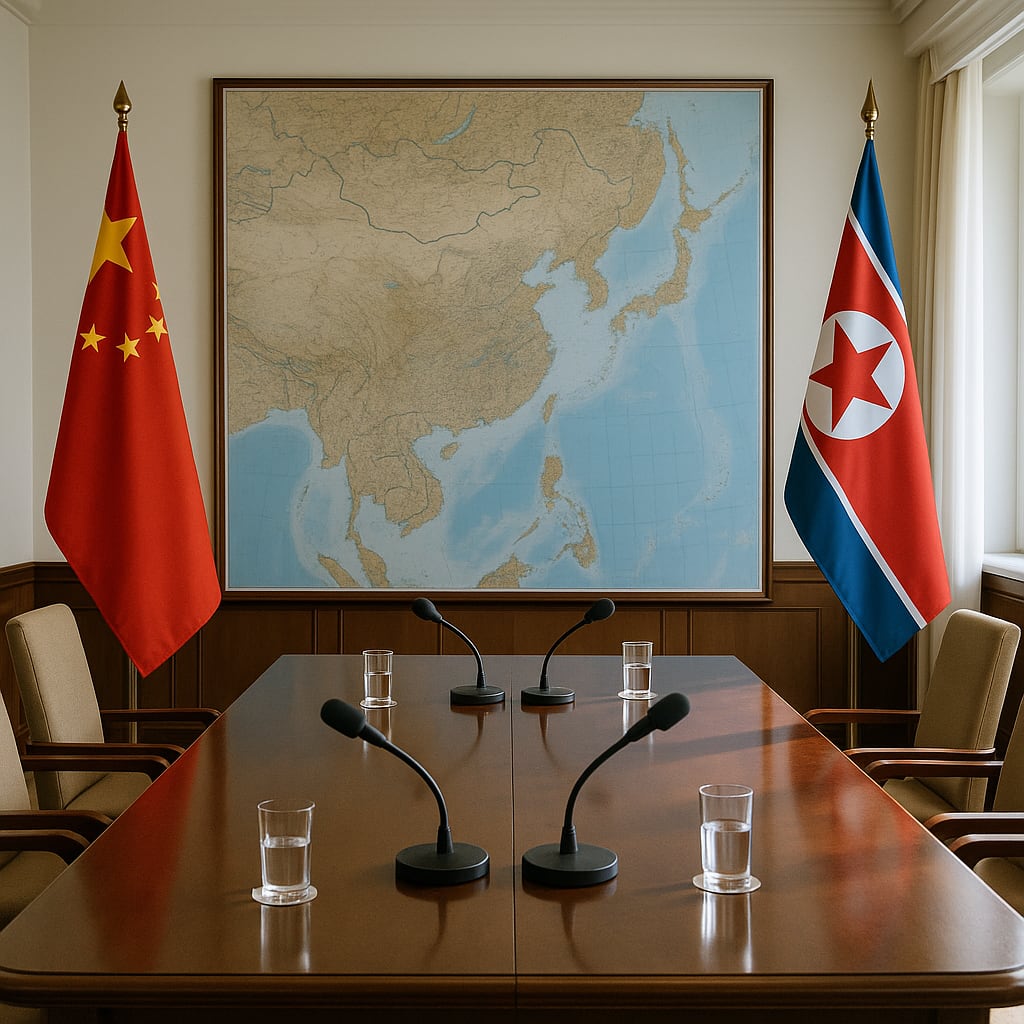
North Korea declares its nuclear program “irreversible” ahead of Xi Jinping’s rare Pyongyang visit
Narrative Snapshot
- Broad agreement: outlets link Pyongyang’s hardened rhetoric to the impending state visit by China’s Xi Jinping (SCMP; BBC; RT; CBC; DW; Sky; ANSA; The Hindu).
- Emphasis splits: SCMP underscores the calibrated timing and recent displays of nuclear-processing capability, and ties Pyongyang’s posture to anxieties over debates in Seoul; DW highlights a steady, under-the-radar buildup, including a tour of a new nuclear fuel facility.
- Framing differences: Japan Times reports North Korea is seeking at least tacit Chinese recognition of its nuclear status, while TASS amplifies Kim Yo Jong’s dismissal of alleged US claims about a denuclearization understanding at a recent China–US summit.
- Context notes: The Hindu foregrounds UN sanctions prohibiting North Korea’s nuclear and ballistic programs; Folha situates Xi’s trip within Pyongyang’s tightening ties with Moscow, while BBC and RT stress the visit’s rarity and its proximity to Xi’s meetings with US and Russian leaders.
What Happened
China confirmed Xi Jinping will pay a state visit to North Korea next Monday and Tuesday at Kim Jong Un’s invitation, a rare trip underscoring close bilateral ties (SCMP; BBC; RT). In the run-up, Kim toured a new nuclear fuel facility and showcased nuclear-processing capabilities (DW; SCMP). Pyongyang then issued high-profile statements through Kim Yo Jong, declaring the nuclear program “absolutely non-negotiable” and “irreversible,” and vowing continued expansion of the arsenal (DW; SCMP; Sky; CBC; ANSA; The Hindu). TASS reported she rejected as “baseless” alleged US claims that a denuclearization goal was agreed at a recent China–US summit. Japan Times said North Korea aims for at least tacit Chinese recognition of its nuclear status during Xi’s visit. The Hindu noted these activities contravene UN Security Council resolutions.
Why It Matters
The statements set the tone for Xi’s visit and directly confront long-standing US-led denuclearization goals (SCMP). They also raise the diplomatic stakes for Beijing, which is North Korea’s principal partner and is arriving in Pyongyang weeks after Xi met both the US and Russian leaders (BBC; RT). DW’s account of a quiet but persistent nuclear buildup, coupled with Pyongyang’s vow to expand its arsenal (Sky), signals not just rhetoric but capability development. Regionally, SCMP links Pyongyang’s posture to security debates in South Korea, while The Hindu underscores the UN sanctions framework that North Korea continues to defy. Folha places the visit within a broader realignment in which Pyongyang is seen edging closer to Moscow. The confluence of these dynamics concentrates attention on whether Beijing can manage risks while preserving influence over a nuclear-armed neighbor.
Diverging Narratives
Coverage converges on North Korea’s hardline message but splits on interpretation and emphasis. SCMP casts Pyongyang’s timing as calibrated for Xi’s arrival and connected to anxieties about South Korean security debates, a linkage not centered by other outlets. DW stresses steady, incremental nuclear advances—touring a new fuel facility—suggesting capability growth beyond rhetoric. Japan Times reports North Korea’s goal of tacit recognition from Beijing, while no source reports China’s position, leaving a gap between Pyongyang’s aims and what Beijing might signal. TASS highlights Kim Yo Jong’s dismissal of alleged US claims about a China–US denuclearization understanding, injecting a contest over diplomatic narratives around last month’s summit. The Hindu anchors legality, reminding readers that North Korea’s programs violate UN resolutions, while Folha situates the visit amid Pyongyang’s closeness to Moscow. BBC and RT frame the visit’s rarity and timing after Xi’s engagements with Washington and Moscow, emphasizing broader power politics rather than program details.
What Happens Next
Xi’s two-day state visit to Pyongyang is set for early next week (SCMP; BBC). The agenda has not been detailed in the sources, and there is no reported indication that North Korea will place its nuclear program on the negotiating table; instead, Kim Yo Jong has said the program is “non-negotiable” and “irreversible” (DW; SCMP; Sky; ANSA; The Hindu). Japan Times reports Pyongyang is seeking at least tacit recognition from China, while TASS relays Pyongyang’s rejection of alleged US claims tied to the recent China–US summit. DW notes North Korea has been quietly expanding capabilities, and SCMP frames Pyongyang’s stance as a challenge to US denuclearization efforts. The extent to which Beijing addresses these issues during the visit remains unreported in the provided sources.