
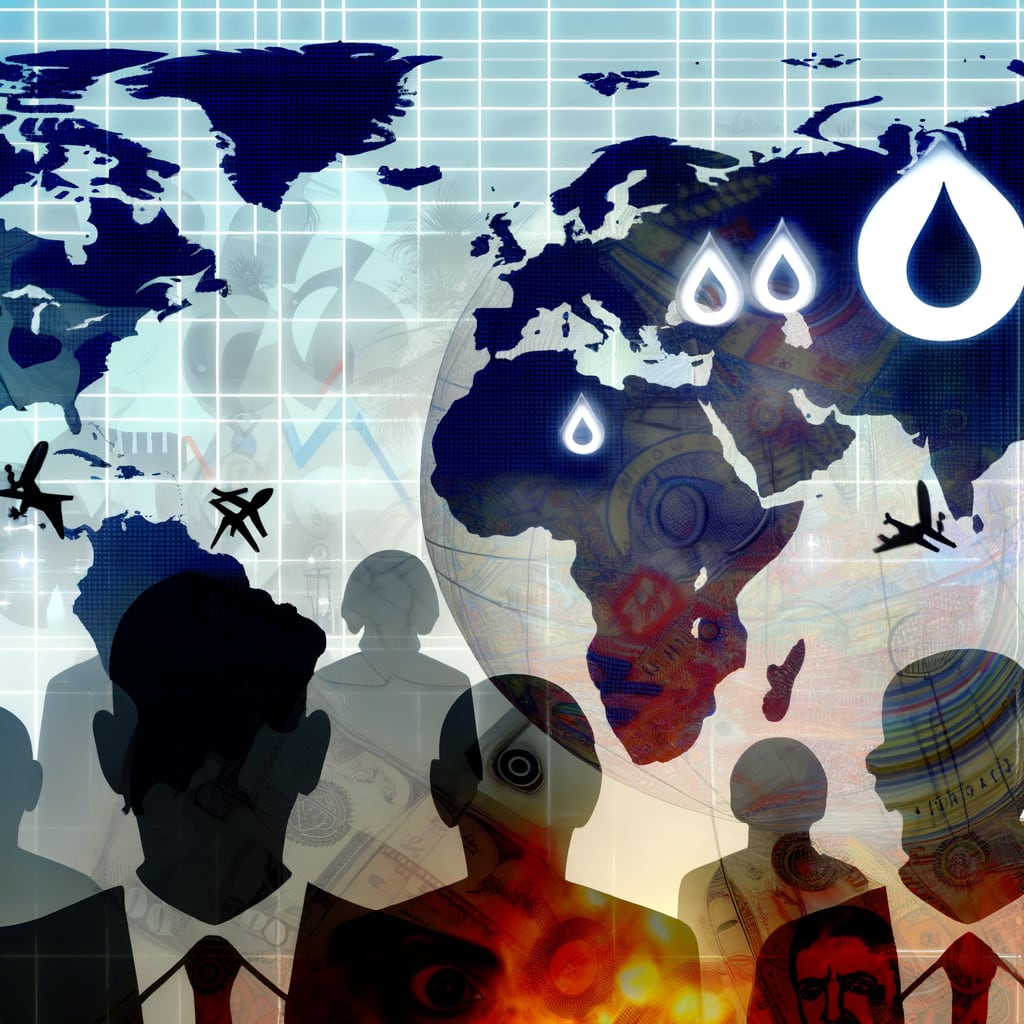
Record Highs in Oil and Diesel Prices Due to Iran Conflict Heavily Impact Global Economy
Global oil and diesel prices have hit record highs due to the ongoing war with Iran, causing substantial impacts on the worldwide economy. Diesel prices have reached a four-year high, with costs of 2.070 euros per liter, according to ANSA. Gas reserves in European Underground Gas Storage facilities are dwindling, with volumes at a mere 29% of total capacity. The strain on oil supply due to the Iran conflict has caused Brent oil prices to fluctuate around $100 per barrel and even reach $106 at one point, as reported by Folha de S.Paulo and TASS.
The Global Impact of Rising Fuel Prices
The Iran conflict has led to a significant disruption in global energy supply, resulting in a steep increase in prices. The price of diesel in the United States has risen by over a third in the last month, hitting almost US$ 5 per gallon, according to Folha de S.Paulo. This surge is impacting everything from transportation of goods to planting of crops.
The price of Urals oil in India reached a record high of $98.93 per barrel, as reported by TASS. In Europe, the cost of gasoline is 1.841 euros per liter, while the price of Brent oil on the Intercontinental Exchange (ICE) has varied, reaching $106 per barrel and later falling below $100 per barrel.
The Impact on Energy Reserves
The escalating tensions in the Middle East have caused the largest disruption in history in the energy supply, according to the International Energy Agency. The closure of the Strait of Hormuz, through which 20 million barrels per day of hydrocarbons transit, has been a major contributor to this disruption.
In response, Australia has begun releasing its fuel stockpile to alleviate the strain on fuel supplies. Energy Minister Chris Bowen has directed fuel companies to release nearly a fifth of reserve petrol and diesel supplies, as reported by The Guardian.
Reactions and Further Developments
The escalating fuel prices have prompted a variety of reactions and strategies globally. In Brazil, President Luiz Inácio Lula da Silva has abolished federal taxes on diesel to counter the rise in fuel prices, a move criticized as populist by some, as noted by a Folha de S.Paulo reader.
In the aviation industry, Cathay Pacific Airways announced a near doubling of its fuel surcharges due to rising fuel costs, according to the South China Morning Post. Similarly, US President Donald Trump has postponed a meeting with China's Xi Jinping due to the intensifying conflict with Iran, as reported by Al Jazeera English.
Current Status
Despite some fluctuations, the price of oil remains high globally, exacerbating economic pressures. The Strait of Hormuz, a vital oil transit route, continues to be a focal point of tensions. As noted by Iranian security chief Ali Larijani, the Strait could either be a Strait of peace or suffering.
As the war in Iran continues, the world watches closely, the effects of the conflict reverberating through global energy markets and economies.