
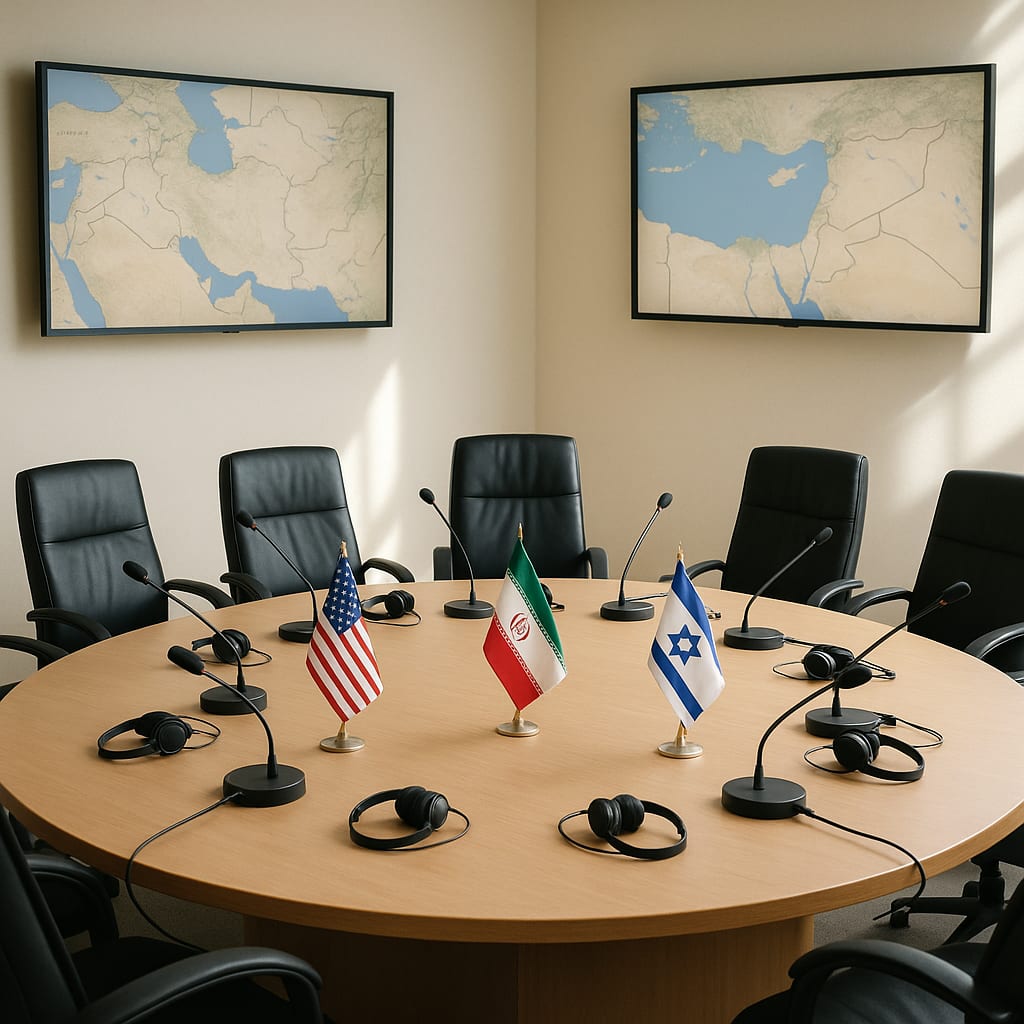
US–Iran talks proceed as Israel–Hezbollah fighting escalates and Trump publicly rebukes Netanyahu
Narrative Snapshot
- Alignment and friction: Multiple outlets report active US–Iran contacts alongside Lebanon ceasefire diplomacy, while also documenting a rare public clash between Donald Trump and Benjamin Netanyahu (Times of Israel; Fox News; Le Monde; Middle East Eye; TASS).
- Leverage and restraint: European and Israeli reporting emphasizes Washington’s role in constraining Israeli moves in Lebanon, even as Israel expands strikes (Le Monde; Times of Israel; Middle East Eye). Others argue US leverage is weaker than it appears (RT).
- Competing frames on Lebanon: A Lebanese assertion that Iran uses Lebanon as a bargaining chip is contested by Hezbollah (Middle East Eye). An Israeli veteran diplomat says decisions on Lebanon are effectively in US–Iranian hands (La Repubblica).
- Narratives of legitimacy and public opinion: Iranian state and aligned outlets highlight Israel’s isolation and loss of legitimacy (IRNA; Tehran Times), while US and UK outlets foreground Trump’s domestic headwinds and Netanyahu’s electoral recalibration (The Guardian; Times of Israel).
What Happened
Donald Trump confirmed he called Benjamin Netanyahu “crazy” amid disputes over Israeli operations against Hezbollah (Fox News; Times of Israel). Le Monde reports Trump instructed Israel not to attack Beirut, even as Israel ordered strikes on Beirut suburbs ahead of a UN Security Council meeting and a minister urged “leveling” them (Le Monde; Middle East Eye). US-mediated talks sought a Lebanon ceasefire; RT said Washington pressed for a Hezbollah withdrawal, while Middle East Eye reported Hezbollah rejected ceasefire terms and later denied Lebanon is Iran’s bargaining chip. Trump and Russian state media both said US–Iran talks are ongoing, with Trump claiming Tehran won’t develop or buy nuclear weapons and that the conflict will end soon, while Iranian officials accused Washington of shifting demands and vowed to resist “excessive” terms (Middle East Eye; TASS; IRNA). Separately, CENTCOM reported Iran fired missiles toward Kuwait and Bahrain after US strikes enforcing a naval blockade (Times of Israel).
Why It Matters
The conjunction of live warfare in Lebanon, high-stakes US–Iran negotiations, and open tensions between Washington and Jerusalem reshapes regional risk. Reporting highlights both momentum for diplomacy and persistent readiness to use force, keeping the prospect of a wider regional war and a ceasefire or paper deal in unstable balance (Al Jazeera; The Hindu; TASS). For Israel, battlefield dynamics and US pressure intersect with domestic politics: Trump’s rebuke and ultra-Orthodox crises are forcing Netanyahu to retool his election strategy, narrowing his room for maneuver on Iran and Hezbollah (Times of Israel). Iranian leaders portray Israel as isolated and humiliated, seeking leverage in talks while setting red lines on Lebanon (IRNA; La Repubblica). Analysts and aligned media argue Israel’s global legitimacy is eroding and that its Lebanon operations undercut US–Iran diplomacy, with potential spillovers for regional energy security and the global economy (Tehran Times; RT).
Diverging Narratives
Outlets differ on who holds the reins. Le Monde and La Repubblica describe US constraint over Israeli operations, even as Israel hits Beirut suburbs; RT argues Netanyahu is betting Washington can’t stop him. On ceasefire diplomacy, RT reports a US position that Hezbollah must withdraw, while Middle East Eye says Hezbollah rejected the plan and later dismissed claims that Lebanon serves as an Iranian bargaining chip—contradicting the Lebanese president’s assertion carried by the same outlet. On the US–Iran track, Trump’s statements about imminent resolution and Iran’s nuclear pledges (TASS) contrast with Iranian officials’ claims that Washington is shifting demands and that Tehran will resist “excessive” terms (IRNA; TASS). Assessments of Israel’s standing split sharply: Israeli and French coverage centers on strategic friction and political fallout (Times of Israel; Le Monde), whereas Iranian outlets depict structural collapse of Israel’s legitimacy (Tehran Times) and battlefield humiliation (IRNA).
What Happens Next
- US-mediated efforts to structure a Lebanon ceasefire remain unresolved, with conflicting accounts of acceptable terms and Hezbollah’s position (RT; Middle East Eye).
- Washington and Tehran continue negotiations “continuously,” but Iranian officials signal firm red lines and accuse the US of changing demands; Trump says the conflict will end soon, by agreement or force (Middle East Eye; IRNA; TASS).
- Israel’s operational choices in Lebanon face simultaneous US pressure, Hezbollah’s evolving tactics—including night-capable drones—and Netanyahu’s electoral constraints (Fox News; Le Monde; Times of Israel).
- Khamenei’s stance tying peace to Israeli withdrawal from Lebanon, and Iran’s responses to the maritime blockade, keep regional flashpoints active (La Repubblica; Times of Israel). Further UN Security Council engagement and additional US–Israel frictions reported in US media remain watch points (Middle East Eye; RT).